WELCOME TO RACHEL’S FICTION WRITING AND REVIEWS BLOG
This is where Rachel keeps you up to date with her novels and stories and also shares reviews, highlights and extracts from other authors.

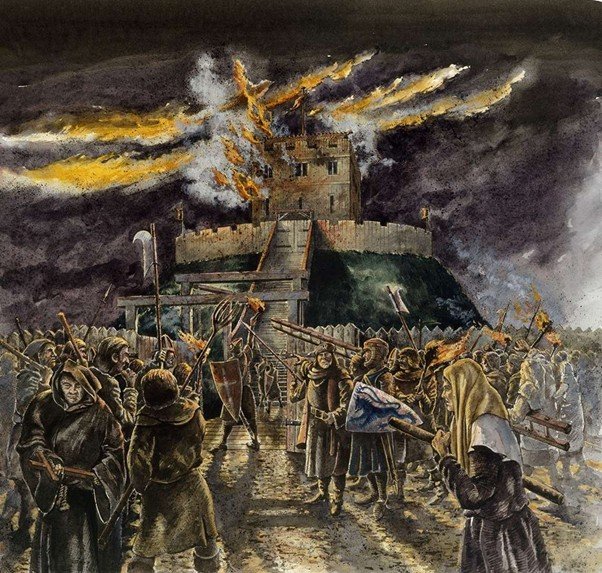
The York Massacre, 16 March 1190: On this Day in History
When England turned on its Jewish communities, and what happened when a few brave souls refused to look away
On the night of 16 March 1190, around 150 Jewish men, women, and children huddled inside a wooden tower in York Castle. Outside, a mob—some of them the city's most respectable merchants and noblemen—bayed for their blood.
By morning, almost all of them were dead.
They hadn’t committed any kind of crime, but they’d been trapped, besieged, and given a choice: forced baptism or death.
Most chose death on their own terms.
It remains one of the darkest episodes in medieval English history, and one that haunted me throughout the writing of Lady of the Castle, my upcoming historical fiction novel, the second in the Nicola de la Haye series.
The Wave of Violence
The York massacre didn’t come out of nowhere. It was the bloodiest peak of a wave of anti-Jewish violence that had been building since the accession of King Richard I in 1189. When Richard was crowned, riots broke out in London and quickly spread north—to Norwich, Stamford, King's Lynn, Lincoln, Bury St Edmunds, and York.
The causes were tangled together: religious prejudice inflamed by crusading fervour, resentment of Jewish moneylenders by nobles drowning in debt, and the age-old power of conspiracy and rumour to transform neighbours into enemies.
In some places, royal authority held. In others, it collapsed entirely.
The Dead Beneath Norwich
A medieval depiction of the persecution of Jews
We don't only know about this violence from chronicles and court records.
In 2004, construction workers digging the foundations for a shopping centre in central Norwich broke through into a medieval well. At the bottom, they found seventeen people. Six adults. Eleven children, aged roughly two to fifteen.
The bodies had been thrown in head-first. The adults had landed first, cushioning the children’s fall. Because the skeletons showed no signs of trying to break a fall, researchers concluded the victims were already dead when dropped in. All seventeen appeared to have been deposited in a single event, their bodies still complete and intact, placed in the well shortly after death.
The well lay just south of what had been Norwich’s medieval Jewish quarter. Radiocarbon dating placed the deaths between 1161 and 1216—a range that includes the recorded massacre of Norwich’s Jewish community on 6 February 1190, when, according to the chronicler Ralph de Diceto, men heading for the Crusade attacked Jewish homes before leaving the city.
DNA analysis of six of the individuals, published in 2022, confirmed what the location and circumstances had long suggested: they were almost certainly Ashkenazi Jews. Four of the six were related to each other. Three of them were sisters—the youngest between five and ten years old. A toddler boy, probably between infancy and three years of age, likely had blue eyes and red hair.
Three sisters. A red-haired toddler. Thrown into a well in the dark, and forgotten for eight hundred years.