
Leofric’s Medieval Mince Pies
For the filling:
5000g minced beef, mutton, or venison (all historically correct)
100g suet (or butter if you need a substitute)
2 onions, chopped
160g raisins or currants
80g chopped dried figs and/ or dates
2 small apples, finely diced
2 tsp ground ginger
1 tsp allspice
1/2 tsp black pepper
3-4 tablespoons runny honey
A splash of verjuice, red wine, or cider (medieval cooks used all three)
Pinch of salt
For the pastry:
Shortcrust pastry (store bought or your own recipe)
Ever wondered why mince pies are called mince pies?
Because they’re meant to contain actual minced meat!
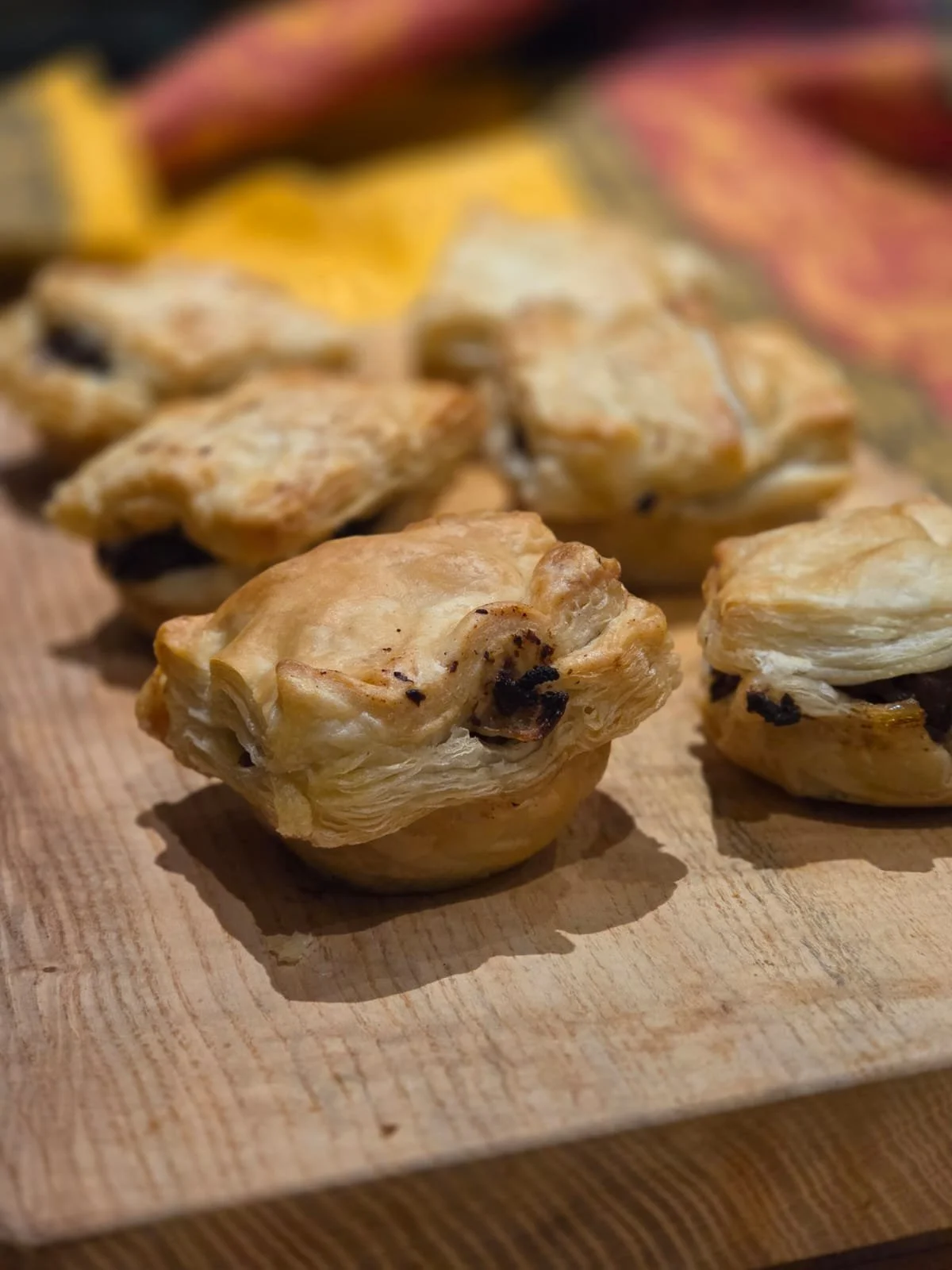
This recipe for medieval mince pies, made from minced meat, fruit, honey, and spices has been long-forgotten, and is well overdue a restoration. I’m not a particular fan of modern-day mince pies, but I made these authentic ones myself, and they were absolutely delicious!
Ingredients for 8 small pies or 2 large
Instructions
Make the filling
Fry the minced meat and suet gently until just cooked
Fry the onions until soft
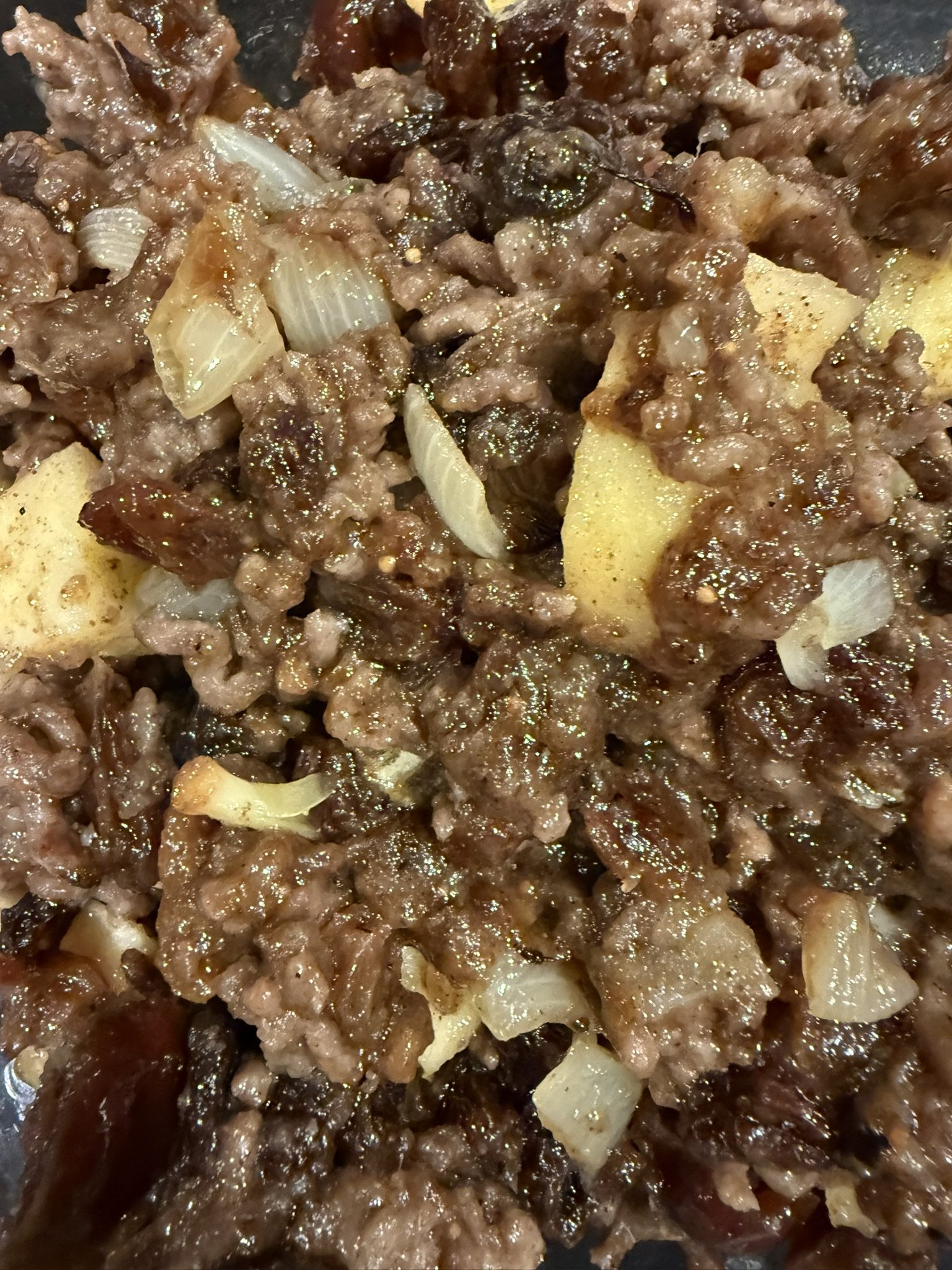
Add the chopped fruit, apple, spices, honey, salt, and a splash of wine/verjuice.
Simmer 5–10 minutes until thick and gloss
Make the Filling
Butter a pie tin or small tart cases with pastry
Spoon in the filling
Add pastry lids and crimp the edges
Bake
Bake at 180°C / 160°C fan for 25–30 minutes (small pies) or 40–45 minutes (large).
Serve warm or cold, preferably with a cup of Leofric’s wassail!
Medieval diners often enjoyed these at room temperature on feast days, but I had them hot, and thoroughly recommend it that way!