Fables & Lies by Elisabeth Storrs
The Coffee Pot Book Club Blog Tour
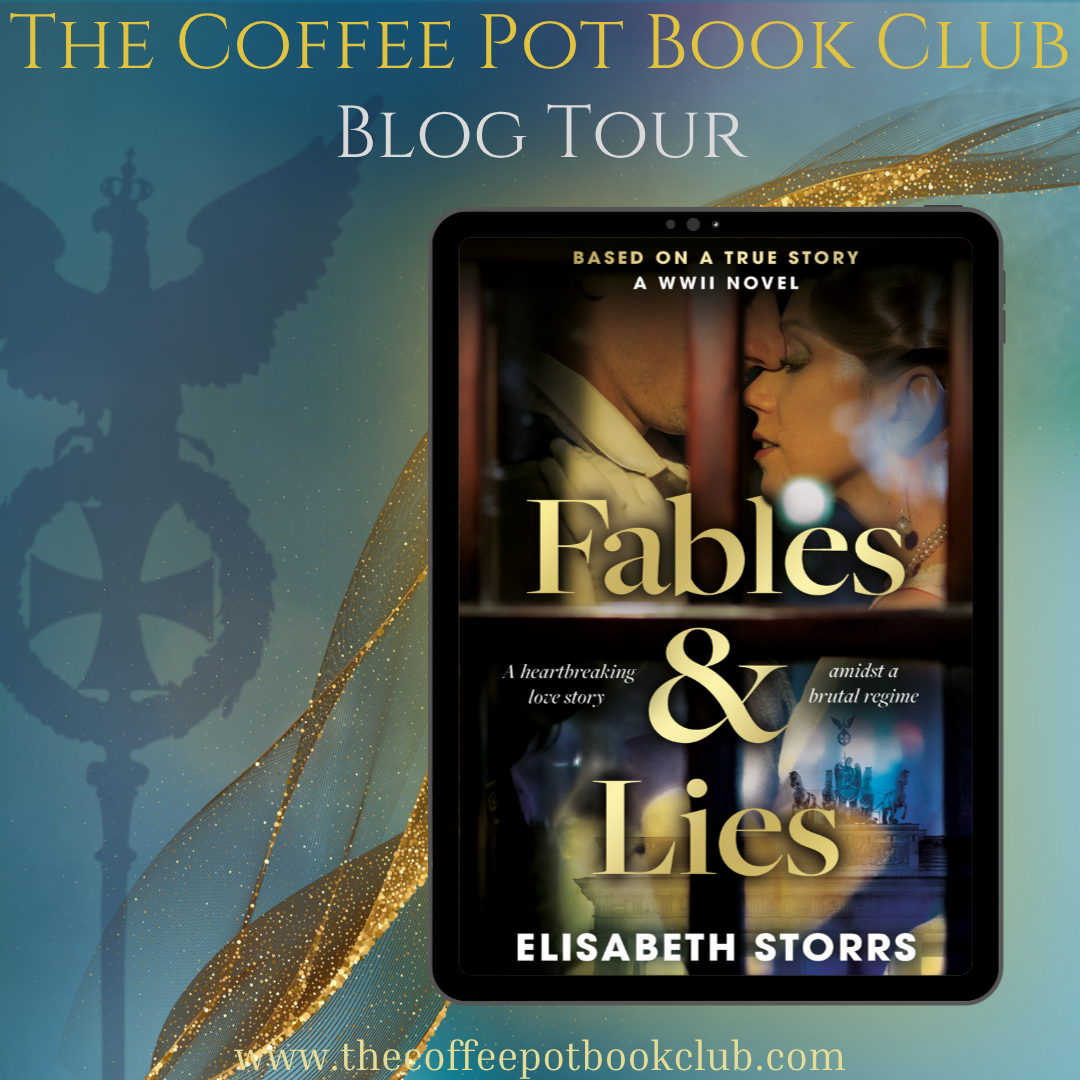
Fables & Lies by Elisabeth Storrs
Today on the blog tour I’m elated to be hosting Elisabeth Storrs with a guest post about her book Fables & Lies, a heart-wrenching WWII story following the struggle of a German woman married to someone deeply involved in the Nazi regime.
Book Description
Under a brutal regime, what price must be paid to preserve truth, treasure and love in a world built on lies?
WWII Berlin. Freyja Bremer, a patriotic museum assistant, marries Kaspar Voigt, an ambitious SS scholar, to protect her father. Yet she is unaware her husband is instrumental in Himmler’s twisted quest for Aryan supremacy.
As she strives to safeguard the priceless Priam’s Treasure from air raids, Freyja falls in love with Darien Lessing, an archaeologist who exposes the moral decay beneath the Regime’s myths. Her awakening drives her into perilous resistance — aiding a Jewish doctor and his wife, Darien’s sister — while uncovering Kaspar’s role in the SS’s darkest programs, which subvert history to justify invasion, abduction and murder.
As Berlin collapses into chaos and bloodshed, Freyja, caught between duty, deception and desire, must risk everything to preserve truth in a world built on lies.
A heartbreaking yet triumphant love story, Fables & Lies shines light on lesser-known aspects of the Nazi Regime. It gives voice to the complex moral struggles of German women, the forgotten resistance of Gentiles married to Jews, the dangers of contested history, the evils of Himmler’s racial studies program and the unsung bravery of German museum curators who saved their nation’s treasures.
Perfect for readers of Kelly Rimmer, Anthony Doer and Laura Morelli.
Buy Link:
Universal Buy Link: https://books2read.com/fablesandlies
Guest Post
Researching Fables & Lies
First, thanks for sharing news of my release of Fables & Lies. The genesis for the book was a contemporary mystery novel I finished in 1994 after becoming fascinated with Heinrich Schliemann who discovered a fabulous cache of gold at Troy which he dubbed “Priam’s Treasure”. At that time mystery shrouded the disappearance of the Trojan gold which the Soviets plundered during the battle of Berlin, insisting the trove was lost in transit in the chaotic aftermath of World War II. Imagine my dismay (and delight) when I read in the newspaper the Russians admitted they’d hidden the treasure for nearly 50 years. My plot of finding the gold became redundant and the manuscript was relegated to the bottom drawer.
After finishing my Tale of Ancient Rome trilogy, I was drawn yet again to Priam’s Treasure. How had it come to be in the Pushkin Museum in Moscow? Why had the Russians lied about possessing it? I dusted off the manuscript to rewrite it as an historical novel covering the true story of the Trojan gold during the war.
Allied and Axis Viewpoints
Researching a novel 30 years ago was a vastly different experience than now. Previously, I’d been limited to books in my local library. Now I had access via the internet to numerous German sources. Historians included the Axis viewpoint rather than presenting the war purely from the Western Allies’ perspective.
As a result, I discovered the little-known story of German museum curators who protected their nation’s (and the world’s) treasures from constant aerial bombardment. I wanted to tell their tale which contrasts with the Nazis plundering both private and public collections across Europe. However, the museum director who risked his life to protect Priam’s Treasure was a Nazi who joined the Himmler’s SS Ahnenerbe Research Institute to guard himself from rivals and advance his career. This, in turn, led me to discover more fanatical SS Ahnenerbe scholars twisted prehistory to promulgate the “Aryan Myth” to justify conquest, dispossession and murder.
Accordingly, Fables & Lies has two major plotlines: the safekeeping mission of the German museum curators; and the work of malevolent SS Ahnenerbe scholars to promulgate the “Aryan Myth” and conduct racial studies to justify conquest, dispossession and murder.
My protagonist, Freyja Bremer, is a patriotic museum assistant raised on Nazi dogma. Through her love affair with Cambridge educated archaeologist, Darien Lessing, her eyes are opened to the rot beneath the Regime’s lies, as they both strive to protect Priam’s Treasure and other antiquities in Berlin’s Museum of Pre and Early History. Her awakening leads her to assisting a Jewish doctor and his wife. Intertwined is Freyja’s forced marriage to Kaspar Voigt, a zealous Ahnenerbe ethnologist, and her quest to discover what her husband’s malicious research entails.
An Avalanche of Sources
I found it very challenging to research modern history after a decade of being immersed in C4th BCE Rome and Etruria. Previously I was dealing with a scarcity of written sources, now I was faced with an avalanche of them. I confess I often find myself in the tarpit of research because I become so interested in too many topics!
At first, I spent a lot of time grappling with an overview of both WWI and WWII to understand the rise of the Nazis and the psyche of German civilians. I then concentrated on reading as much as I could on Himmler’s research institute, the SS Ahnenerbe. This revealed a bizarre expedition to Tibet to find evidence of “proto-Aryans” who had survived the sinking of Atlantis. Himmler also sought to find the Holy Grail which he saw as a stone that fell from a diadem of an ancient goddess. In fact, Spielberg’s Indiana Jones movie franchise drew inspiration from such excursions. However, these esoteric endeavors were superseded by archeological excavations conducted by reputable prehistorians who subverted history to serve power. They claimed Indo-Aryans (they called them Indo-Germanics) spread their culture from Scandinavia across Europe in the Stone Age thereby justifying reclamation of “ancestral” lands, particularly Poland, Russia and Ukraine. The concepts of the “Master Race” and “Sub-humans” were underpinned by such theories which led to dispossession, enslavement and genocide.
Academic Articles and Modern Historians
In addition to history books, I found a wealth of information in academic journals in the JSTOR database. And I was lucky a retired German teacher was prepared to translate many of these for me. I found obscure historical details through these articles which I could never have known if only relying on English texts.
I also reached out to current day historians. I highly recommend writers taking this approach. You’d be surprised how generous academics are with their time if you demonstrate your bona fides. I was able to access copies of the day journals and correspondence of the Pre and Early History Museum Director who defied a “Hitler Order” to ensure the treasure remained safe. It gave me incredible insight into the lives of Germans living under the Regime.
Walking the Ground
“Walking the ground” upon which an historical novel is set is invaluable. I retained an expert guide who escorted me on an extensive personalized walking tour of Berlin over two days. This included the eerie experience of donning a hardhat and head torch to enter the pitch-black interior of the ruins of a “Flak Tower”, the only remaining example of three built during the war. These fortresses boasted three-meter-thick concrete walls and housed thousands of people during air raids. They also had huge cannons on their rooves to bring down enemy aircraft. Priam’s Treasure and other exhibits ended up being stored in the tower erected near the Zoo. The tour (run by a speleology society) certainly gave me a taste of what it would have been like to shelter in one of these goliaths as Freyja did during the Soviet assault.
The other fascinating fact I discovered through this tour was that the Pre and Early History Museum was located next door to the Gestapo HQ and SS House. Little wonder the building came under constant air raids given its sinister neighbor! I would never have made the connection had I not visited Berlin.
I hope you’ll enjoy learning a lot of little-known stories in Fables & Lies, a novel that demonstrates history is never neutral, and courage can be found in the quietest acts of defiance.
Author Bio
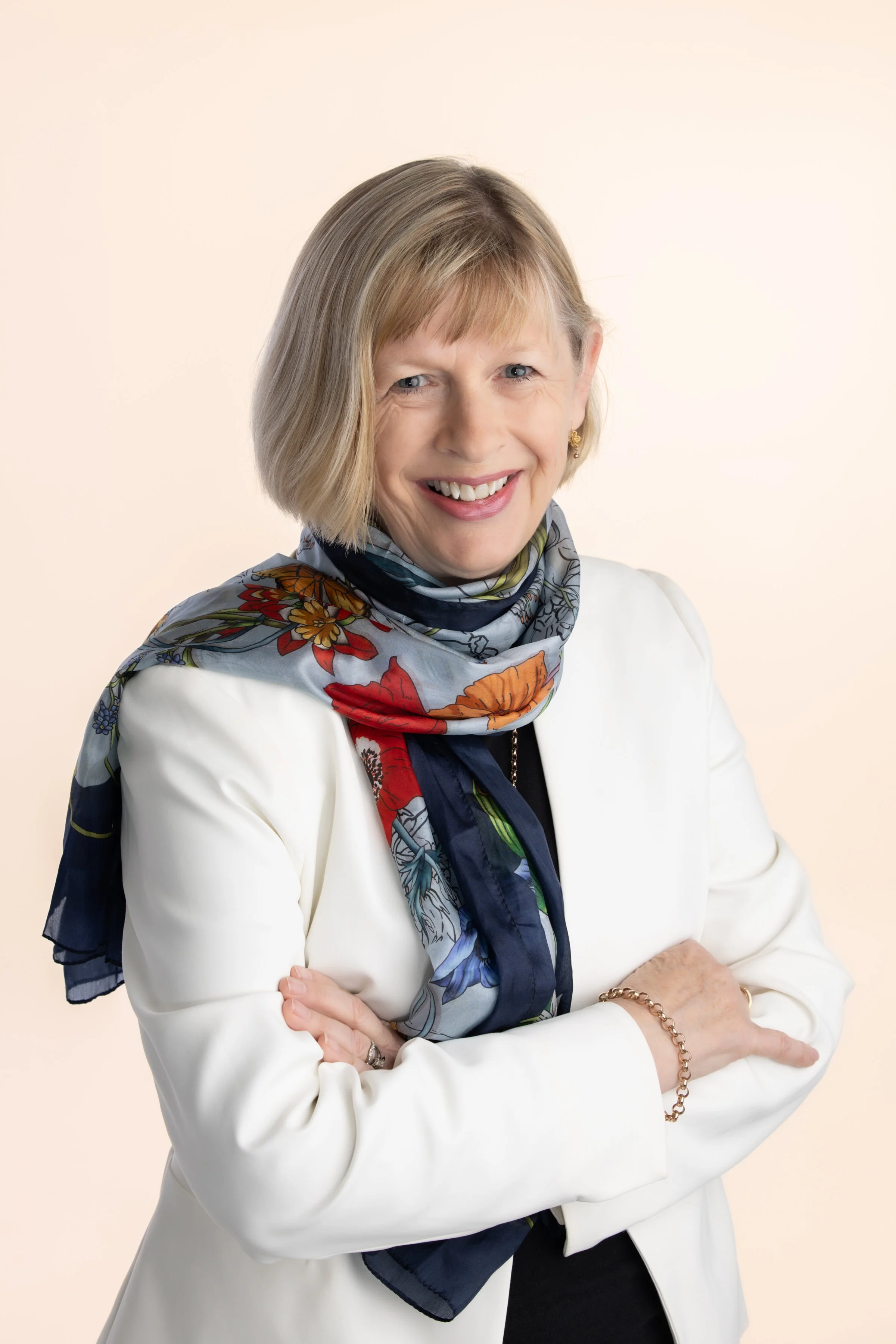
Elisabeth Storrs Author
Elisabeth Storrs has a great love for history and myths. She is the award-winning author of A Tale of Ancient Rome trilogy which was endorsed by Ursula Le Guin, Kate Quinn and Ben Kane.
Now her obsession lies with Trojan treasure and twisted Germanic prehistory in her new release, Fables & Lies: A World War II Novel.
Elisabeth is also the founder of the Historical Novel Society Australasia and the $155,000 ARA Historical Novel Prize. She lives in Sydney with her husband in a house surrounded by jacarandas.
Author Links:
Website: https://www.elisabethstorrs.com
Twitter / X: https://x.com/elisabethstorrs
Instagram Handle: https://www.instagram.com/elisabethstorrsauthor/
Facebook https://www.facebook.com/elisabeth.storrs/
Pinterest: https://www.pinterest.com/elisabethstorrs/
Book Bub: https://www.bookbub.com/authors/elisabeth-storrs
TikTok: https://www.tiktok.com/@elisabethstorrs?lang=en-GB
Amazon Author Page: https://www.amazon.com/stores/Elisabeth-Storrs/author/B005NVUWZ4
Goodreads: https://www.goodreads.com/author/show/4489059.Elisabeth_Storrs