WELCOME TO RACHEL’S FICTION WRITING AND REVIEWS BLOG
This is where Rachel keeps you up to date with her novels and stories and also shares reviews, highlights and extracts from other authors.

She Didn't Wait for Permission
International Women's Day asks us to celebrate the women who refused to accept the limits placed upon them. Who pushed back. Who led. Who endured. And every year, we tend to look to the recent past — to suffragettes, trailblazers, and glass-ceiling-breakers of the modern era.
But what about the women who did all of that eight hundred years before anyone thought to name it?
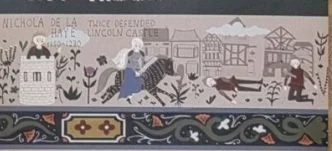
Meet Nicola de la Haye. Sheriff of Lincolnshire. Castellan of Lincoln Castle. The woman who, in 1217, successfully defended one of England's most strategically vital fortresses against a French-backed rebel army: at the age of approximately seventy. She didn't wait for permission, and she didn’t expect plaudits: because no one was going to give it.
What the Twelfth Century Said Women Were
The medieval world had very clear ideas about women's place in society, and those ideas were enforced from pulpit, court, and custom alike. Women were considered intellectually weaker than men, legally subordinate to their fathers and husbands, and spiritually suspect - daughters of Eve, prone to temptation and manipulation(!!!). Church fathers and contemporary writers were emphatic on the subject. Women should be silent, obedient, and invisible in public life.
I've explored just how relentless and inventive that misogyny was in my medieval misogyny series, including a look at the men who competed, with some enthusiasm, for the title of Worst Villain to Women of the 12th Century. It's a crowded field.
What Nicola de la Haye Actually Did
Nicola inherited the hereditary castellanship of Lincoln Castle from her father, and she held it through two marriages, through political upheaval, through sieges and civil wars, and with a grip that no one could prise loose. She administered justice, she negotiated with kings, defied a rogue justiciar who threatened the kingdom whilst Richard the Lionheart was on crusade, and she commanded garrisons and organised castle defences - incredibly well.
When King John's reign collapsed into civil war and a French prince threatened to take the English throne, Nicola was the one defending Lincoln.
She was also, at various points, told she was too old, too female, and too inconvenient. She resigned her position as castellan (constable), but was promptly reappointed, because no one else could do it as well as she could.
And one of King John’s last acts was to make her the first female sheriff in England - Sheriff of Lincoln.
This is the woman at the heart of my novel Lady of Lincoln: not a fictional heroine invented to fit a modern template, but a real woman whose story has simply been waiting to be told.