WELCOME TO RACHEL’S FICTION WRITING AND REVIEWS BLOG
This is where Rachel keeps you up to date with her novels and stories and also shares reviews, highlights and extracts from other authors.


Medieval Advent
Everyone is talking about what they have in their advent calendars: chocolates, toys, even Star Wars characters! Advent also brings to mind glittering candles on wreaths, festive jumpers, Christmas markets, mulled wine, and the countdown to Christmas morning.
I haven’t met a single person (other than fellow medieval fiction authors) who have any idea that for medieval people, Advent was not a season of indulgence or celebration. It was a period of fasting, penance, self-examination, and preparation for the Second Coming rather than Santa’s sleigh.
The earliest evidence for Advent appears in the 4th century, particularly in Gaul and Spain, where Christians observed a multi-week fast before Epiphany rather than Christmas. This early “Nativity Fast” resembled Lent: No meat, no dairy, no rich foods, no marital relations (yes, this was explicitly addressed!). By the 6th century, Rome formalised a four-week liturgical season leading up to Christmas. But unlike today’s “anticipatory joy,” medieval Advent preached repentance, vigilance, and apocalyptic expectation.
The focus wasn’t solely on celebrating Christ’s birth. Advent was designed to prepare the soul for Christ’s return in judgement. Medieval sermons emphasised humility, fear of sin, confession, charitable giving, and moral renewal. The message was clear: Christmas might be coming, but so was Judgement Day!
If modern Advent is “countdown to the festivities,” medieval Advent was “brace yourself and prepare your soul.”

Claudia Procula, Pontius Pilate’s wife
Most of us know Pontius Pilate — the Roman governor who condemned Jesus to death. But how many of us know the woman who tried to stop him?
Claudia Procula (sometimes called Procula or Procla) appears only once in the New Testament, yet her brief act of conscience made her one of the most intriguing women in early Christian history, a woman caught between empire, superstition, and moral conviction.

William de Tracy: The Penitent Knight of Canterbury
William de Tracy helped slay Thomas Becket—then sought forgiveness on a pilgrimage to Rome and the Holy Land. Can a murderer find redemption?
On that bitter December evening in 1170, when Thomas Becket, the Archbishop of Canterbury, fell beneath four flashing swords, one of those four blades belonged to Sir William de Tracy. Chroniclers called him the calmest of the murderers; steady-handed, methodical, a man who believed he was acting under royal command. Yet for the rest of his life, remorse and infamy would drive him abroad.

All Souls’ Day: Soul Cakes, Prayer and Memory
As the bells of All Saints’ Day fall silent, a gentler sound takes their place — the slow, measured knell for the departed. 2 November, All Souls’ Day, was the moment when the living turned their hearts toward those still journeying through Purgatory.
The season of light ended not in mourning, but in hope — that love and prayer could reach beyond the grave. The word soul comes from Old English sawol, “the spiritual essence of a person.”
The “Mass of Souls,” or Soul Mass Day, was first proclaimed in 998 AD by Abbot Odilo of Cluny. He ordered that every monastery in his order should celebrate a Mass for “all the faithful departed.” From Cluny, the custom spread throughout Europe.
Yet its roots run deep into pagan soil. Romans had their Parentalia, a spring festival for the dead where families brought cakes and wine to tombs. Celts laid food on thresholds at Samhain to honour their ancestors. Christianity sanctified these gestures, and the offering of food became the offering of prayer.
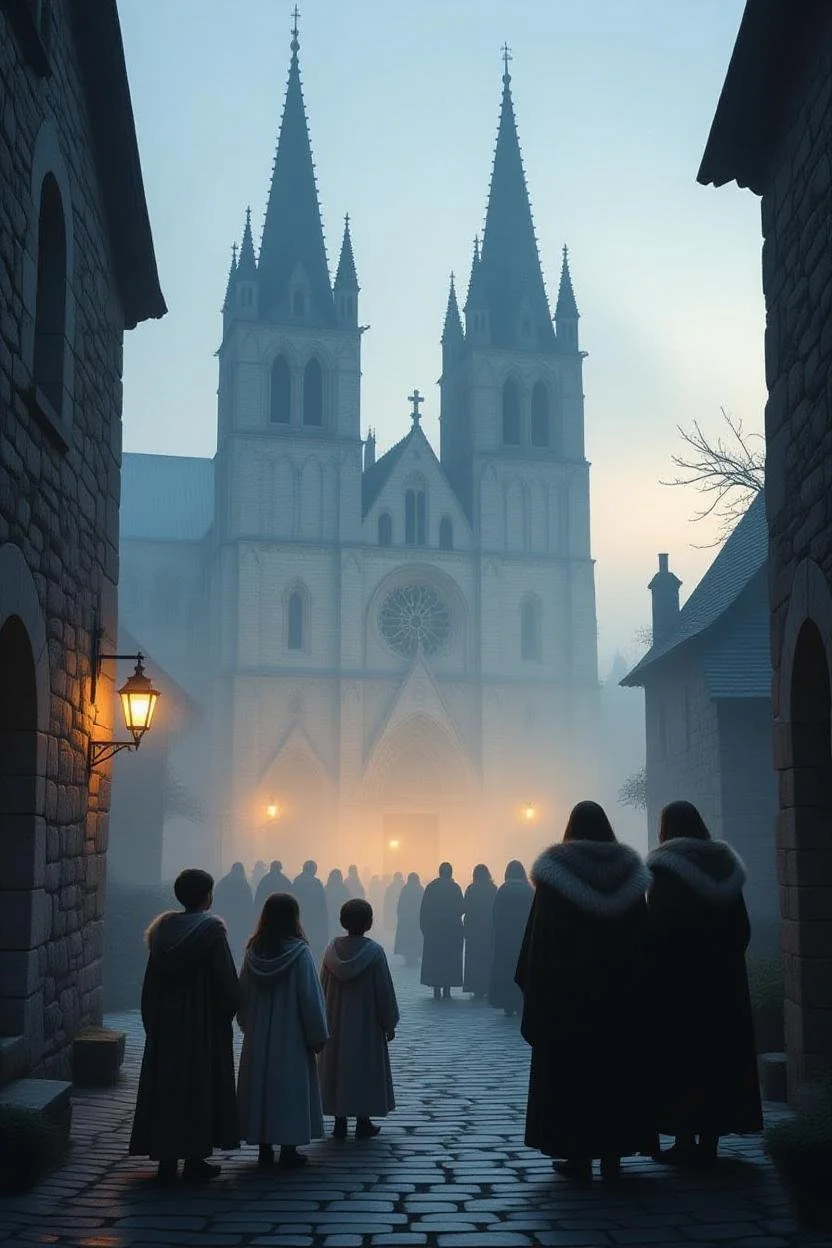
All Hallows’ Day: The Feast of All Saints
After the shadowed vigil of All Hallows’ Eve came the brightness of All Hallows’ Day—later called Hallowmas.
The name joins hallow (Old English hālga, “holy person”) and mass (from Latin missa, “Eucharistic service”).
It was the day when the Church lifted its gaze from the souls still journeying toward heaven to those who had already arrived.
Altars were dressed in white, bells rang across town and countryside, and processions wound through streets lit by candles. The message was clear: the darkness of death had been overcome by the light of sainthood.