WELCOME TO RACHEL’S FICTION WRITING AND REVIEWS BLOG
This is where Rachel keeps you up to date with her novels and stories and also shares reviews, highlights and extracts from other authors.

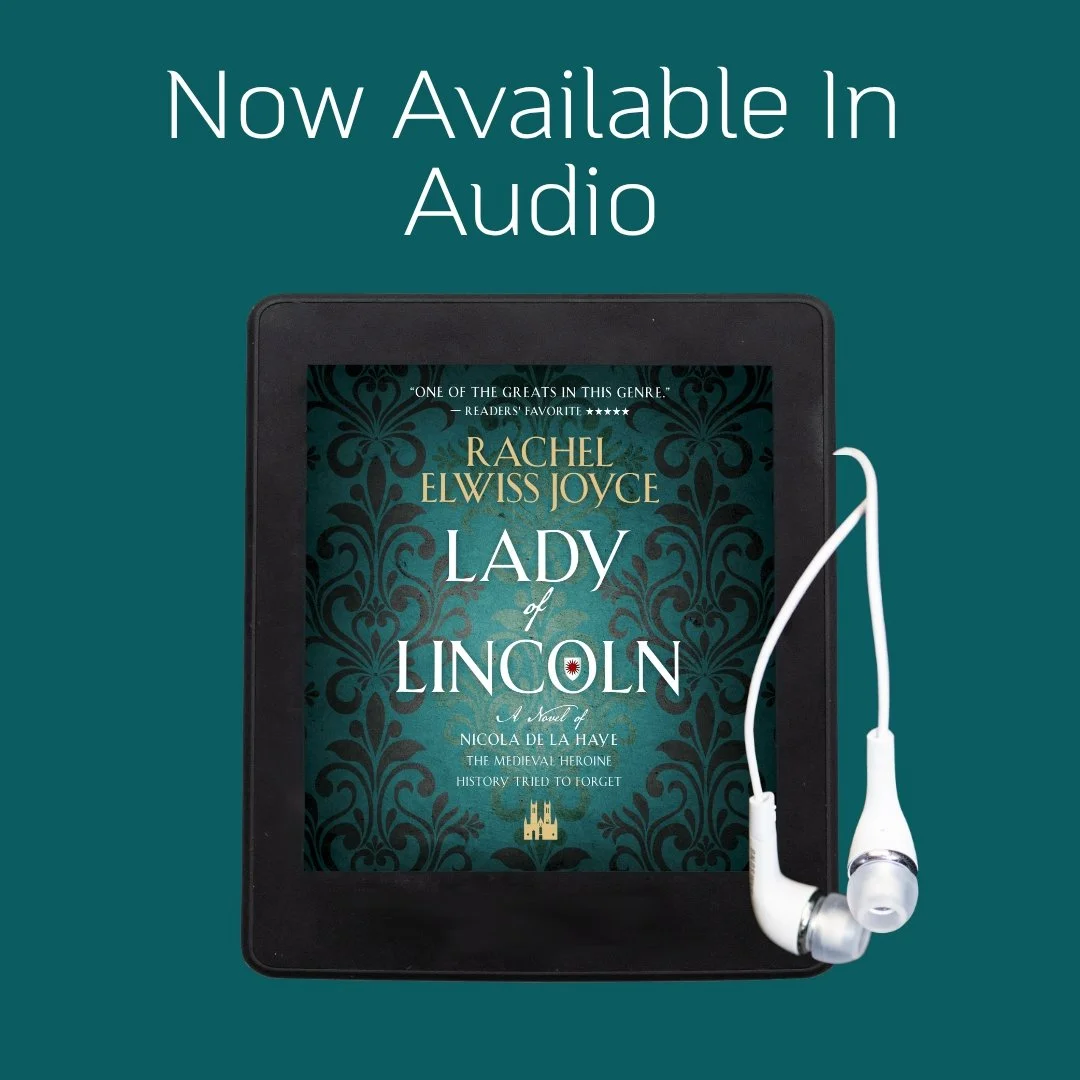
🎧 Lady of Lincoln Is Now Available on Audible
There are some stories that were amazing when heard, and I’m delighted to share that Lady of Lincoln is now available in audiobook on Audible.
And the narrator, Sarah Kempton (already award-nominated), is fabulous!
Nicola de la Haye’s story: a woman who inherited a castle, defied expectation, and refused to fail her people or surrender what was hers, can now be experienced in a new way: spoken aloud, as the sounds of her world unfold around you.
This is the first book in the trilogy following the remarkable true story of the woman sometimes remembered as “the woman who saved England.” In this opening volume, we meet Nicola as a young heiress navigating loyalty, ambition, and survival in a world that doubts her capacity to lead.
Listening brings a different intimacy. The cadence of medieval names. The weight of oaths. The quiet resolve in moments when no one else sees.
If you love immersive historical fiction, I hope you’ll enjoy hearing Nicola’s story.
🎧 You can find Lady of Lincoln now on Audible. Listen to the sample for free.
Universal book link: https://books2read.com/u/4980nW
Herstory Refuses to Be Forgotten!
ady of Lincoln opens in 1168, when a fourteen-year-old Nicola de la Haye stood in the barracks of Lincoln Castle, a young girl surrounded by sleeping soldiers, determined to help a boy who didn't belong. It was a small act of defiance in a world that would soon demand much larger ones.
I'm honoured to share that Lady of Lincoln has been named a semi-finalist in the 2025 Chanticleer Chaucer Awards for Early Historical Fiction.
The novel has already won awards, and this is a highly prestigious one. Chuffed as I am, it’s not really about awards and recognition that I can weave a good tale (although I’m thrilled about that!). It's about what Nicola's story represents—a woman who inherited a barony and a castle in her own right, who found herself caught between impossible loyalties when her husband joined the Great Rebellion of 1173-4, and who chose to defend what was hers.
That’s what inspired me to write about her in the first place.

BookLife for Publishers Weekly Review of LADY OF LINCOLN
Joyce’s historical fiction debut vividly portrays Nicola de la Haye, a 12th-century noblewoman who defied societal norms to protect her legacy, family, and lands, during a time when women were largely regarded as inconsequential. Beginning in 1168, Nicola’s story emerges as one of courage and conviction, as she steps into the role of protector of her father’s Lincoln Castle, defends those who are vulnerable, and transforms from a naive girl into a formidable leader. When her father dies unexpectedly, Nicola is left to manage her own fate. Her first step on that tentative path is to wed William FitzErneis (Fitz), a match she believes is made from passion—though it’s decidedly below her station. But Nicola soon discovers that, despite her determination, the world of 12th-century England won’t make life easy for a strong, resilient woman.
Joyce intricately blends Nicola’s personal struggles—including her marriage to Fitz and later union, after his death, to Gerard de Camville—with historical events like Henry the Young King’s Great Rebellion and the martyrdom of Thomas Becket, showcasing Nicola’s resilience and leadership in a male-dominated world. She is portrayed as a multifaceted protagonist, melding vulnerability with unyielding strength, and her resourcefulness highlights the tenacity of women throughout history. Nicola’s relationships, particularly with her husbands, are nuanced and emotionally charged, reflecting the complexities of love and duty in medieval times.
The historical setting is meticulously researched, with vivid descriptions of Lincoln Castle, the surrounding countryside, and the brutal realities of medieval warfare. Joyce’s attention to detail immerses readers in the period while providing authenticity, and real historical figures like King Henry II and Prince John add depth, their interactions set against political chaos and dynastic maneuverings. Lady of Lincoln is a captivating exploration of history—depicted through the lens of a remarkable female protagonist—that explores themes of love, loss, loyalty, and resilience against a richly detailed medieval backdrop.
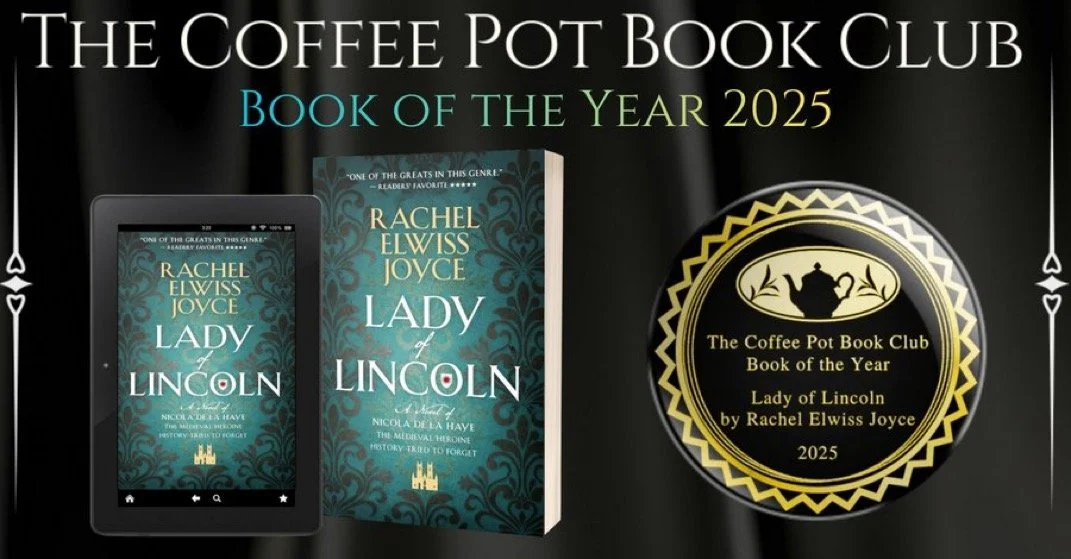
LADY OF LINCOLN Wins Book of the Year Award!
I can’t quite believe I’m posting this, but besides winning the Gold Medal for Historical Biographical Fiction, LADY OF LINCOLN won the Book of the Year Award in the Coffee Pot Book Club annual awards!
I’m so honoured that my novel has been recognised amongst such great fiction, and so pleased to have done the memory of NIcola de la Haye proud! 😀