Herstory Refuses to Be Forgotten!
Lady of Lincoln Novel Named Chaucer Award Semi-finalist!

LADY OF LINCOLN is in the semi-final for the Chaucer Award.
What does it take for a woman's voice to echo across eight centuries?
Lady of Lincoln opens in 1168, when a fourteen-year-old Nicola de la Haye stood in the barracks of Lincoln Castle, a young girl surrounded by sleeping soldiers, determined to help a boy who didn't belong. It was a small act of defiance in a world that would soon demand much larger ones.
Nicola de la Haye would go on to inherit a barony and a castle in her own right—at a time when women were expected to disappear into marriage. I'm honoured to share that Lady of Lincoln has been named a semi-finalist in the 2025 Chanticleer Chaucer Awards for Early Historical Fiction.
The novel has already won awards, and this is a highly prestigious one. Chuffed as I am, it’s not really about awards and recognition that I can weave a good tale (although I’m thrilled about that!). It's about what Nicola's story represents—a woman who inherited a barony and a castle in her own right, who found herself caught between impossible loyalties when her husband joined the Great Rebellion of 1173-4, and who chose to defend what was hers.
That’s what inspired me to write about her in the first place.
The Woman History Nearly Forgot
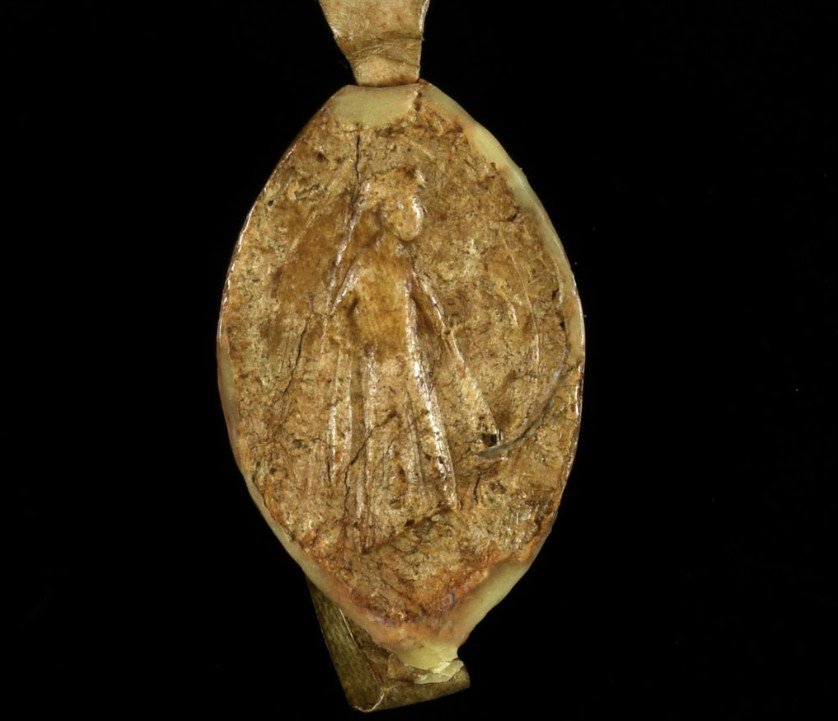
The seal of Nicola de la Haye showing one hand on her hip and a falcon on her arm.
Nicola de la Haye was also known as Nicholaa, the formal Latin version for sealing documents, and Nicole, the Norman French version, which is coincidentally the Norman French name for Lincoln. Haye was also spelled Haie and Hay and various other way.
Nicola held Lincoln Castle against rebels, the king’s justiciar, and would-be usurpers. She became the first woman ever appointed sheriff in her own right. William Marshal himself declared it would be "dishonourable not to help so brave a lady" when calling troops to relieve her castle during the siege of 1217. Yet outside of Lincoln itself, her name has faded from memory.
As Sharon Bennett Connolly (who wrote non-fiction book about Nicola) stated in her foreword of the book, women made up half the medieval population, but their presence in the historical record is minimal. Unless they were spectacularly villainous, suffered horrendously, or achieved the remarkable, chroniclers barely noticed them. Even then, they might earn only a cursory mention.
Lady of Lincoln explores the untold years of Nicola's life: the formative period before she became the "woman who saved England."
It's the story of a young woman learning what it means to command, to choose, to hold fast when the world, and the men around her, want her to yield. Set against the backdrop of the Great Rebellion, it follows Nicola as she navigates treacherous court politics, family betrayal, and the dawning realization that her inheritance—and her very survival—depend on her willingness to stand alone.
Why Historical Fiction like Lady of Lincoln is Important
The twelfth century was certainly a stormy ride: the Anarchy, the martyrdom of an Archbishop, the Great Rebellion. Royal infighting fuelled by jealousy, ambitious nobles and a church determined to stamp its authority. And amidst the chaos, it was the townspeople, the villeins, the Jews, and noblewomen like Nicola de la Haye who picked up the pieces.
Historical fiction can do what biography cannot—it can put flesh on bones, restore the sparkle to long-dead eyes, and let us walk beside these forgotten figures through their impossible choices. It can ask:
What did she think when her husband rode off to join the rebellion?
How did she learn to command men twice her age?
What did it cost her to become the woman history would barely remember to record?
This semi-finalist recognition on top of all the other awards the novel has received suggests that perhaps these stories matter—that readers are hungry for the other half of history: how what happened mattered to people; an in particular, how it mattered to ordinary people, and to the women.
🔥Forged in Fire 🔥
Nicola's story doesn't end with this novel. Lady of Lincoln covers her early years, ending as the chroniclers were just beginning to take note. The drama, the sieges, the legendary defence that would make her name—all that lies ahead in Lady of the Castle and Lady of England.
But this first book shows us how she became the woman who would refuse to yield. A young woman into a world of war, raised to protect her father’s legacy, tested by betrayal—Nicola de la Haye kept her family, her lands, and her castle safe when everything demanded she surrender.
Eight centuries later, her voice refuses to be forgotten.
Lady of Lincoln is available for pre-order. Universal book link here.