WELCOME TO RACHEL’S BLOG

Scroll down to see the most recent posts, or use the search bar to find previous blogs, news, and other updates

Medieval Stories
The York Massacre, 16 March 1190: On this Day in History

The York Massacre, 16 March 1190: On this Day in History

When England turned on its Jewish communities, and what happened when a few brave souls refused to look away

On the night of 16 March 1190, around 150 Jewish men, women, and children huddled inside a wooden tower in York Castle. Outside, a mob—some of them the city's most respectable merchants and noblemen—bayed for their blood.

By morning, almost all of them were dead.

They hadn’t committed any kind of crime, but they’d been trapped, besieged, and given a choice: forced baptism or death.

Most chose death on their own terms.

It remains one of the darkest episodes in medieval English history, and one that haunted me throughout the writing of Lady of the Castle, my upcoming historical fiction novel, the second in the Nicola de la Haye series.

The Wave of Violence

The York massacre didn’t come out of nowhere. It was the bloodiest peak of a wave of anti-Jewish violence that had been building since the accession of King Richard I in 1189. When Richard was crowned, riots broke out in London and quickly spread north—to Norwich, Stamford, King's Lynn, Lincoln, Bury St Edmunds, and York.

The causes were tangled together: religious prejudice inflamed by crusading fervour, resentment of Jewish moneylenders by nobles drowning in debt, and the age-old power of conspiracy and rumour to transform neighbours into enemies.

In some places, royal authority held. In others, it collapsed entirely.

The Dead Beneath Norwich

A medieval depiction of the persecution of Jews

We don't only know about this violence from chronicles and court records.

In 2004, construction workers digging the foundations for a shopping centre in central Norwich broke through into a medieval well. At the bottom, they found seventeen people. Six adults. Eleven children, aged roughly two to fifteen.

The bodies had been thrown in head-first. The adults had landed first, cushioning the children’s fall. Because the skeletons showed no signs of trying to break a fall, researchers concluded the victims were already dead when dropped in. All seventeen appeared to have been deposited in a single event, their bodies still complete and intact, placed in the well shortly after death.

The well lay just south of what had been Norwich’s medieval Jewish quarter. Radiocarbon dating placed the deaths between 1161 and 1216—a range that includes the recorded massacre of Norwich’s Jewish community on 6 February 1190, when, according to the chronicler Ralph de Diceto, men heading for the Crusade attacked Jewish homes before leaving the city.

DNA analysis of six of the individuals, published in 2022, confirmed what the location and circumstances had long suggested: they were almost certainly Ashkenazi Jews. Four of the six were related to each other. Three of them were sisters—the youngest between five and ten years old. A toddler boy, probably between infancy and three years of age, likely had blue eyes and red hair.

Three sisters. A red-haired toddler. Thrown into a well in the dark, and forgotten for eight hundred years.

Read More
She Didn't Wait for Permission
Nicola de la Haye, Medieval Women, Medieval Misogyny Rachel Elwiss Joyce Nicola de la Haye, Medieval Women, Medieval Misogyny Rachel Elwiss Joyce

She Didn't Wait for Permission

‍International Women's Day asks us to celebrate the women who refused to accept the limits placed upon them. Who pushed back. Who led. Who endured. And every year, we tend to look to the recent past — to suffragettes, trailblazers, and glass-ceiling-breakers of the modern era.

‍But what about the women who did all of that eight hundred years before anyone thought to name it?

‍Meet Nicola de la Haye. Sheriff of Lincolnshire. Castellan of Lincoln Castle. The woman who, in 1217, successfully defended one of England's most strategically vital fortresses against a French-backed rebel army: at the age of approximately seventy. She didn't wait for permission, and she didn’t expect plaudits: because no one was going to give it.

‍ What the Twelfth Century Said Women Were

‍The medieval world had very clear ideas about women's place in society, and those ideas were enforced from pulpit, court, and custom alike. Women were considered intellectually weaker than men, legally subordinate to their fathers and husbands, and spiritually suspect - daughters of Eve, prone to temptation and manipulation(!!!). Church fathers and contemporary writers were emphatic on the subject. Women should be silent, obedient, and invisible in public life.

‍I've explored just how relentless and inventive that misogyny was in my medieval misogyny series, including a look at the men who competed, with some enthusiasm, for the title of Worst Villain to Women of the 12th Century. It's a crowded field.

‍What Nicola de la Haye Actually Did

Nicola inherited the hereditary castellanship of Lincoln Castle from her father, and she held it through two marriages, through political upheaval, through sieges and civil wars, and with a grip that no one could prise loose. She administered justice, she negotiated with kings, defied a rogue justiciar who threatened the kingdom whilst Richard the Lionheart was on crusade, and she commanded garrisons and organised castle defences - incredibly well.

When King John's reign collapsed into civil war and a French prince threatened to take the English throne, Nicola was the one defending Lincoln.

She was also, at various points, told she was too old, too female, and too inconvenient. She resigned her position as castellan (constable), but was promptly reappointed, because no one else could do it as well as she could.

And one of King John’s last acts was to make her the first female sheriff in England - Sheriff of Lincoln.

‍This is the woman at the heart of my novel Lady of Lincoln: not a fictional heroine invented to fit a modern template, but a real woman whose story has simply been waiting to be told.

Read More
How a Birthday Party at Chinon Kickstarted a Civil War (5 March 1173)

How a Birthday Party at Chinon Kickstarted a Civil War (5 March 1173)

Today is my birthday 😁. And as birthdays go, I could have shared mine with worse people, because 5 March 1133 was also the birthday of Henry II of England, born at Le Mans, one of the most formidable rulers medieval Europe ever produced.

Henry II’s Birthday was 5th March

Soldier, lawgiver, empire-builder, father of eight legitimate children (and countless illegitimate ones), and a man whose family would become both his greatest weapon, his biggest headache, and eventually most spectacular downfall.

Which makes today a good day to talk about what happened on his fortieth birthday, in 1173. Because that evening a feast was held at Château de Chinon. The great hall would have been ablaze with candlelight and Henry, thinking he’d managed to control his spoiled, entitled (but courteous and generous) namesake son, allowed the goblets to be repeatedly refilled by his son’s own hand.

The drunkenness that followed led to everything that followed: the Great Rebellion, where Henry’s family were torn apart, and his throne would never feel secure again.

This event, and the Great Rebellion itself, runs through the heart of my novel Lady of Lincoln.

Read More
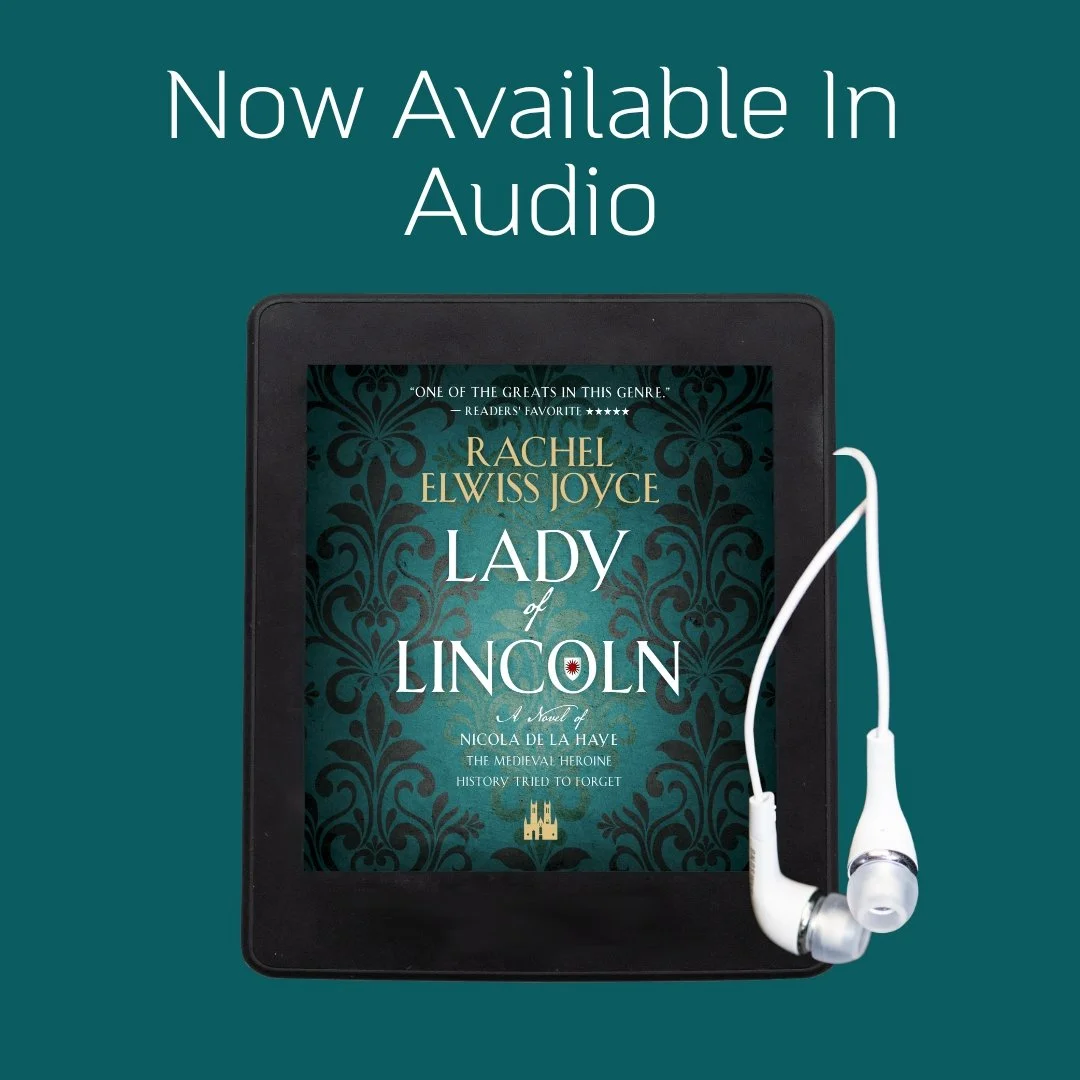
🎧 Lady of Lincoln Is Now Available on Audible
Lady of Lincoln, Historical Fiction Rachel Elwiss Joyce Lady of Lincoln, Historical Fiction Rachel Elwiss Joyce

🎧 Lady of Lincoln Is Now Available on Audible

There are some stories that were amazing when heard, and I’m delighted to share that Lady of Lincoln is now available in audiobook on Audible.

And the narrator, Sarah Kempton (already award-nominated), is fabulous!

Nicola de la Haye’s story: a woman who inherited a castle, defied expectation, and refused to fail her people or surrender what was hers, can now be experienced in a new way: spoken aloud, as the sounds of her world unfold around you.

This is the first book in the trilogy following the remarkable true story of the woman sometimes remembered as “the woman who saved England.” In this opening volume, we meet Nicola as a young heiress navigating loyalty, ambition, and survival in a world that doubts her capacity to lead.

Listening brings a different intimacy. The cadence of medieval names. The weight of oaths. The quiet resolve in moments when no one else sees.

If you love immersive historical fiction, I hope you’ll enjoy hearing Nicola’s story.

🎧 You can find Lady of Lincoln now on Audible. Listen to the sample for free.

Universal book link: https://books2read.com/u/4980nW
Read More
Big News: Lady of the Castle Shortlisted for the HNS First Chapter Competition

Big News: Lady of the Castle Shortlisted for the HNS First Chapter Competition

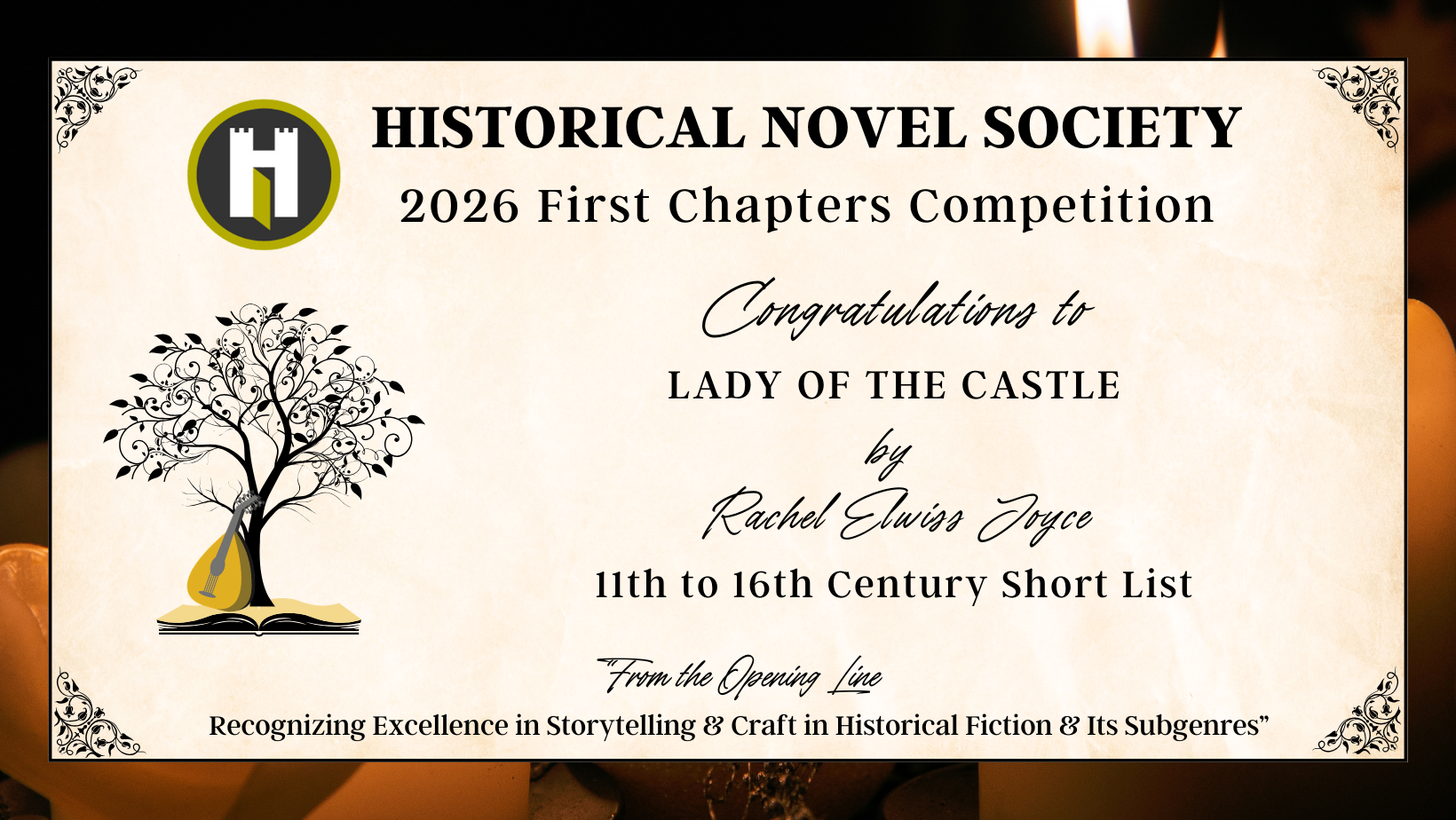
Lady of the Castle has been shortlisted for the Historical Novel Society's First Chapter Competition before it’s even been published, and and I'm still doing a happy dance about it! 🥳

This is my second Nicola de la Haye novel, still unpublished, still being polished, but somehow its opening chapter caught the attention of the HNS judges in the competitive 11th–16th Century Category. 😀

The competition honours exactly what makes historical fiction electric: that first page that drops you into another century and refuses to let go. Nicola de la Haye - castellan, survivor, one of medieval England's most remarkable women - has a story worth telling, and it’s wonderful that Lady of Lincoln has already won so many awards, but also that Lady of the Castle is being credited even before the book even exists in final form!

Lady of the Castle continues where Lady of Lincoln left off, following Nicola through the treacherous politics and passions of the late 12th century. I'm deep in final revisions. You can track my writing and publishing progress here.

Stay tuned!

Read More
She Was Almost Written Out of History, But Today, She Takes Back Her Story

She Was Almost Written Out of History, But Today, She Takes Back Her Story

Lady of Lincoln is officially here, and the woman history almost forgot is ready to be remembered.

Today is publication day for Lady of Lincoln, and I won't pretend I'm not emotional. This book, and this woman, has lived in my heart for years.

Nicola de la Haye was real. She inherited Lincoln Castle, commanded a garrison, defied kings, and at nearly seventy years old, held her fortress against the forces of Prince Louis of France in a siege and then a battle that may have changed the course of English history. Without her, England might be speaking French today.

And yet, until now, you've almost certainly never heard her name.

I hope that ends today.

Read More
The Saxon Secret to Avoiding a Bad Ruler

The Saxon Secret to Avoiding a Bad Ruler

What if the worst rulers in English history didn't have to happen?

Bad kings - the weak, the cruel, the catastrophically incompetent - weren't inevitable. They were the consequence of a system that handed the most powerful job in the kingdom to whoever happened to emerge from the right womb in the right order!

Primogeniture, succession by (male) birth order, gave England Edward II, whose personal failings and political incompetence ended in his deposition and probable murder. It gave England Richard II, whose erratic tyranny triggered a constitutional crisis and cost him his throne. It gave England Henry VI, whose mental collapse plunged the country into thirty years of civil war. These weren't accidents of fate. They were what happens when a system prioritises birth order over every other human quality.

But before the Normans locked this system in place, the Anglo-Saxons did something far more interesting.

The Aetheling System: Choose the Best, Not the First

Read More
Nicola de la Haye

Nicola de la Haye

The inspiration of Brienne of Tarth, Nicola de la Haye saved England twice. Watch the video below and discover the legend. (Spoilers alerts!).

And when you’ve finished, it’s time to find out more about the medieval heroine, the world she lived in, the corrupt men she had to deal with, and how the medieval badass sorted them all out!

Buy the first book in the Nicola de la Haye series, Lady of Lincoln, here.

Read More
Muriel of Lincoln
Norman Invasion, Saxon England, Medieval England, LIncoln Rachel Elwiss Joyce Norman Invasion, Saxon England, Medieval England, LIncoln Rachel Elwiss Joyce

Muriel of Lincoln

Nicola de la Haye held Lincoln Castle against a French siege and saved England, and everyone remembers her name.

Almost no one remembers her grandmother.

Muriel of Lincoln didn't lead armies or defy kings in any spectacular fashion, but without her calculated survival and strategic positioning, there would be no Nicola, no legend, no castle defense that changed the course of English history.

This is the story of the invisible foundation upon which greatness was built.

The Survivor's Daughter

After 1066, most Saxon lords lost everything—their lands, their titles, their entire futures disappeared as William the Conqueror handed England to his Norman knights like spoils of war.

But Muriel's father, Colswein of Lincoln, somehow managed to keep his holdings, and the Domesday Book provides the documentary proof of this remarkable survival.

This wasn't luck or accident—this was cold, hard value in the eyes of the new regime. The Normans needed more than swords and intimidation to actually rule England in any sustainable way; they needed local networks, local loyalty, and men who could make occupation feel less like conquest and more like legitimate governance. Colswein was one of those rare men who proved too useful to destroy, whose cooperation was worth more than his elimination.

And the fastest, most permanent way to lock in that kind of usefulness? Marriage between the old world and the new.

Read More
LADY OF LINCOLN is available on NetGalley!

LADY OF LINCOLN is available on NetGalley!

For a limited time only, Lady of Lincoln is available for Netgalley reviewers and librarians to read and review.

If you love immersive historical fiction based on real characters and strong women protagonists, then this novel is for you!

Get your copy here: https://www.netgalley.com/catalog/book/787763 or click the image above.

More on Lady of LIncoln:

1173. Nicola de la Haye will inherit great estates and Lincoln Castle—one of England's most strategic fortresses, but the medieval world is a man's world and her father arranges a marriage to secure her estates. She chooses love instead, causing her world to collapse. King Henry II punishes her. Her husband betrays her and joins a rebellion. Powerful men circle her inheritance like wolves.

LADY OF LINCOLN is the award-winning first book in the true story of Nicola de la Haye—the woman who would become England's first female sheriff and, years later, save the realm from a French invasion. But that triumph is still distant. This is where it begins: with a young woman learning what defiance costs, and what it takes to survive.

"A towering, epic saga… one of the greats in this genre." — Readers' Favorite ★★★★★

Read More
Lady of Lincoln Gallops into the Chaucer Awards

Lady of Lincoln Gallops into the Chaucer Awards

I’m delighted to share some wonderful news: Lady of Lincoln has been named a Finalist in the Chanticleer International Chaucer Award for Historical Fiction.

It feels especially fitting to imagine Lady of Lincoln galloping into this space. The novel tells the true story of Nicola de la Haye, a medieval noblewoman who refused to be sidelined in a world designed for men, and who quite literally rode into danger to defend her lands, her people, and her legacy.

The Chaucer Award celebrates historical fiction that brings the past vividly to life, honouring works grounded in strong research, compelling storytelling, and memorable characters. To see Nicola’s story recognised in this way is deeply meaningful.

Thank you to Chanticleer for championing historical fiction, and to every reader who has ridden alongside Nicola on her journey so far. More news to come: the ride is far from over.

Read More
Herstory Refuses to Be Forgotten!
Nicola de la Haye, Historical Fiction, Awards Rachel Elwiss Joyce Nicola de la Haye, Historical Fiction, Awards Rachel Elwiss Joyce

Herstory Refuses to Be Forgotten!

ady of Lincoln opens in 1168, when a fourteen-year-old Nicola de la Haye stood in the barracks of Lincoln Castle, a young girl surrounded by sleeping soldiers, determined to help a boy who didn't belong. It was a small act of defiance in a world that would soon demand much larger ones.

I'm honoured to share that Lady of Lincoln has been named a semi-finalist in the 2025 Chanticleer Chaucer Awards for Early Historical Fiction.

The novel has already won awards, and this is a highly prestigious one. Chuffed as I am, it’s not really about awards and recognition that I can weave a good tale (although I’m thrilled about that!). It's about what Nicola's story represents—a woman who inherited a barony and a castle in her own right, who found herself caught between impossible loyalties when her husband joined the Great Rebellion of 1173-4, and who chose to defend what was hers.

That’s what inspired me to write about her in the first place.

Read More
Feasts, Folklore & Boar: A Medieval Christmas with a Dash of Wild Hunt Magic

Feasts, Folklore & Boar: A Medieval Christmas with a Dash of Wild Hunt Magic

Christmas is coming; and if you think today’s festive spread is decadent, just imagine what a medieval English banquet looked like! Long before turkeys were discovered in America, people from monks to monarchs gathered round a banquet table groaning with pies, ale, spiced wine, and one very impressive centrepiece: the boar’s head.

Read More
BookLife for Publishers Weekly Review of LADY OF LINCOLN
Lady of Lincoln, Book Review Rachel Elwiss Joyce Lady of Lincoln, Book Review Rachel Elwiss Joyce

BookLife for Publishers Weekly Review of LADY OF LINCOLN

Joyce’s historical fiction debut vividly portrays Nicola de la Haye, a 12th-century noblewoman who defied societal norms to protect her legacy, family, and lands, during a time when women were largely regarded as inconsequential. Beginning in 1168, Nicola’s story emerges as one of courage and conviction, as she steps into the role of protector of her father’s Lincoln Castle, defends those who are vulnerable, and transforms from a naive girl into a formidable leader. When her father dies unexpectedly, Nicola is left to manage her own fate. Her first step on that tentative path is to wed William FitzErneis (Fitz), a match she believes is made from passion—though it’s decidedly below her station. But Nicola soon discovers that, despite her determination, the world of 12th-century England won’t make life easy for a strong, resilient woman.

Joyce intricately blends Nicola’s personal struggles—including her marriage to Fitz and later union, after his death, to Gerard de Camville—with historical events like Henry the Young King’s Great Rebellion and the martyrdom of Thomas Becket, showcasing Nicola’s resilience and leadership in a male-dominated world. She is portrayed as a multifaceted protagonist, melding vulnerability with unyielding strength, and her resourcefulness highlights the tenacity of women throughout history. Nicola’s relationships, particularly with her husbands, are nuanced and emotionally charged, reflecting the complexities of love and duty in medieval times.

The historical setting is meticulously researched, with vivid descriptions of Lincoln Castle, the surrounding countryside, and the brutal realities of medieval warfare. Joyce’s attention to detail immerses readers in the period while providing authenticity, and real historical figures like King Henry II and Prince John add depth, their interactions set against political chaos and dynastic maneuverings. Lady of Lincoln is a captivating exploration of history—depicted through the lens of a remarkable female protagonist—that explores themes of love, loss, loyalty, and resilience against a richly detailed medieval backdrop.

Read More
Another Accolade for LADY OF LINCOLN!
Book Award, Book Reviews, Lady of Lincoln, Nicola de la Haye Rachel Elwiss Joyce Book Award, Book Reviews, Lady of Lincoln, Nicola de la Haye Rachel Elwiss Joyce

Another Accolade for LADY OF LINCOLN!

Besides winning a gold medal and ‘Book of the Year’ from the Coffee Pot Book Club, a ‘Notable Book’ Award from BlueInk Review (their highest accolade), and Five Stars from Reader’s Favorite, LADY OF LINCOLN has now been shortlisted for the Chaucer Award by the Chanticleer International Book Awards!.

Read More
LADY OF LINCOLN Wins Book of the Year Award!

LADY OF LINCOLN Wins Book of the Year Award!

I can’t quite believe I’m posting this, but besides winning the Gold Medal for Historical Biographical Fiction, LADY OF LINCOLN won the Book of the Year Award in the Coffee Pot Book Club annual awards!

I’m so honoured that my novel has been recognised amongst such great fiction, and so pleased to have done the memory of NIcola de la Haye proud! 😀

Read More
LADY OF LINCOLN wins the Gold Medal Award!
Book Award, Lady of Lincoln, Nicola de la Haye Rachel Elwiss Joyce Book Award, Lady of Lincoln, Nicola de la Haye Rachel Elwiss Joyce

LADY OF LINCOLN wins the Gold Medal Award!

I’m absolutely thrilled that LADY OF LINCOLN has won the Gold Medal in the Historical Biographical Fiction category in the Coffee Pot Book Club ‘Book of the Year’ awards!

I cannot thank the committee enough for recognising the novel, the hard work in putting it together, but also Nicola de la Haye’s story!

Read More