WELCOME TO RACHEL’S BLOG
Scroll down to see the most recent posts, or use the search bar to find previous blogs, news, and other updates
Fastrada: Charlemagne’s Queen History Tried to Forget
Charlemagne is usually thought of as the iron-willed king, crowned Emperor of the Romans in 800, architect of a European empire and champion of learning and reform. What we never hear about, however, are the women who stood beside him: women whose influence shaped politics, justice, and the fragile stability of his realm.
One of the most controversial of these women was Fastrada, Charlemagne’s fourth wife and queen, a woman remembered less for what she did than for how male chroniclers chose to describe her.
A Frankish Noblewoman in a Dangerous Court
Fastrada was born into the high Frankish nobility around the mid-8th century, the daughter of Count Radulf. Her marriage to Charlemagne in 783 was not a romantic match but a strategic one, strengthening ties between powerful families within the Frankish heartlands. This was a period when Charlemagne’s empire was expanding rapidly through conquest, forced conversion, and ruthless suppression of revolt.
Queens in the Carolingian world were not crowned consorts in the later medieval sense, but they were far from ornamental. They managed households, acted as intermediaries, dispensed patronage, and, crucially, advised the king. Fastrada arrived at court at a moment when Charlemagne’s rule was under strain from internal rebellion, particularly in Saxony.
“Cruel” Queen or Convenient Scapegoat?
Our surviving sources paint Fastrada in dark colours. Einhard, Charlemagne’s biographer, describes her as harsh and cruel, claiming that her influence made the king more severe in judgement. Later chroniclers echoed this, blaming her for brutal punishments meted out against rebels and dissenters.
But this raises an uncomfortable question: Was Fastrada truly cruel, or was she blamed for decisions Charlemagne himself made?
Early medieval queens were often held responsible when kings ruled harshly. Advising firmness could easily be reframed as bloodthirstiness, especially when the adviser was a woman. Fastrada’s reputation may tell us more about medieval anxieties over female influence than about her actual character.
It is worth noting that Charlemagne’s most notorious acts of brutality, including the mass executions of Saxons, predated and outlasted Fastrada’s life. Yet only she became a symbol of excessive severity.
Henry II of England – The Jailer of Queens
When Henry of Anjou (later Henry II, also known as Henry Plantagenet) married Eleanor of Aquitaine in 1152, they created a political alliance of breath taking scale. Henry was heir to the English throne; Eleanor, just divorced from King Louis VII of France, brought with her the duchy of Aquitaine, one of the wealthiest and most independent regions in Europe.
For a time, their marriage was a true partnership. Eleanor rode beside Henry on campaign, governed Aquitaine in his name, and bore him eight children. Together, they forged the Angevin Empire stretching from the Scottish borders to the Pyrenees.
But power and passion soured into mistrust. By the 1170s, the marriage had collapsed into open hostility.
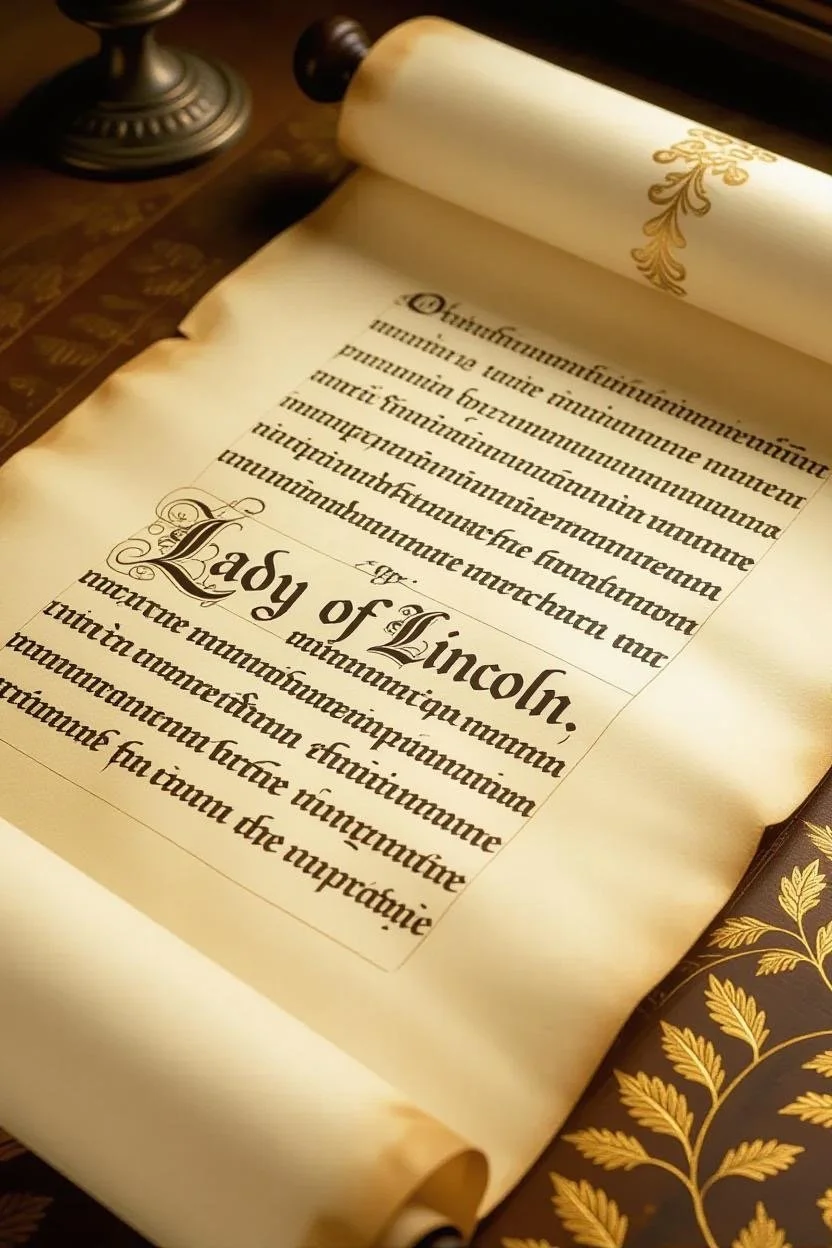
A Michaelmas Announcement: Lady of Lincoln
I am delighted to announce the title of my debut novel:
Lady of Lincoln: A Novel of Nicola de la Haye, a Woman Born to Lead in a Man’s World, a Medieval Heroine History Tried to Forget
This is Book One of my Nicola de la Haye Trilogy, based on the extraordinary life of the castellan of Lincoln—a woman who defied kings, commanded armies, and became one of the most remarkable heroines of medieval England.
The full back-cover blurb will be revealed later, but here’s a teaser glimpse:
Lady of Lincoln tells the true story of Nicola de la Haye, the young noblewoman who inherited Lincoln Castle, braved rebellion and betrayal, and fought to lead in a world that told her she could not.
On this Michaelmas, as the medieval year turned toward winter, I’m excited to turn a new page in sharing Nicola’s story with you.
Stay tuned for the cover reveal, official blurb, and more glimpses into the history behind the novel.
Matthew of Boulogne — The Count Who Kidnapped a Nun
In 1160, Matthew seized Marie from Romsey Abbey and forced her into marriage. Chroniclers condemned the act as a violation of holy vows. John of Salisbury, writing in the period, described the outrage with which churchmen viewed the marriage. It was a scandal even by the rough standards of the age.
Marie was wrenched from her abbey, stripped of her religious identity, and thrust into the role of countess against her will. For women in the Middle Ages, the cloister was often seen as protection from such forced unions — but not for Marie.
She Wasn’t Supposed to Matter…
She didn’t set out to defy anyone. She didn’t burn with ambition, or plot her way to power. She was young. She wanted love. She was raised to trust men to handle the weight of responsibility. And yet, by the time her story was done, she’d held command of one of England’s greatest castles, faced down rebellions, navigated the treachery and ambition of the marriage market, and made choices that shaped the future of a kingdom.
The Battle of Fornham: When a Countess Rode to War and Changed Medieval England Forever
In the mist-shrouded dawn of October 17, 1173, near the quiet Suffolk village of Fornham St. Genevieve, history was about to witness something remarkable. Not just another medieval battle between king and rebels, but the extraordinary tale of a countess who donned armor, took up lance and shield, and rode into battle alongside her husband against the Crown itself.
This is the story of Petronilla de Grandmesnil, Countess of Leicester – a woman whose courage would echo through the centuries, and whose fall into a muddy ditch would become one of the most memorable moments of medieval English warfare.