WELCOME TO RACHEL’S BLOG
Scroll down to see the most recent posts, or use the search bar to find previous blogs, news, and other updates
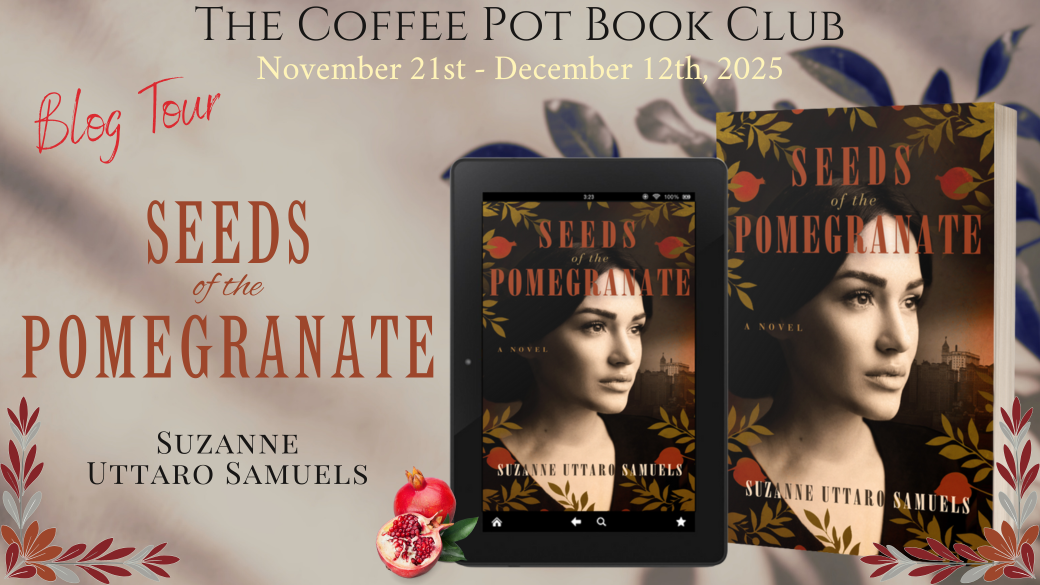
Seeds of the Pomegranate by Suzanne Uttaro Samuels
I’m very pleased to be hosting Seeds of the Pomegranate on the blog tour today, a novel not just in the historical Fiction genre, but also women’s fiction, immigrant (Sicilian, no less…) fiction, heritage fiction, and gangland crime fiction!!
I’ve got an excerpt from the author (see below), but first, the blurb:
A gritty story of a woman learning to survive in 20th century Gangland New York
In early 20th-century Sicily, noblewoman Mimi Inglese, a talented painter, dreams of escaping the rigid expectations of her class by gaining admission to the Palermo Art Academy. But when she contracts tuberculosis, her ambitions are shattered. With the Sicilian nobility in decline, she and her family leave for New York City in search of a fresh start.
Instead of opportunity, Mimi is pulled into the dark underbelly of city life and her father’s money laundering scheme. When he is sent to prison, desperation forces her to put her artistic talent to a new use—counterfeiting $5 bills to keep her family from starvation and, perhaps, to one day reclaim her dream of painting. But as Gangland violence escalates and tragedy strikes, Mimi must summon the courage to flee before she is trapped forever in a life she never wanted.
From Sicily’s sun-bleached shores to the crowded streets of immigrant New York, Seeds of the Pomegranate is a story of courage, art, and the women who refused to disappear.
Zenobia of Palmyra: the Queen Who Defied Rome
In the third century CE, as Rome teetered on the brink of fragmentation, a woman from the desert city of Palmyra rose to challenge the empire itself.
Her name was Zenobia — scholar, strategist, queen, and for a brief, extraordinary moment, empress of the East.
Richard de Brito: The Forgotten Killer; and a very Dangerous Friend
In legend he struck the final blow; in fiction, he will cause a torrent of trouble for his friend William FitzErneis in Lady of Lincoln.
When Archbishop Thomas Becket was cut down before the altar of Canterbury Cathedral in December 1170, the man who delivered the fatal stroke was Richard de Brito—sometimes styled le Breton. His sword, witnesses said, split Becket’s skull so deeply that the blade snapped on the flagstones.
Unlike the other knights, de Brito cried out as he struck:
“Take that for the love of my lord William FitzEmpress!”
The words stunned those who heard them. He was killing the archbishop not in Henry II’s name, but in that of Henry’s brother—the late William FitzEmpress, Henry II’s brother.
Book Review: Ripples Through Time by Christina Courtenay
A fun timeslip modern-day and Viking era set romance novel, Christina Courtney’s tale ticks all the right boxes.
An attractive man and woman in modern day England, brought together by unhappy circumstances. An attractive Viking (Norse) man and a Saxon woman in England, brought together by unhappy circumstances.
There are family betrayals and jealousy, buried treasure, and two kind people, attracted to each other—in both timelines!
And did I mention the fantastic setting—Viking invaded Saxon England? Swords and axes, healing herbs, and ancient stone monuments to the dead...
What Remains is Hope by Bonnie Suchman
Today’s Coffee Pot Blog Tour features What Remains is Hope, a Holocaust saga. I’m providing an excerpt (see below), but first, take a look at the book description:
Beginning in 1930s Germany and based on their real lives, four cousins as close as siblings—Bettina, Trudi, Gustav, and Gertrud—share the experiences of the young, including first loves, marriages, and children.
Bettina, the oldest, struggles to help her parents with their failing business. Trudi dresses in the latest fashions and tries to make everything look beautiful. Gustav is an artist at heart and hopes to one day open a tailoring shop. Gertrud, the youngest, is forced by her parents to keep secrets, but that doesn’t stop her from chasing boys. However, over their seemingly ordinary lives hangs one critical truth—they’re Jewish—putting them increasingly at risk.
When World War II breaks out, the four are still in Germany or German-occupied lands, unable or unwilling to leave. How will these cousins avoid the horrors of the Nazi regime, a regime that wants them dead? Will they be able to avoid the deportations and concentration camps that have claimed their fellow Jews? Danger is their constant companion, and it will take hope and more to survive.
Vibia Sabina: Empress, Wife of Hadrian
I bet that if you think of Emperor Hadrian, you think about his great wall in the north of England. Possibly you might think of the Roman decadence of villas and statues made from marble. Yet beside him, often erased from the narrative, stood Vibia Sabina, his wife and Rome’s empress for more than four decades.
Her likeness survives on hundreds of coins, but her voice does not. She remains one of antiquity’s most silent women.
Ravenscourt by Samantha Ward-Smith
He wanted to be gone from the dark enclosing room, with its mocking misery, to be gone from this house of nightmares, of shattered dreams, and discovered secrets which could not be put back in the box.
Venice, 1880.
Alexander, Viscount Dundarran, seeks refuge from scandal amidst the fading grandeur of crumbling palazzos during the infamous Carnival in the city. There he encounters the enigmatic Lady Arabella Pembrook—a young, beautiful widow. Both are scarred by their pasts but find solace in each other and a chance at redemption.
But when duty calls Alexander back to England upon his father's death, a darker journey begins. Travelling to Ravenscourt, the decaying estate once belonging to Arabella’s late husband, Alexander must confront the house’s disturbing legacy which has echoed through the generations. Within its walls lie secrets that refuse to stay buried and will threaten everything he thought he knew. But can Alex uncover the truth in time?
Hugh de Morville: The Knight Who Would Not Repent
Lord of Westmorland and Knaresborough, de Morville escaped execution, but not history’s judgment.
When Thomas Becket fell beneath the knights’ swords on that winter night in Canterbury, Hugh de Morville was there, but whether he struck or simply stood aside remains one of history’s greyest shadows.
He was the oldest of the four and the most powerful: Lord of Westmorland and Knaresborough, baron of the north, and keeper of one of the most formidable castles in England. While Reginald FitzUrse raged, William de Tracy hesitated, and Richard de Brito delivered the fatal blow, de Morville watched . But his silence proved to be as damning as any sword.
Lady of Lincoln Receives a 5-Star Review from The Coffee Pot Book Club!
I’m absolutely delighted, and a little bit overwhelmed, to share that Lady of Lincoln has received a 5-star review from the highly respected Coffee Pot Book Club!
For those who don’t know, The Coffee Pot Book Club is one of the most trusted and independent voices in the historical fiction community, known for its thoughtful, in-depth reviews and support for authors who bring history vividly to life.
As a debut author, it’s both humbling and thrilling to have Lady of Lincoln recognised by such an esteemed platform.
Claudia Procula, Pontius Pilate’s wife
Most of us know Pontius Pilate — the Roman governor who condemned Jesus to death. But how many of us know the woman who tried to stop him?
Claudia Procula (sometimes called Procula or Procla) appears only once in the New Testament, yet her brief act of conscience made her one of the most intriguing women in early Christian history, a woman caught between empire, superstition, and moral conviction.
A Virtuoso in America: Adrian by Fred Raymond Goldman
Today’s Coffee Pot Blog Tour features A Virtuoso in America: Adrian, book two in the Holocaust-related series. I’m providing an excerpt (see below), but first, take a look at the book description.
How do you reconcile a decision you made in the past when the world erupts in war, threatening the life of someone you love and believe you were protecting?
Adrian Mazurek immigrated to the United States from Krakow, Poland, 14 years ago and is now a successful violin soloist and concertmaster of The Eleventh State Symphony Orchestra in New York. But despite his outward success, Adrian is inwardly harboring a shameful secret, one he has not revealed to anyone.
William de Tracy: The Penitent Knight of Canterbury
William de Tracy helped slay Thomas Becket—then sought forgiveness on a pilgrimage to Rome and the Holy Land. Can a murderer find redemption?
On that bitter December evening in 1170, when Thomas Becket, the Archbishop of Canterbury, fell beneath four flashing swords, one of those four blades belonged to Sir William de Tracy. Chroniclers called him the calmest of the murderers; steady-handed, methodical, a man who believed he was acting under royal command. Yet for the rest of his life, remorse and infamy would drive him abroad.
Zipporah, the Wife of Moses
Most people, when they think of Moses, imagine him standing alone before Pharaoh or parting the Red Sea. Yet at his side was a woman—a wife, a foreigner, and a figure of quiet defiance: Zipporah, daughter of Jethro of Midian.
Who Was Zipporah?
Zipporah appears only briefly in the Book of Exodus, but her presence is unforgettable. She was one of seven daughters of a Midianite priest. When Moses fled Egypt after killing an overseer, he found refuge in Midian— and at a well, defended Jethro’s daughters from abusive shepherds. In gratitude, Jethro offered him hospitality and the hand of his daughter, Zipporah.
That is the story’s surface, but beneath it lies something far more intriguing: a woman who stepped outside her cultural boundaries to follow a fugitive foreigner; who raised children between two worlds; who faced the weight of Moses’s divine calling and still kept her own courage.
What Remains by Erryn Lee
Today I’m hosting ‘What Remains’ on the Coffee Pot Book Club Blog Tour. First, the fascinating blurb, perfect for the time of year, then I’ll showcase an excerpt from the author.
What Remains is a haunting dual-timeline mystery that bridges centuries-and secrets-between ancient Rome and the modern world.
LADY OF LINCOLN UPDATE
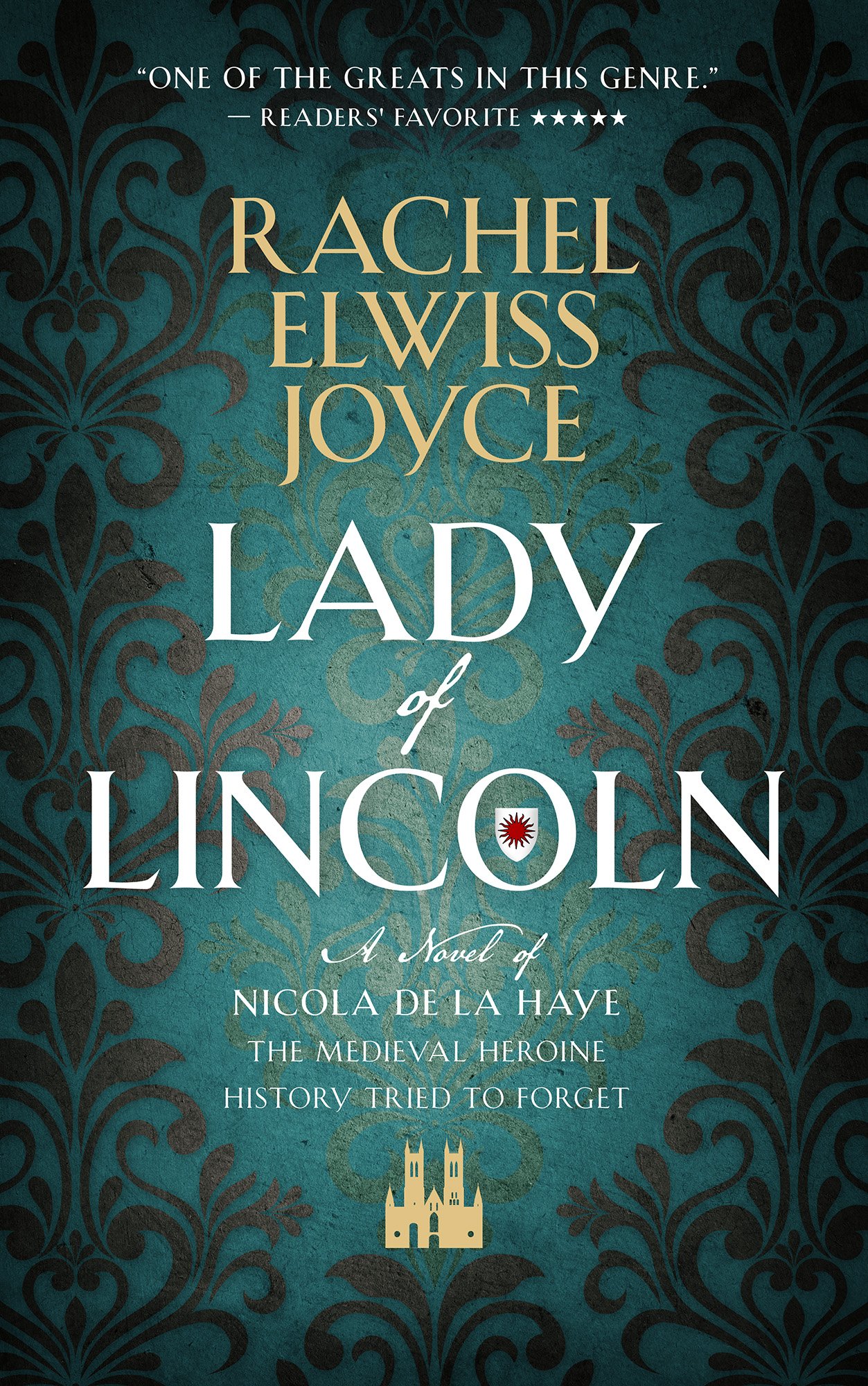
I’m thrilled to announce the full book description/ blurb of my upcoming novel, LADY OF LINCOLN is ready to read! I do hope you like it. 🙏
Reginald FitzUrse: The Bear Knight Who Slayed a Saint
On 29 December 1170, four armed knights pushed through the freezing rain towards Canterbury Cathedral. Their leader was Reginald FitzUrse—a man whose very name meant “son of the bear.” He would live up to it in every sense: fierce, proud, and dangerously impulsive.
When Thomas Becket fell beneath their swords that night, FitzUrse’s roar echoed through the nave. It was he who first laid hands on the archbishop, striking the blow that turned a quarrel between king and church into one of the most shocking crimes of the Middle Ages.
A Knight of the King’s Household
Little is known of FitzUrse’s early life. He came from a respectable Somerset family, holding lands at Willeton and Barham. Like many younger sons of the gentry, he found advancement in royal service. By the 1160s he was one of Henry II’s household knights—trusted, well-paid, and fiercely loyal to the king who rewarded courage and obedience above all else.
That loyalty, however, would prove fatal.
All Souls’ Day: Soul Cakes, Prayer and Memory
As the bells of All Saints’ Day fall silent, a gentler sound takes their place — the slow, measured knell for the departed. 2 November, All Souls’ Day, was the moment when the living turned their hearts toward those still journeying through Purgatory.
The season of light ended not in mourning, but in hope — that love and prayer could reach beyond the grave. The word soul comes from Old English sawol, “the spiritual essence of a person.”
The “Mass of Souls,” or Soul Mass Day, was first proclaimed in 998 AD by Abbot Odilo of Cluny. He ordered that every monastery in his order should celebrate a Mass for “all the faithful departed.” From Cluny, the custom spread throughout Europe.
Yet its roots run deep into pagan soil. Romans had their Parentalia, a spring festival for the dead where families brought cakes and wine to tombs. Celts laid food on thresholds at Samhain to honour their ancestors. Christianity sanctified these gestures, and the offering of food became the offering of prayer.
All Hallows’ Day: The Feast of All Saints
After the shadowed vigil of All Hallows’ Eve came the brightness of All Hallows’ Day—later called Hallowmas.
The name joins hallow (Old English hālga, “holy person”) and mass (from Latin missa, “Eucharistic service”).
It was the day when the Church lifted its gaze from the souls still journeying toward heaven to those who had already arrived.
Altars were dressed in white, bells rang across town and countryside, and processions wound through streets lit by candles. The message was clear: the darkness of death had been overcome by the light of sainthood.