WELCOME TO RACHEL’S FICTION WRITING AND REVIEWS BLOG
This is where Rachel keeps you up to date with her novels and stories and also shares reviews, highlights and extracts from other authors.

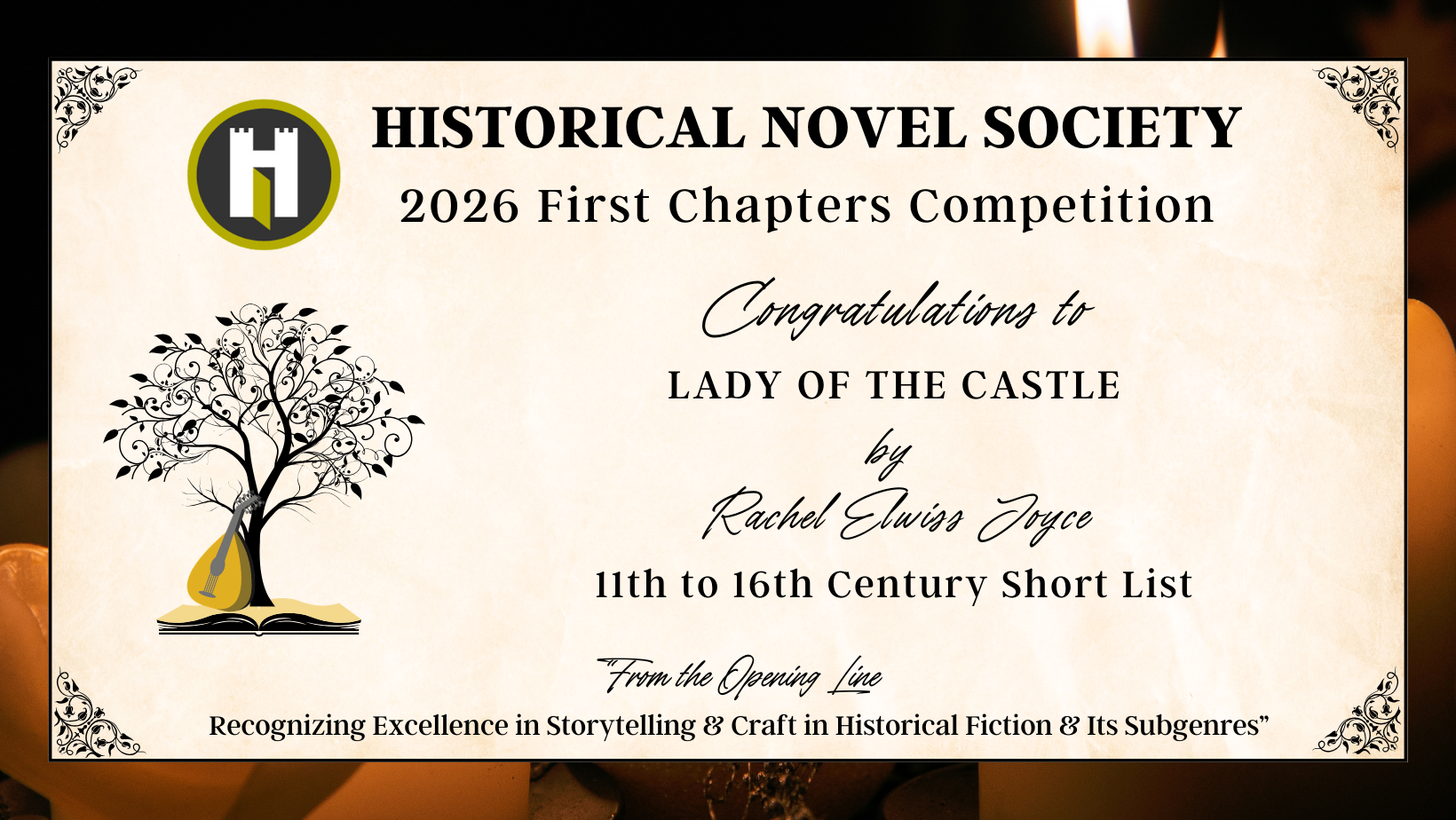
Big News: Lady of the Castle Shortlisted for the HNS First Chapter Competition
Lady of the Castle has been shortlisted for the Historical Novel Society's First Chapter Competition before it’s even been published, and and I'm still doing a happy dance about it! 🥳
This is my second Nicola de la Haye novel, still unpublished, still being polished, but somehow its opening chapter caught the attention of the HNS judges in the competitive 11th–16th Century Category. 😀
The competition honours exactly what makes historical fiction electric: that first page that drops you into another century and refuses to let go. Nicola de la Haye - castellan, survivor, one of medieval England's most remarkable women - has a story worth telling, and it’s wonderful that Lady of Lincoln has already won so many awards, but also that Lady of the Castle is being credited even before the book even exists in final form!
Lady of the Castle continues where Lady of Lincoln left off, following Nicola through the treacherous politics and passions of the late 12th century. I'm deep in final revisions. You can track my writing and publishing progress here.
Stay tuned!
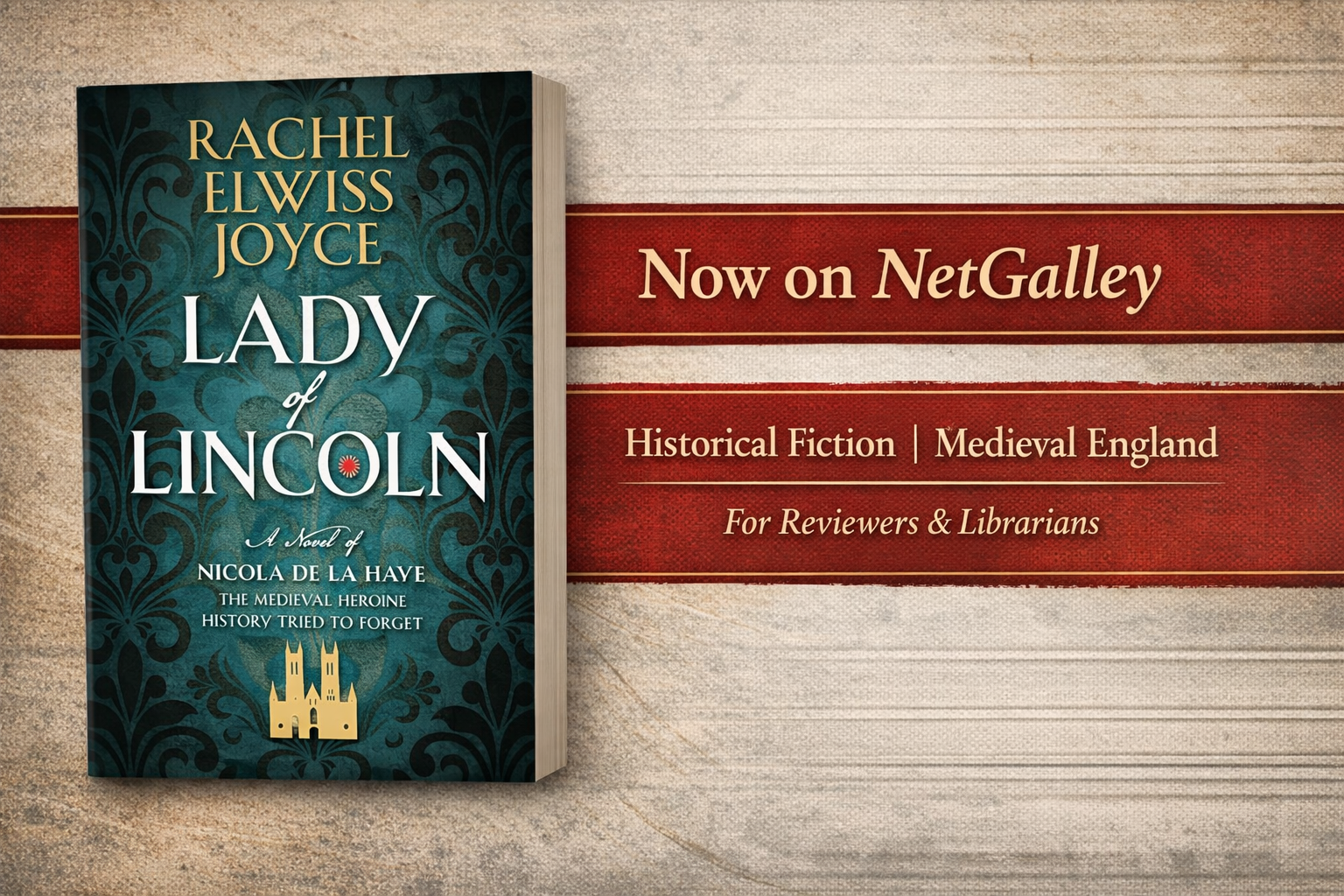
LADY OF LINCOLN is available on NetGalley!
For a limited time only, Lady of Lincoln is available for Netgalley reviewers and librarians to read and review.
If you love immersive historical fiction based on real characters and strong women protagonists, then this novel is for you!
Get your copy here: https://www.netgalley.com/catalog/book/787763 or click the image above.
More on Lady of LIncoln:
1173. Nicola de la Haye will inherit great estates and Lincoln Castle—one of England's most strategic fortresses, but the medieval world is a man's world and her father arranges a marriage to secure her estates. She chooses love instead, causing her world to collapse. King Henry II punishes her. Her husband betrays her and joins a rebellion. Powerful men circle her inheritance like wolves.
LADY OF LINCOLN is the award-winning first book in the true story of Nicola de la Haye—the woman who would become England's first female sheriff and, years later, save the realm from a French invasion. But that triumph is still distant. This is where it begins: with a young woman learning what defiance costs, and what it takes to survive.
"A towering, epic saga… one of the greats in this genre." — Readers' Favorite ★★★★★

Lady of Lincoln Receives a 5-Star Review from The Coffee Pot Book Club!
I’m absolutely delighted, and a little bit overwhelmed, to share that Lady of Lincoln has received a 5-star review from the highly respected Coffee Pot Book Club!
For those who don’t know, The Coffee Pot Book Club is one of the most trusted and independent voices in the historical fiction community, known for its thoughtful, in-depth reviews and support for authors who bring history vividly to life.
As a debut author, it’s both humbling and thrilling to have Lady of Lincoln recognised by such an esteemed platform.

LADY OF LINCOLN and the Cutting Room Floor…
I’m incredibly lucky that Sharon Bennett Connolly of ‘HISTORY… THE INTERESTING BITS’ has very kindly agreed to provide the forward for my upcoming, Chaucer Award long-listed, novel, LADY OF LINCOLN. As the non-fiction biographer of Nicola (Nicholaa) de la Haye, there couldn’t be a better (or nicer) person to introduce the book.
But that meant there was no reason to keep the original preface I had prepared.
Instead of losing it to the cutting room floor, I thought instead I would publish it here as a taster and introduction to who Nicola was. Please see below:
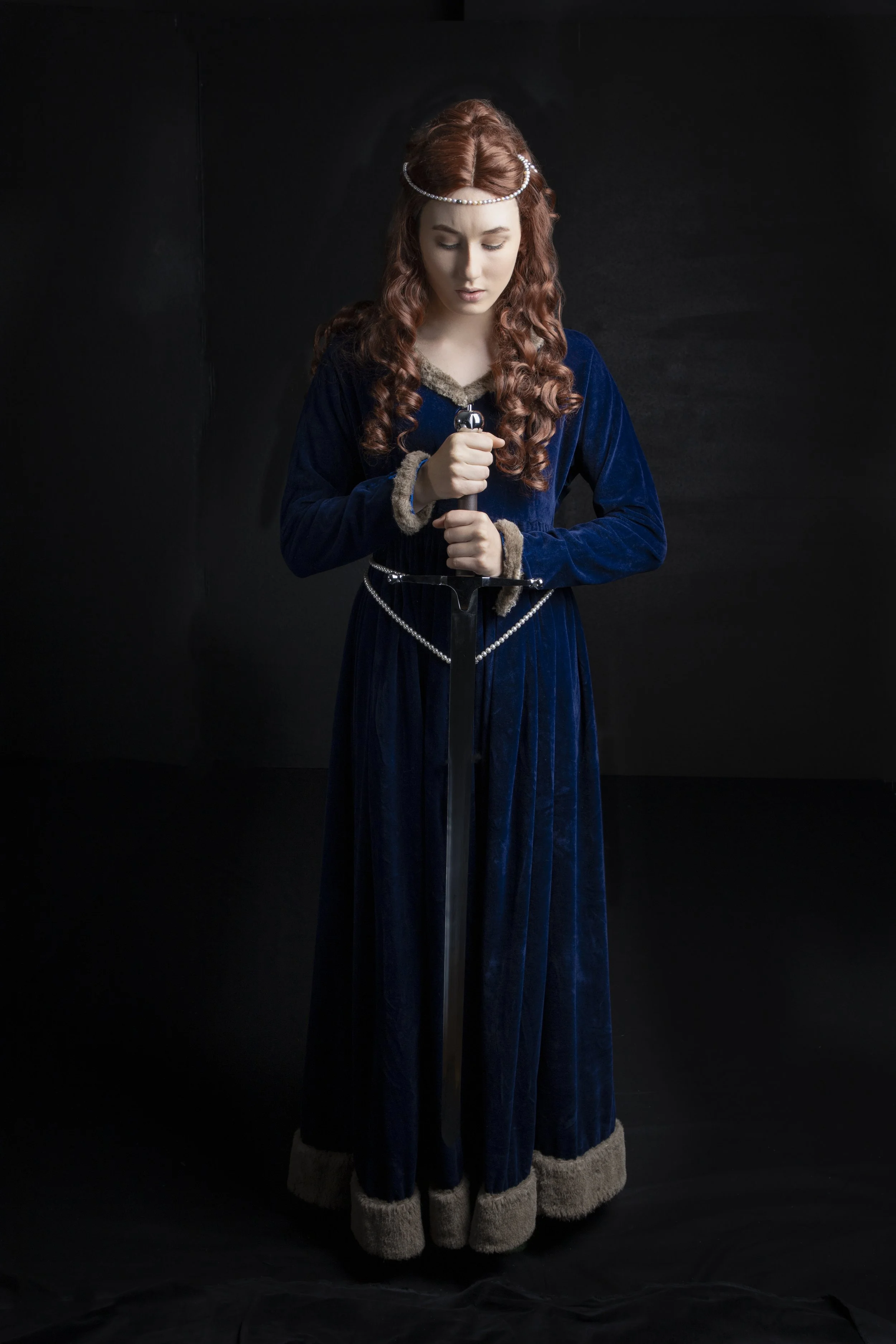
The Secret Is Out: The Heroine of Rachel’s Upcoming Novel is… Nicola de la Haye
My protagonist is Nicola (Nicholaa) de la Haye: the woman who saved England.
Nicola isn’t a creation of legend or folklore. She was real — a formidable 12th- and 13th-century noblewoman who defied the expectations of her age. She inherited power in her own right, commanded a castle garrison, and twice (at least) defended Lincoln Castle from siege.
Most famously, in 1217, when England teetered on the edge of conquest by Prince Louis of France, Nicola — then nearly seventy years old — refused to surrender her castle. She held the fortress until William Marshal’s army turned the tide in what chroniclers called the Battle of Lincoln Fair (or the Second Battle of Lincoln). Without her, England’s story might have ended very differently.