WELCOME TO RACHEL’S FICTION WRITING AND REVIEWS BLOG
This is where Rachel keeps you up to date with her novels and stories and also shares reviews, highlights and extracts from other authors.


Lady of Lincoln Awarded the Prestigious BlueInk ‘Notable Book’ Seal!
I’m delighted to share some wonderful news:
Lady of Lincoln has been awarded the BlueInk Notable Book Seal — an honour reserved for a very small number of books judged to be of exceptional merit.
BlueInk Review is one of the publishing industry’s most respected editorial review services, created by professional critics and editors who have written for outlets such as Publishers Weekly, Kirkus, and major newspapers.
The Notable Book Seal is BlueInk’s highest distinction, highlighting titles that stand out for their literary quality, authenticity, and craftsmanship. Fewer than five percent of submissions receive this accolade.
Here’s some of what the reviewer wrote about Lady of Lincoln:
“Joyce’s rich characterization unfolds against a vivid, meticulously researched historical backdrop… a gripping account of courage amid the brutal realities of civil war.”
For a historical novel rooted in the real life of Nicola de la Haye, England’s indomitable Lady of Lincoln Castle, this accolade is deeply meaningful. It celebrates not only the countless hours of research and writing but also the historical women who refused to be forgotten.
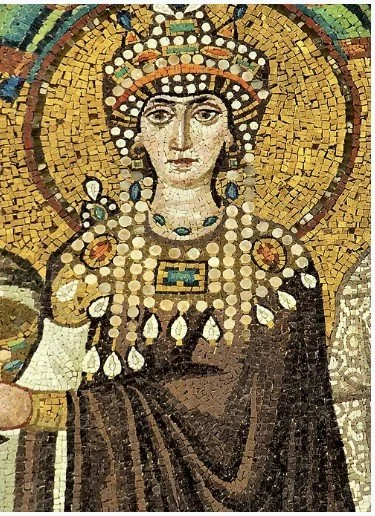
Empress Theodora of Byzantium: She Saved an Empire
The latest in the blog series is a special treat for me. I’ve long been fascinated, but a bit in the dark, about the Byzantine Empire.
But it seems few women of the early Middle Ages rose as far—or have been judged as harshly—as Empress Theodora of Byzantium. Rising from the margins of Constantinople’s theatre world to become one of the most powerful women in imperial history, Theodora’s story is one of intelligence, ambition, resilience, and reinvention. And like so many extraordinary women, she was both celebrated and vilified by her contemporaries.
Who Was Empress Theodora?
Born around 500 CE, Theodora started life far from the purple. Her father was a bear trainer for the Hippodrome’s Blue faction, and after his death, Theodora and her sisters were pushed into the theatre—an environment that in Byzantium sat somewhere between entertainment, politics, and scandal. According to the hostile historian Procopius (more on him later), Theodora’s early life involved performance, satire, and possibly sex work—though his account is so malicious that modern historians tread carefully.
What we do know is that Theodora was:
Exceptionally intelligent, known for her quick wit and sharp political instincts
Socially mobile in a rigid society, rising from performer to respected mistress of the imperial court
Deeply religious, eventually embracing Monophysite Christianity
A political partner, not merely a wife, to Emperor Justinian I
When Justinian became emperor in 527 CE, Theodora ruled alongside him as Augusta, wielding extraordinary influence—sometimes surpassing that of her husband.
The Nika Riots: A Moment That Defined an Empress



Medieval Advent
Everyone is talking about what they have in their advent calendars: chocolates, toys, even Star Wars characters! Advent also brings to mind glittering candles on wreaths, festive jumpers, Christmas markets, mulled wine, and the countdown to Christmas morning.
I haven’t met a single person (other than fellow medieval fiction authors) who have any idea that for medieval people, Advent was not a season of indulgence or celebration. It was a period of fasting, penance, self-examination, and preparation for the Second Coming rather than Santa’s sleigh.
The earliest evidence for Advent appears in the 4th century, particularly in Gaul and Spain, where Christians observed a multi-week fast before Epiphany rather than Christmas. This early “Nativity Fast” resembled Lent: No meat, no dairy, no rich foods, no marital relations (yes, this was explicitly addressed!). By the 6th century, Rome formalised a four-week liturgical season leading up to Christmas. But unlike today’s “anticipatory joy,” medieval Advent preached repentance, vigilance, and apocalyptic expectation.
The focus wasn’t solely on celebrating Christ’s birth. Advent was designed to prepare the soul for Christ’s return in judgement. Medieval sermons emphasised humility, fear of sin, confession, charitable giving, and moral renewal. The message was clear: Christmas might be coming, but so was Judgement Day!
If modern Advent is “countdown to the festivities,” medieval Advent was “brace yourself and prepare your soul.”