WELCOME TO RACHEL’S FICTION WRITING AND REVIEWS BLOG
This is where Rachel keeps you up to date with her novels and stories and also shares reviews, highlights and extracts from other authors.

🎧 Lady of Lincoln Is Now Available on Audible
There are some stories that were amazing when heard, and I’m delighted to share that Lady of Lincoln is now available in audiobook on Audible.
And the narrator, Sarah Kempton (already award-nominated), is fabulous!
Nicola de la Haye’s story: a woman who inherited a castle, defied expectation, and refused to fail her people or surrender what was hers, can now be experienced in a new way: spoken aloud, as the sounds of her world unfold around you.
This is the first book in the trilogy following the remarkable true story of the woman sometimes remembered as “the woman who saved England.” In this opening volume, we meet Nicola as a young heiress navigating loyalty, ambition, and survival in a world that doubts her capacity to lead.
Listening brings a different intimacy. The cadence of medieval names. The weight of oaths. The quiet resolve in moments when no one else sees.
If you love immersive historical fiction, I hope you’ll enjoy hearing Nicola’s story.
🎧 You can find Lady of Lincoln now on Audible. Listen to the sample for free.
Universal book link: https://books2read.com/u/4980nW
LADY OF LINCOLN is available on NetGalley!
For a limited time only, Lady of Lincoln is available for Netgalley reviewers and librarians to read and review.
If you love immersive historical fiction based on real characters and strong women protagonists, then this novel is for you!
Get your copy here: https://www.netgalley.com/catalog/book/787763 or click the image above.
More on Lady of LIncoln:
1173. Nicola de la Haye will inherit great estates and Lincoln Castle—one of England's most strategic fortresses, but the medieval world is a man's world and her father arranges a marriage to secure her estates. She chooses love instead, causing her world to collapse. King Henry II punishes her. Her husband betrays her and joins a rebellion. Powerful men circle her inheritance like wolves.
LADY OF LINCOLN is the award-winning first book in the true story of Nicola de la Haye—the woman who would become England's first female sheriff and, years later, save the realm from a French invasion. But that triumph is still distant. This is where it begins: with a young woman learning what defiance costs, and what it takes to survive.
"A towering, epic saga… one of the greats in this genre." — Readers' Favorite ★★★★★
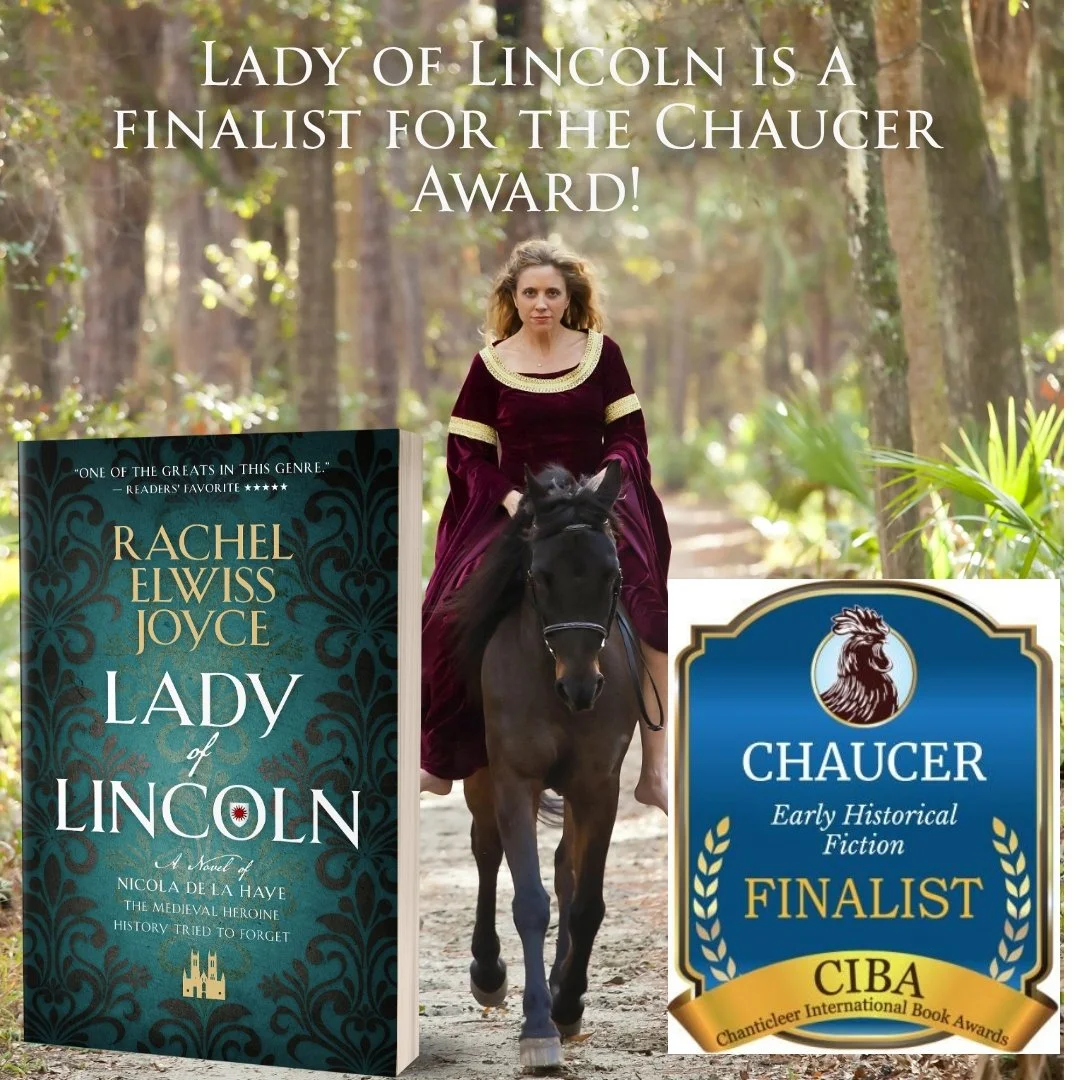
Lady of Lincoln Gallops into the Chaucer Awards
I’m delighted to share some wonderful news: Lady of Lincoln has been named a Finalist in the Chanticleer International Chaucer Award for Historical Fiction.
It feels especially fitting to imagine Lady of Lincoln galloping into this space. The novel tells the true story of Nicola de la Haye, a medieval noblewoman who refused to be sidelined in a world designed for men, and who quite literally rode into danger to defend her lands, her people, and her legacy.
The Chaucer Award celebrates historical fiction that brings the past vividly to life, honouring works grounded in strong research, compelling storytelling, and memorable characters. To see Nicola’s story recognised in this way is deeply meaningful.
Thank you to Chanticleer for championing historical fiction, and to every reader who has ridden alongside Nicola on her journey so far. More news to come: the ride is far from over.
LADY OF LINCOLN Wins Book of the Year Award!
I can’t quite believe I’m posting this, but besides winning the Gold Medal for Historical Biographical Fiction, LADY OF LINCOLN won the Book of the Year Award in the Coffee Pot Book Club annual awards!
I’m so honoured that my novel has been recognised amongst such great fiction, and so pleased to have done the memory of NIcola de la Haye proud! 😀
Bloodbath at the Lionheart’s Coronation
We remember Richard the Lionheart as a crusader king, a warrior who fought Saladin, and whose name resounded across Christendom. But for England’s Jews, his reign began in fire and betrayal.
Benedict of York’s story embodies that betrayal. Beaten at the doors of Westminster Hall, baptised by a friend who meant him no harm, denied even a grave among his people, his fate symbolises the peril of being both essential and despised in medieval England.