WELCOME TO RACHEL’S BLOG
Scroll down to see the most recent posts, or use the search bar to find previous blogs, news, and other updates
Muriel of Lincoln
Nicola de la Haye held Lincoln Castle against a French siege and saved England, and everyone remembers her name.
Almost no one remembers her grandmother.
Muriel of Lincoln didn't lead armies or defy kings in any spectacular fashion, but without her calculated survival and strategic positioning, there would be no Nicola, no legend, no castle defense that changed the course of English history.
This is the story of the invisible foundation upon which greatness was built.
The Survivor's Daughter
After 1066, most Saxon lords lost everything—their lands, their titles, their entire futures disappeared as William the Conqueror handed England to his Norman knights like spoils of war.
But Muriel's father, Colswein of Lincoln, somehow managed to keep his holdings, and the Domesday Book provides the documentary proof of this remarkable survival.
This wasn't luck or accident—this was cold, hard value in the eyes of the new regime. The Normans needed more than swords and intimidation to actually rule England in any sustainable way; they needed local networks, local loyalty, and men who could make occupation feel less like conquest and more like legitimate governance. Colswein was one of those rare men who proved too useful to destroy, whose cooperation was worth more than his elimination.
And the fastest, most permanent way to lock in that kind of usefulness? Marriage between the old world and the new.
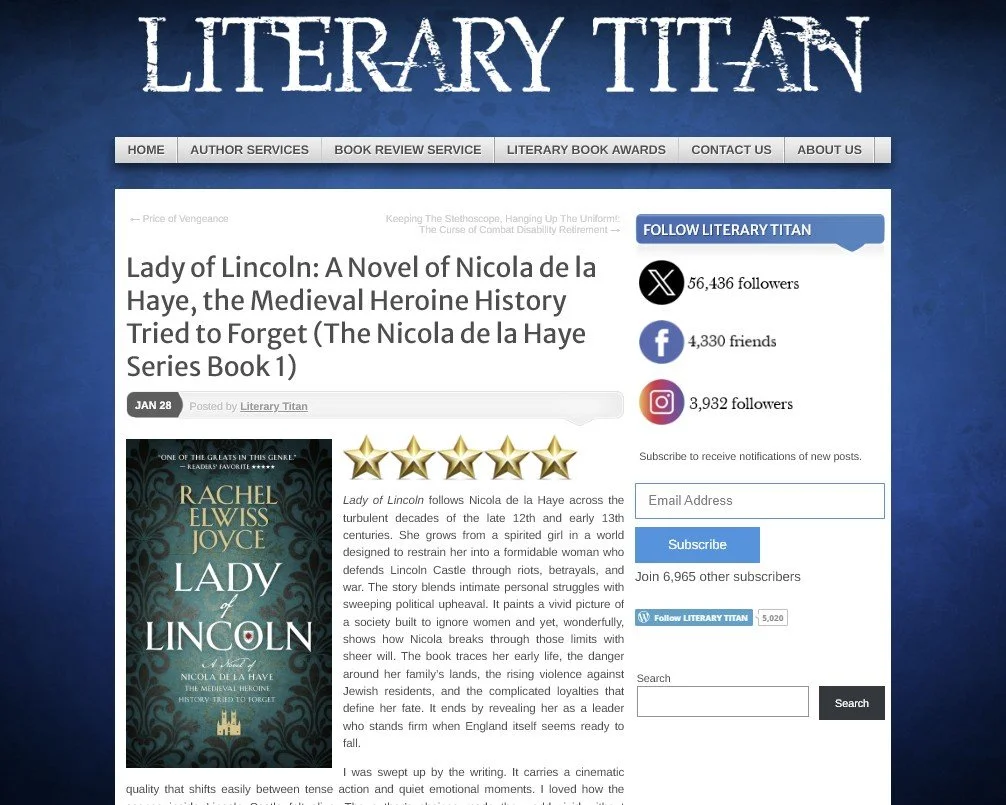
Literary Titan Gives LADY OF LINCOLN 5 Stars! ⭐⭐⭐⭐⭐
I’m thrilled to share that Lady of Lincoln, the first book in The Nicola de la Haye Series, has just been reviewed by Literary Titan and received five stars!
This thoughtful review recognises the emotional depth, historical richness, and narrative heart of a story that brings a forgotten woman back to life.
Here are a few stand-out quotes from the review that really capture what makes this novel special:
“Emotional without turning sentimental, rich without turning dense, and dramatic without losing grip on the people at its center.” — Literary Titan
This line highlights what I most hoped to achieve: not just a vivid historical setting, but a story that resonates emotionally without ever feeling overwrought.
“Nicola’s struggle against the constraints of her gender, her grief, and her desire to shape her own future felt honest and raw.” — Literary Titan
One of the most powerful parts of Nicola’s journey is how she confronts not just external enemies, but the limitations society imposes on her simply because she is a woman. I’m so glad the review recognised the emotional honesty behind that arc.
“A vivid, emotionally charged tale that turns a forgotten heroine into an unforgettable force.” — Literary Titan
It’s always humbling to see Nicola described as “unforgettable.” She was real, and her truly inspiring story deserves to be remembered.

Goodreads Giveaway!
I'm excited to announce a Goodreads giveaway for my award-winning novel, Lady of Lincoln! Enter now to win a copy and discover the award-winning story of Nicola de la Haye—a woman who commanded in a man's world and changed the course of English history.
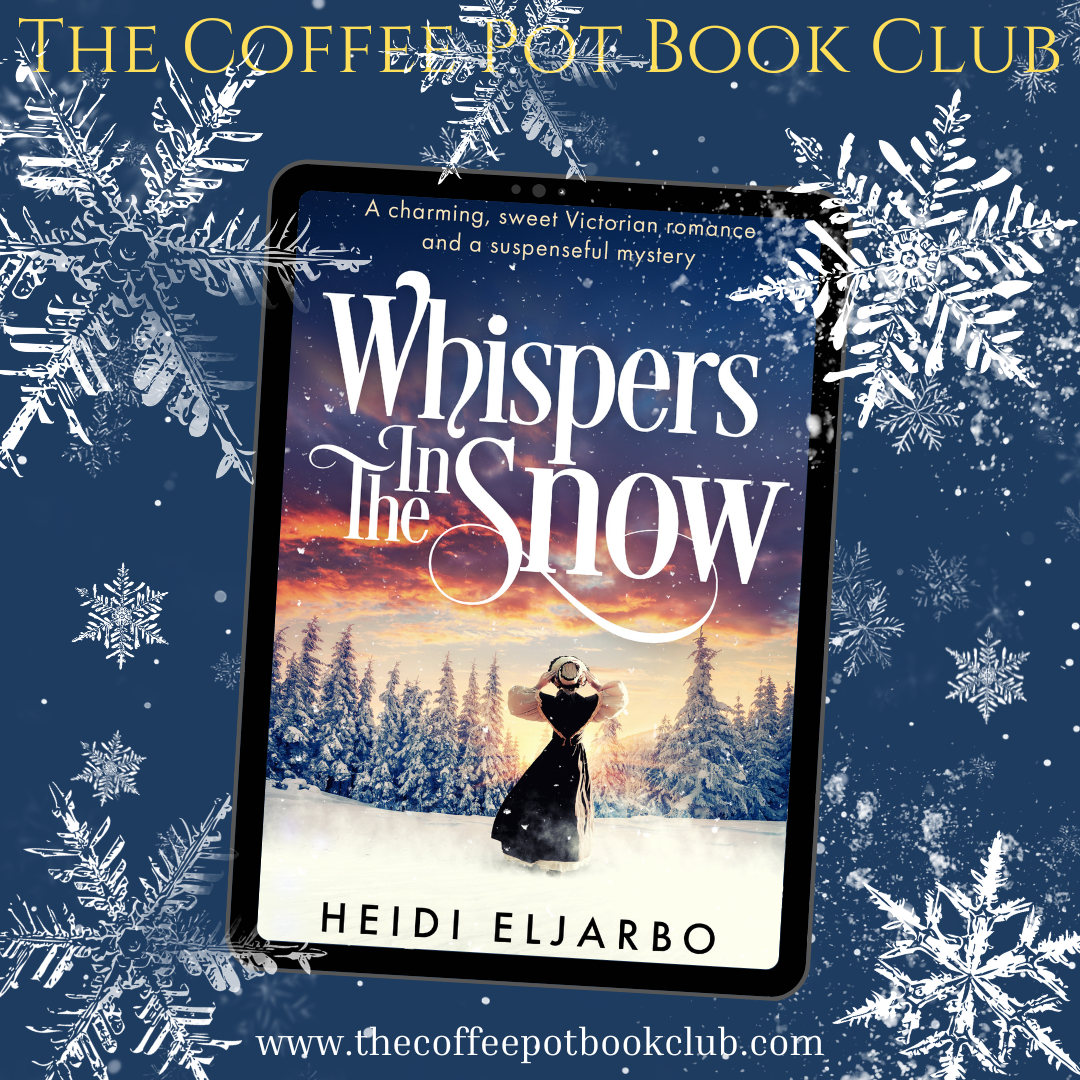
LADY OF LINCOLN is available on NetGalley!
For a limited time only, Lady of Lincoln is available for Netgalley reviewers and librarians to read and review.
If you love immersive historical fiction based on real characters and strong women protagonists, then this novel is for you!
Get your copy here: https://www.netgalley.com/catalog/book/787763 or click the image above.
More on Lady of LIncoln:
1173. Nicola de la Haye will inherit great estates and Lincoln Castle—one of England's most strategic fortresses, but the medieval world is a man's world and her father arranges a marriage to secure her estates. She chooses love instead, causing her world to collapse. King Henry II punishes her. Her husband betrays her and joins a rebellion. Powerful men circle her inheritance like wolves.
LADY OF LINCOLN is the award-winning first book in the true story of Nicola de la Haye—the woman who would become England's first female sheriff and, years later, save the realm from a French invasion. But that triumph is still distant. This is where it begins: with a young woman learning what defiance costs, and what it takes to survive.
"A towering, epic saga… one of the greats in this genre." — Readers' Favorite ★★★★★
Lady of Lincoln Gallops into the Chaucer Awards
I’m delighted to share some wonderful news: Lady of Lincoln has been named a Finalist in the Chanticleer International Chaucer Award for Historical Fiction.
It feels especially fitting to imagine Lady of Lincoln galloping into this space. The novel tells the true story of Nicola de la Haye, a medieval noblewoman who refused to be sidelined in a world designed for men, and who quite literally rode into danger to defend her lands, her people, and her legacy.
The Chaucer Award celebrates historical fiction that brings the past vividly to life, honouring works grounded in strong research, compelling storytelling, and memorable characters. To see Nicola’s story recognised in this way is deeply meaningful.
Thank you to Chanticleer for championing historical fiction, and to every reader who has ridden alongside Nicola on her journey so far. More news to come: the ride is far from over.
The Relic Keeper by Heidi Eljarbo
I’m thrilled today to be spotlighting the late-Renaissance historical novel, The Relic Keeper by Heidi Eljarbo, with Christian themes about hope and love.
Inspired by Gerrit van Honthorst’s masterpiece, The Adoration of the Child, and the novel Oliver Twist by Charles Dickens.
Italy, 1620.
Angelo is an orphan, lonely and forgotten. Having been passed on from one family to the next, he ends up as a common thief, subject to and under the thumb of a ruthless robber called Tozzo.
Angelo knows no other life and has lost hope that any chance of providence will ever replace his lonely, misfortunate existence. When he loses his master, his livelihood is shaken. Tozzo’s plunder is hidden in a safe place, but what will happen if someone comes after Angelo to get their hands on the stolen relics? More than that, he feels threatened by words he’s heard too many times; that he’ll always remain unforgiven and doomed.
One day, a priest invites Angelo to help with chores around the church and rectory and, in exchange, offers him room and board. Padre Benedetto’s kindness and respect are unfamiliar and confusing, but Angelo’s safety is still a grave concern. Two older robbers have heard rumors about the hidden treasures and will stop at nothing to attain them.
With literary depictions and imagery, Angelo’s story is a gripping and emotional journey of faint hope and truth in seventeenth-century Italy—an artistic and audacious tale that crosses paths with art collector Vincenzo Giustiniani and the powerful Medici family.
Using invisible threads, Heidi Eljarbo weaves together her fictional stories with historical figures and real events.
Eleanor of Vermandois
In the shadowed corridors of twelfth-century French history stands a woman whose story has been largely forgotten—Eleanor of Vermandois (c. 1148–1213). Born into one of medieval Europe's most controversial families, Eleanor's life was marked by political intrigue, personal tragedy, and remarkable resilience as she navigated a world where powerful men controlled women's destinies.
If you're planning to read my popular, and currently free, historical novella Eleanor's Revenge, the first section of this post is spoiler-free, introducing Eleanor and her family background. Further down, after a clear spoiler warning, I delve into the full dramatic arc of her life.
A Scandalous Beginning
Eleanor's very existence was rooted in scandal. Her parents' marriage in 1142 triggered one of the most notorious affairs of the medieval period. Her father, Raoul I, Count of Vermandois, was the powerful seneschal of France and cousin to King Louis VII. Her mother, Petronilla of Aquitaine, was the younger sister of the legendary Eleanor of Aquitaine, who would become Queen of both France and England.
Their love story began at the French court around 1141, when Petronilla met the much older, married Raoul. With her sister's encouragement and the king's approval, Raoul secured an annulment from his first wife, Eleanor of Blois, on dubious grounds of consanguinity. Three compliant bishops—one of whom was Raoul's own brother—officiated at Raoul and Petronilla's wedding in early 1142.
Book Review: A Brotherly Devotion by Jill Bray
I thoroughly enjoyed this historical whodunnit and would recommend.
It started with action (the murder) and kept going. It took me a chapter or so to get into the writing, but the story was so engaging I was immersed by chapter 2.
I really love stories that contain more than one plot, and where the various plots intertwine. This story, with murders, a love triangle, paternalistic misogyny (when doesn’t that happen in medieval times, me thinks…), the peasants revolting because there isn’t enough food, and out-of-touch, wealthy churchmen and class divides, gave a fun and interesting read.
LADY OF LINCOLN scoops up another Gold Medal Award!
Lady of Lincoln, the historical novel about Nicola de la Haye, has won the Reader’s Choice Gold Medal Award
Herstory Refuses to Be Forgotten!
ady of Lincoln opens in 1168, when a fourteen-year-old Nicola de la Haye stood in the barracks of Lincoln Castle, a young girl surrounded by sleeping soldiers, determined to help a boy who didn't belong. It was a small act of defiance in a world that would soon demand much larger ones.
I'm honoured to share that Lady of Lincoln has been named a semi-finalist in the 2025 Chanticleer Chaucer Awards for Early Historical Fiction.
The novel has already won awards, and this is a highly prestigious one. Chuffed as I am, it’s not really about awards and recognition that I can weave a good tale (although I’m thrilled about that!). It's about what Nicola's story represents—a woman who inherited a barony and a castle in her own right, who found herself caught between impossible loyalties when her husband joined the Great Rebellion of 1173-4, and who chose to defend what was hers.
That’s what inspired me to write about her in the first place.