WELCOME TO RACHEL’S BLOG

Scroll down to see the most recent posts, or use the search bar to find previous blogs, news, and other updates

Medieval Stories
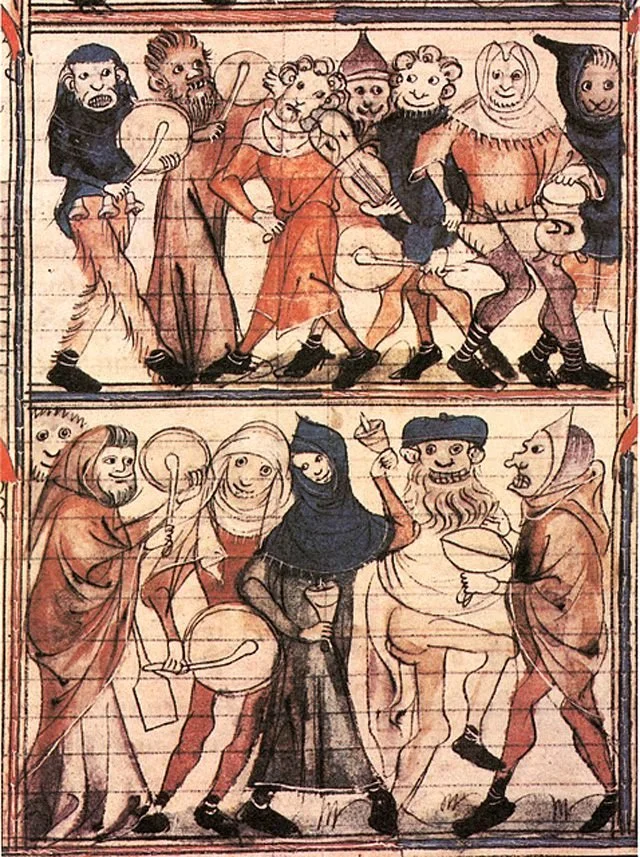
Medieval New Year's Eve: When Chaos Was the Point

Medieval New Year's Eve: When Chaos Was the Point

Forget champagne at midnight and awkward renditions of "Auld Lang Syne." Medieval New Year's was an entirely different beast, and honestly? It sounds way more fun.

Across Europe, the turning of the year wasn't just a date on the calendar. It was a full-blown excuse to flip everyday life on its head, stuff your face with roasted meat, and generally behave in ways that would make your local priest extremely nervous.

The Feast of Fools: Your Annually Scheduled Revolution

The Festival of Fools

Picture this: It's January 1st in a medieval town. The lowly church clerks and regular townsfolk have just elected a "Pope of Fools." They're parading through the streets in ridiculous costumes, possibly drunk, definitely making a mockery of sacred rituals. There's dancing. There's dice rolling during church services. Someone's definitely cross-dressing. It's absolute pandemonium.

Welcome to the Festum Fatuorum—the Feast of Fools.

What started as cheeky bits of playacting during Christmas church services eventually spiraled into something gloriously unhinged. By the later Middle Ages, you had masked dances, muddy street parades, and the kind of irreverent chaos that eventually made church authorities say "okay, that's ENOUGH" and ban the whole thing in the 15th century. (Though, naturally, people kept doing versions of it anyway because people have always been delightfully stubborn about their fun.)

Think of it as medieval Mardi Gras meets The Office Christmas party, but with more livestock in the streets.
Read More
Fastrada: Charlemagne’s Queen History Tried to Forget

Fastrada: Charlemagne’s Queen History Tried to Forget

Charlemagne is usually thought of as the iron-willed king, crowned Emperor of the Romans in 800, architect of a European empire and champion of learning and reform. What we never hear about, however, are the women who stood beside him: women whose influence shaped politics, justice, and the fragile stability of his realm.

One of the most controversial of these women was Fastrada, Charlemagne’s fourth wife and queen, a woman remembered less for what she did than for how male chroniclers chose to describe her.

A Frankish Noblewoman in a Dangerous Court

Fastrada was born into the high Frankish nobility around the mid-8th century, the daughter of Count Radulf. Her marriage to Charlemagne in 783 was not a romantic match but a strategic one, strengthening ties between powerful families within the Frankish heartlands. This was a period when Charlemagne’s empire was expanding rapidly through conquest, forced conversion, and ruthless suppression of revolt.

Queens in the Carolingian world were not crowned consorts in the later medieval sense, but they were far from ornamental. They managed households, acted as intermediaries, dispensed patronage, and, crucially, advised the king. Fastrada arrived at court at a moment when Charlemagne’s rule was under strain from internal rebellion, particularly in Saxony.

“Cruel” Queen or Convenient Scapegoat?

Our surviving sources paint Fastrada in dark colours. Einhard, Charlemagne’s biographer, describes her as harsh and cruel, claiming that her influence made the king more severe in judgement. Later chroniclers echoed this, blaming her for brutal punishments meted out against rebels and dissenters.

But this raises an uncomfortable question: Was Fastrada truly cruel, or was she blamed for decisions Charlemagne himself made?

Early medieval queens were often held responsible when kings ruled harshly. Advising firmness could easily be reframed as bloodthirstiness, especially when the adviser was a woman. Fastrada’s reputation may tell us more about medieval anxieties over female influence than about her actual character.

It is worth noting that Charlemagne’s most notorious acts of brutality, including the mass executions of Saxons, predated and outlasted Fastrada’s life. Yet only she became a symbol of excessive severity.
Read More
Feasts, Folklore & Boar: A Medieval Christmas with a Dash of Wild Hunt Magic

Feasts, Folklore & Boar: A Medieval Christmas with a Dash of Wild Hunt Magic

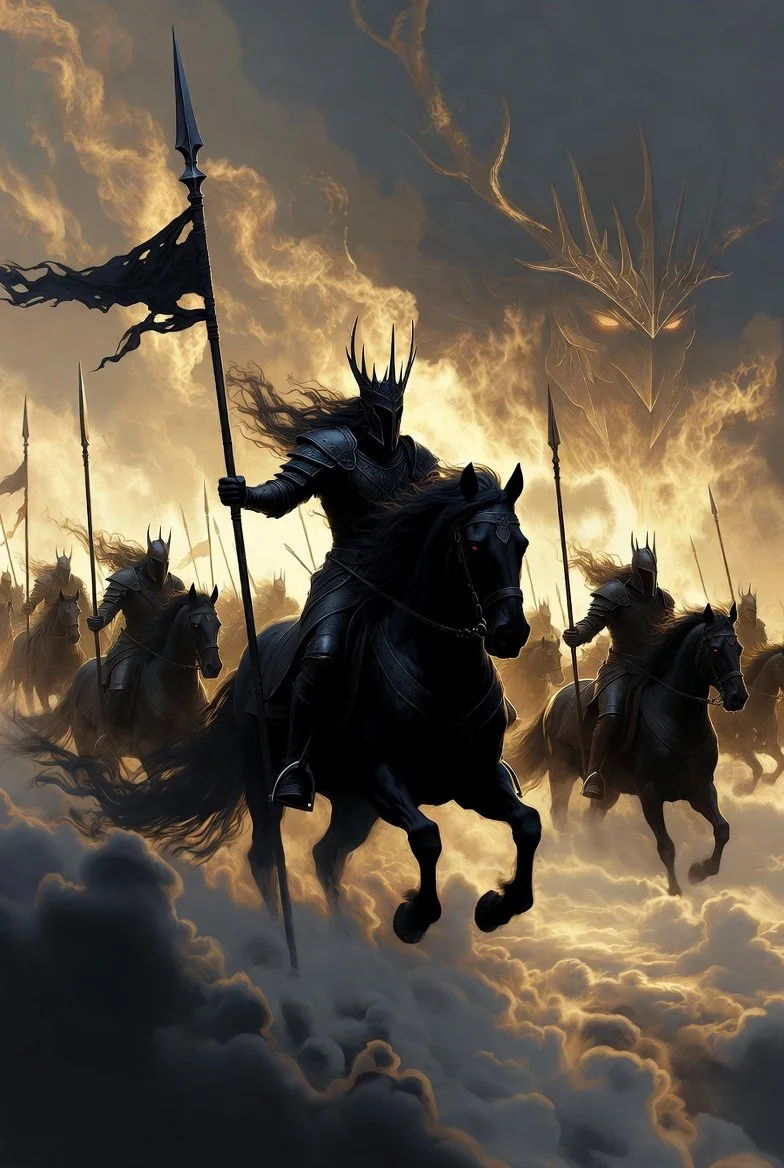
Christmas is coming; and if you think today’s festive spread is decadent, just imagine what a medieval English banquet looked like! Long before turkeys were discovered in America, people from monks to monarchs gathered round a banquet table groaning with pies, ale, spiced wine, and one very impressive centrepiece: the boar’s head.
Read More
Richard the Lionheart at Sixteen: the Making of a Warrior Duke

Richard the Lionheart at Sixteen: the Making of a Warrior Duke

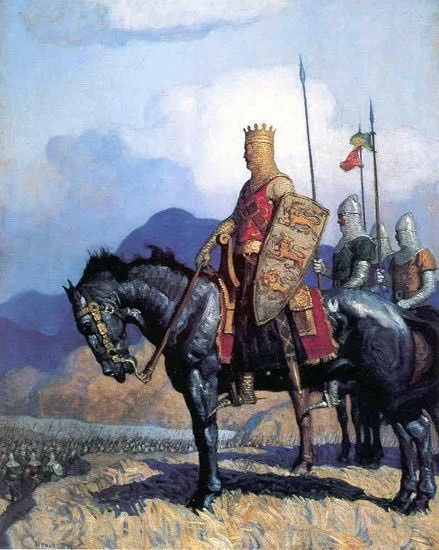
In 1173, a boy of sixteen took his first step onto the stage of war. His name was Richard, Duke of Aquitaine, though he had yet to earn the epithet Lionheart.

Before he became the crusader-king of legend, before his songs and sieges, Richard was a restless teenager thrust into the most dangerous political storm of the twelfth century: the Great Rebellion against his father, King Henry II.

It was a rebellion born of pride, family betrayal, and the impossible weight of expectation. And it was here — amid defeat, shame, and fire — that the making of a warrior began.

A Son in His Mother’s Shadow

Richard was Eleanor of Aquitaine’s favourite son, and in many ways her reflection: intelligent, impulsive, proud. Born in Oxford but raised in the cultured courts of Poitiers and Bordeaux, he was steeped in his mother’s world of poetry and politics. By his mid-teens he could compose in Occitan, debate theology in Latin, and command a hall full of barons — yet he was still a boy in a man’s game.

In 1172, Henry II had forced Eleanor to surrender the duchy of Aquitaine to her teenage son, intending to bind the region more tightly to the English crown. But Aquitaine was Eleanor’s inheritance, her life’s work, and Richard was fiercely loyal to her. The gift was both a promotion and a trap: the young duke found himself governing a proud and fractious land, surrounded by lords twice his age and loyalty only thinly pledged.

When the rebellion of 1173 began, Richard stood between two worlds — son of a king, heir to a duchy, and caught between the two towering figures who defined his destiny.

Read More
BookLife for Publishers Weekly Review of LADY OF LINCOLN
Lady of Lincoln, Book Review Rachel Elwiss Joyce Lady of Lincoln, Book Review Rachel Elwiss Joyce

BookLife for Publishers Weekly Review of LADY OF LINCOLN

Joyce’s historical fiction debut vividly portrays Nicola de la Haye, a 12th-century noblewoman who defied societal norms to protect her legacy, family, and lands, during a time when women were largely regarded as inconsequential. Beginning in 1168, Nicola’s story emerges as one of courage and conviction, as she steps into the role of protector of her father’s Lincoln Castle, defends those who are vulnerable, and transforms from a naive girl into a formidable leader. When her father dies unexpectedly, Nicola is left to manage her own fate. Her first step on that tentative path is to wed William FitzErneis (Fitz), a match she believes is made from passion—though it’s decidedly below her station. But Nicola soon discovers that, despite her determination, the world of 12th-century England won’t make life easy for a strong, resilient woman.

Joyce intricately blends Nicola’s personal struggles—including her marriage to Fitz and later union, after his death, to Gerard de Camville—with historical events like Henry the Young King’s Great Rebellion and the martyrdom of Thomas Becket, showcasing Nicola’s resilience and leadership in a male-dominated world. She is portrayed as a multifaceted protagonist, melding vulnerability with unyielding strength, and her resourcefulness highlights the tenacity of women throughout history. Nicola’s relationships, particularly with her husbands, are nuanced and emotionally charged, reflecting the complexities of love and duty in medieval times.

The historical setting is meticulously researched, with vivid descriptions of Lincoln Castle, the surrounding countryside, and the brutal realities of medieval warfare. Joyce’s attention to detail immerses readers in the period while providing authenticity, and real historical figures like King Henry II and Prince John add depth, their interactions set against political chaos and dynastic maneuverings. Lady of Lincoln is a captivating exploration of history—depicted through the lens of a remarkable female protagonist—that explores themes of love, loss, loyalty, and resilience against a richly detailed medieval backdrop.

Read More
Another Accolade for LADY OF LINCOLN!
Book Award, Book Reviews, Lady of Lincoln, Nicola de la Haye Rachel Elwiss Joyce Book Award, Book Reviews, Lady of Lincoln, Nicola de la Haye Rachel Elwiss Joyce

Another Accolade for LADY OF LINCOLN!

Besides winning a gold medal and ‘Book of the Year’ from the Coffee Pot Book Club, a ‘Notable Book’ Award from BlueInk Review (their highest accolade), and Five Stars from Reader’s Favorite, LADY OF LINCOLN has now been shortlisted for the Chaucer Award by the Chanticleer International Book Awards!.

Read More
Wu Zetian: The Woman Who Ruled an Empire
Forgotten Women of History, Historical Fiction Rachel Elwiss Joyce Forgotten Women of History, Historical Fiction Rachel Elwiss Joyce

Wu Zetian: The Woman Who Ruled an Empire

When we think of medieval power, the mind rarely leaps to a woman occupying the highest throne in one of the world’s greatest empires. Yet in 7th-century China, one woman did precisely that. Wu Zetian (624–705 CE) rose from low-ranking concubine to become China’s only female emperor; not merely empress consort, nor regent, but sovereign ruler in her own right.

In a world shaped by Confucian ideals that explicitly declared women inferior and unfit for leadership, her ascent was nothing short of astonishing.

And like many powerful women in history, Wu Zetian has been remembered through a haze of scandal, propaganda, and deliberate distortion. It’s time to peel back the layers and re-examine the woman behind the legend.

From Concubine to Emperor: A Rise Unlike Any Other

Wu Zetian entered the palace of Emperor Taizong as a teenage concubine; one among hundreds, hardly expected to influence politics. After Taizong’s death she should, by custom, have been sent to a Buddhist convent. Instead, she returned to the palace of his successor, Emperor Gaozong, beginning her ascent through skill, cunning, and what later historians would call “unwomanly ambition.”

Smooth Operator

But ambition alone did not place her on the throne. She possessed a sharp intelligence and administrative brilliance; a talent for identifying capable officials, many of whom became her loyal supporters; and a capacity to counter, outmanoeuvre, or neutralise rival factions.

When Gaozong suffered debilitating strokes, Wu Zetian took charge of state affairs. After his death, she ruled first through her sons and eventually dispensed with that formality entirely, proclaiming her own dynasty: the Zhou, and naming herself Huangdi, the imperial title previously reserved for male rulers.

Read More
‘King and Conqueror’: How much truth-stretching is acceptable?
Historical Fiction, Norman Invasion, Historical Drama Rachel Elwiss Joyce Historical Fiction, Norman Invasion, Historical Drama Rachel Elwiss Joyce

‘King and Conqueror’: How much truth-stretching is acceptable?

Welcome back to another Medieval Monday blog. After several posts dissecting the lead up to the Great Rebellion of 1173-4, today I’m switching focus to another seismic moment in English history: the Norman Conquest of England, as reimagined in the TV programme King & Conqueror.

The show has stirred plenty of excitement, and equally as much critique, about just how faithful a retelling it is. Because of that, I was loathe to watch it, but now I have, and here’s my view.

In short: yes, it draws on real events, but takes dramatic licence freely. The question is: when storytelling trumps scholarship, how much is too much?

Read More
Lady of Lincoln Awarded the Prestigious BlueInk ‘Notable Book’ Seal!

Lady of Lincoln Awarded the Prestigious BlueInk ‘Notable Book’ Seal!

I’m delighted to share some wonderful news:
Lady of Lincoln has been awarded the BlueInk Notable Book Seal — an honour reserved for a very small number of books judged to be of exceptional merit.

BlueInk Review is one of the publishing industry’s most respected editorial review services, created by professional critics and editors who have written for outlets such as Publishers Weekly, Kirkus, and major newspapers.

The Notable Book Seal is BlueInk’s highest distinction, highlighting titles that stand out for their literary quality, authenticity, and craftsmanship. Fewer than five percent of submissions receive this accolade.

Here’s some of what the reviewer wrote about Lady of Lincoln:

“Joyce’s rich characterization unfolds against a vivid, meticulously researched historical backdrop… a gripping account of courage amid the brutal realities of civil war.”

For a historical novel rooted in the real life of Nicola de la Haye, England’s indomitable Lady of Lincoln Castle, this accolade is deeply meaningful. It celebrates not only the countless hours of research and writing but also the historical women who refused to be forgotten.

Read More
Empress Theodora of Byzantium: She Saved an Empire

Empress Theodora of Byzantium: She Saved an Empire

The latest in the blog series is a special treat for me. I’ve long been fascinated, but a bit in the dark, about the Byzantine Empire.

But it seems few women of the early Middle Ages rose as far—or have been judged as harshly—as Empress Theodora of Byzantium. Rising from the margins of Constantinople’s theatre world to become one of the most powerful women in imperial history, Theodora’s story is one of intelligence, ambition, resilience, and reinvention. And like so many extraordinary women, she was both celebrated and vilified by her contemporaries.

Who Was Empress Theodora?

Born around 500 CE, Theodora started life far from the purple. Her father was a bear trainer for the Hippodrome’s Blue faction, and after his death, Theodora and her sisters were pushed into the theatre—an environment that in Byzantium sat somewhere between entertainment, politics, and scandal. According to the hostile historian Procopius (more on him later), Theodora’s early life involved performance, satire, and possibly sex work—though his account is so malicious that modern historians tread carefully.

What we do know is that Theodora was:

  • Exceptionally intelligent, known for her quick wit and sharp political instincts

  • Socially mobile in a rigid society, rising from performer to respected mistress of the imperial court

  • Deeply religious, eventually embracing Monophysite Christianity

  • A political partner, not merely a wife, to Emperor Justinian I

When Justinian became emperor in 527 CE, Theodora ruled alongside him as Augusta, wielding extraordinary influence—sometimes surpassing that of her husband.

The Nika Riots: A Moment That Defined an Empress

Read More
Medieval Advent
Medieval Festivals Rachel Elwiss Joyce Medieval Festivals Rachel Elwiss Joyce

Medieval Advent

Everyone is talking about what they have in their advent calendars: chocolates, toys, even Star Wars characters! Advent also brings to mind glittering candles on wreaths, festive jumpers, Christmas markets, mulled wine, and the countdown to Christmas morning.

I haven’t met a single person (other than fellow medieval fiction authors) who have any idea that for medieval people, Advent was not a season of indulgence or celebration. It was a period of fasting, penance, self-examination, and preparation for the Second Coming rather than Santa’s sleigh.

The earliest evidence for Advent appears in the 4th century, particularly in Gaul and Spain, where Christians observed a multi-week fast before Epiphany rather than Christmas. This early “Nativity Fast” resembled Lent: No meat, no dairy, no rich foods, no marital relations (yes, this was explicitly addressed!). By the 6th century, Rome formalised a four-week liturgical season leading up to Christmas. But unlike today’s “anticipatory joy,” medieval Advent preached repentance, vigilance, and apocalyptic expectation.

The focus wasn’t solely on celebrating Christ’s birth. Advent was designed to prepare the soul for Christ’s return in judgement. Medieval sermons emphasised humility, fear of sin, confession, charitable giving, and moral renewal. The message was clear: Christmas might be coming, but so was Judgement Day!

If modern Advent is “countdown to the festivities,” medieval Advent was “brace yourself and prepare your soul.”

Read More