Capons, Cocks and Hens: Keeping Chickens in Medieval England
Why the medieval farmyard was hardest on its males, and why, in a different way, ours still is.
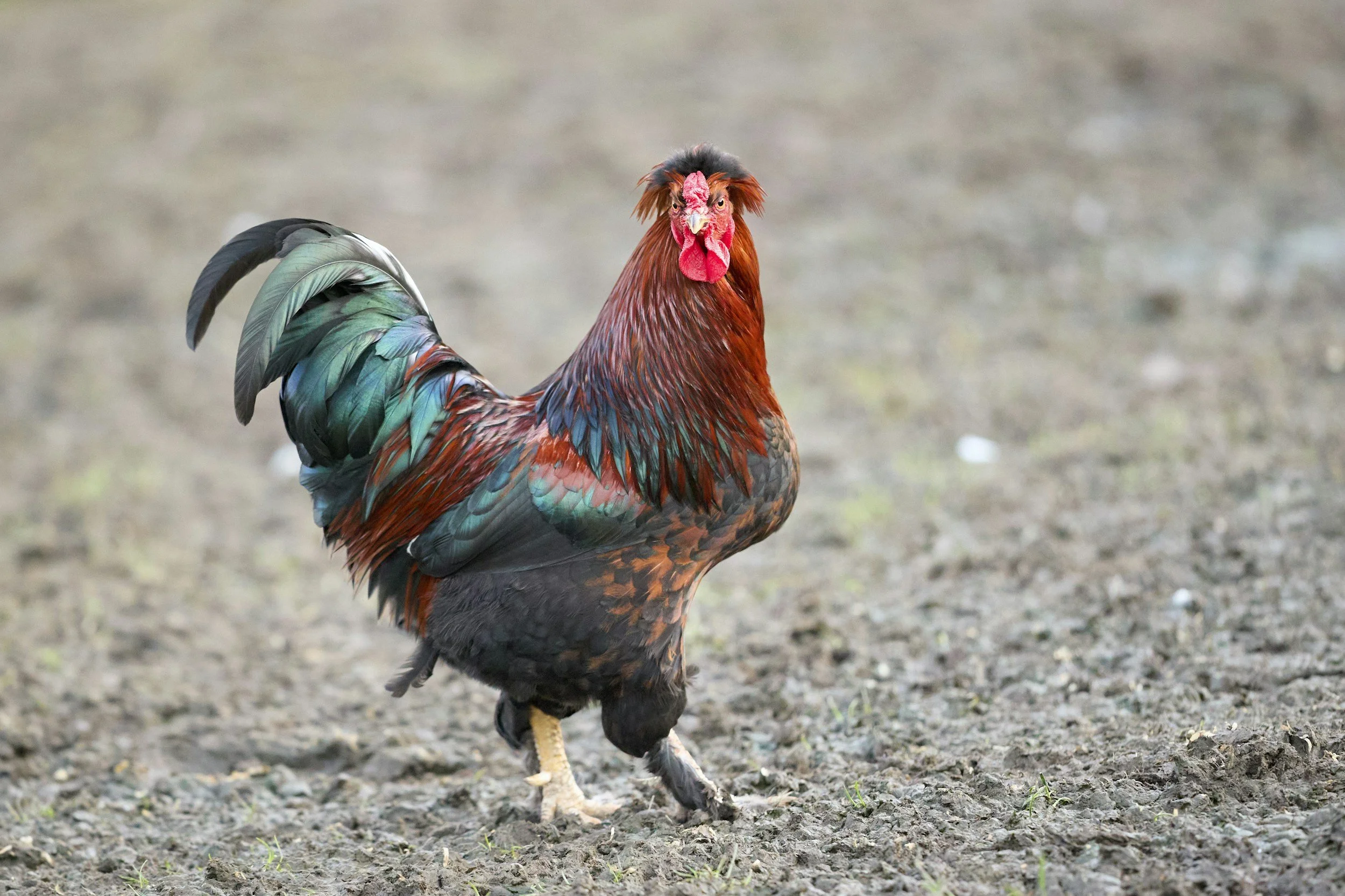
confession time
I do a huge amount of research for my historical novels. I researched Nicola de la Haye, her family and neighbours, the events of the time and 50 years before and 50 years after, as well as what life was like in medieval England. I did this for over a year before I started to write, and continued all the time.
I put in the author’s note for Lady of Lincoln the few things that weren’t in line with history: I changed when one person was likely to have died (but I may still have been correct), and I added a dramatic event that history didn’t describe (but it' could have always happened).
I discovered interesting facts such as this information about rabbits:
Medieval rabbits were usually known as coneys, a word that entered English through Anglo-Norman French and ultimately derived from the Latin cuniculus. The word rabbit originally referred only to a young coney, but over time it came to be used for the animal at any age and gradually replaced the older term. In medieval records, coneys often appear in connection with warrens or enclosed coneygarths, where they were carefully bred and managed for their meat and fur. The older word survived for centuries, although its pronunciation eventually became awkward because it sounded increasingly like a vulgar term, helping rabbit to become the standard name.
I also discovered that medieval people loved to eat ‘capons’, which, I have to admit, I hadn’t heard of before.
But I didn’t explore further, and I didn’t realise it wasn’t just another word for chicken, like coney was for rabbits now.
Three readers of the first imprint of Lady of Lincoln have spotted my error (it’s great to have readers so invested in history), because I had capons laying eggs, even though capons were male!
The error was corrected. Egg was on face (or not, as capons can’t lay eggs…). Although it might linger in the audiobook for a while…
My penance: this blog
So I’ve looked further into capons, and concluded that male chickens had a bad lot in medieval times.
But is their treatment any better now?
At this point, I need to warn you with a note on content: this post discusses historical animal cruelty, including cockfighting, and compares it with a modern intensive-farming practice (the culling of day-old male chicks). Neither is described in graphic step-by-step detail, but if this is a subject you'd rather avoid, you may want to skip the sections "A Harder Fate" and "Then and Now."
If you were a chicken in medieval England, the worst thing you could be was male
We tend to picture the medieval farmyard as gently pastoral: hens scratching contentedly around the cottage, a cockerel crowing at dawn. That picture isn't wrong, exactly, it's just missing most of the story. Because from the moment a male chick hatched, the farmyard had already decided he was a problem to be solved: too many mouths, too much aggression, not enough usefulness. What happened to him next ranged from a quick death to a surgeon's knife to, for a smaller number, a fighting pit.
This is the story of the medieval chicken — hens, capons and cocks alike — but it's the males whose fate deserves the closer look.
Why the Farmyard Needed Chickens at All
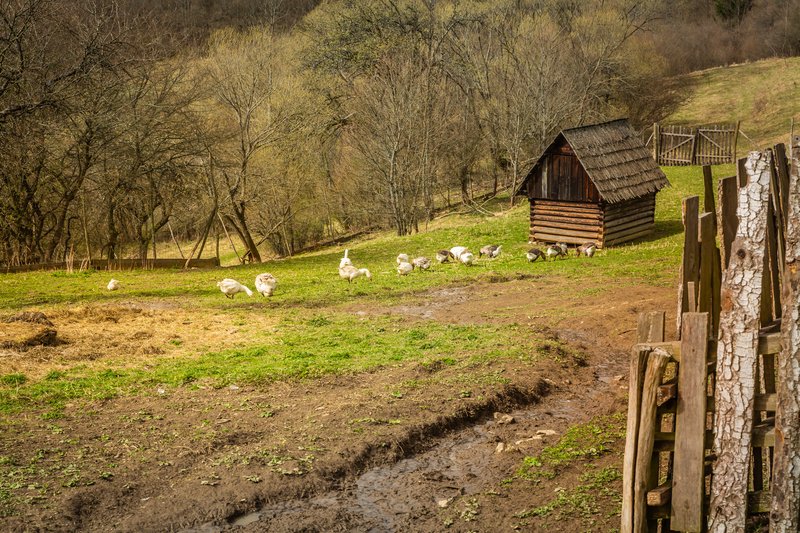
Chickens required little land, could feed largely on scraps and whatever they found for themselves, and were small enough to be kept by families who owned few other animals. They were an important part of medieval farming, particularly for poorer rural households.
Medieval poultry was not generally confined in the manner of modern commercial chickens. During daylight hours, hens would wander freely around the farmyard, searching for seeds, insects, worms, fallen grain and scraps of food. At night, they needed protection from foxes, polecats and other predators, and might be shut inside a simple wooden hen house, barn, shed or woven enclosure, or taken into the house.
Research into later medieval England suggests that many rural households kept a cock and approximately five to seven hens: small flocks maintained primarily for their eggs rather than as a regular source of meat. That ratio is the whole story in miniature: a household needed exactly one adult male. Everything else with a comb and wattles was, sooner or later, going to be a problem.
The Hen's Job: Eggs
Medieval hens laid far fewer eggs than modern commercial breeds. The exact number varied with breed, age, food supply and season, but studies of medieval poultry husbandry suggest a hen might produce somewhere in the region of seventy to one hundred eggs a year. Laying declined sharply over winter, making spring's larger supply especially welcome.
Eggs mattered because they provided animal protein without requiring the household to slaughter a bird — useful on the many days when Church rules restricted meat, and valuable enough that tenants might owe eggs or poultry to the lord of the manor as rent or seasonal payment.
A hen, in short, earned her keep every day simply by being alive. A male chicken had no equivalent daily usefulness — and that is what decided almost everything about his life.
What Happened to the Male Birds?
A household needed at least one cock to hatch chicks and maintain the flock. Keeping more than that was a liability: cockerels ate food that could otherwise support laying hens, and mature males were likely to fight one another. Most surplus males were therefore killed while relatively young, and eaten.
Some, however, were kept alive a while longer, for one of two much harder purposes.
A Harder Fate: Caponisation
A capon was a male chicken castrated before reaching full maturity. Removing the testes reduced male hormone production: the bird became less aggressive, less inclined to fight or roam, and put more of its food into weight rather than muscle and temperament. The result was tender, richly flavoured meat, regarded as superior to ordinary farmyard fowl and served in aristocratic and ecclesiastical households. The Forme of Cury, a recipe collection associated with the cooks of Richard II, includes dishes made with capon.
But getting there was brutal. A bird's testes lie deep in the body cavity, close to the spine and kidneys — nothing like the external anatomy of a mammal. The operator had to restrain the young cockerel, pluck feathers from the site, cut through skin and body wall, and locate and remove the testes one at a time, sometimes using small spoons, hooks, or loops of horsehair passed through a narrow tube. There was no anaesthetic, no antiseptic, and no understanding of infection in the modern sense. Some birds died of bleeding, shock or infection. We should be cautious about assuming every detail in later poultry manuals reflects medieval practice exactly, but the core fact is not in doubt: this was a genuine, dangerous surgical operation performed on a fully conscious bird.
Physical caponisation is now prohibited in England on animal-welfare grounds. Although, it appears that it’s still practiced in many countries and can be imported.
A Harder Fate, Continued: The Fighting Cock
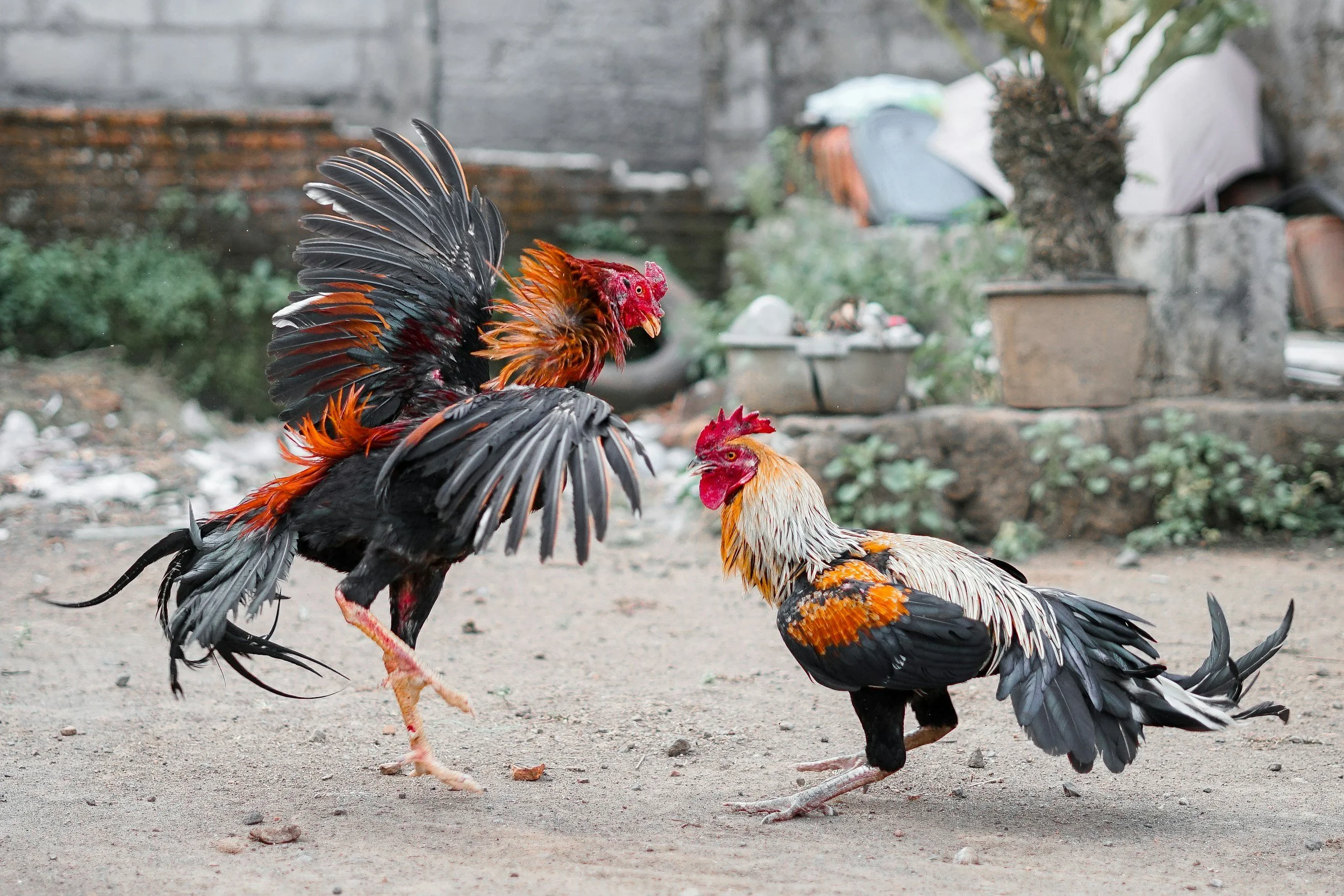
A cock fight
A smaller number of males avoided both the pot and the surgeon's knife, only to meet a worse end. They were trained to fight.
Cockfighting was already an established English pastime by the twelfth century. The chronicler William FitzStephen, writing around 1174, described London schoolboys bringing their fighting cocks to their masters every Shrove Tuesday, given the whole morning free from lessons to watch their birds do battle. The schoolmasters themselves directed the fights, taking a material advantage from them, since the dead birds fell to them — a detail that tells us this wasn't a fringe cruelty but an institutionalised one, built into the school calendar alongside the pancakes.
The practice of holding matches in schools ran from the twelfth century into the middle of the nineteenth, and cockfighting spread far beyond the schoolroom: birds bred and trained for the pit, fitted with spurs, fought until one was dead or disabled. A related pastime, cock-throwing — sticks thrown at a tethered bird — was also recorded, particularly around Shrovetide. Cockfighting itself was not made illegal in Great Britain until 1849, a reminder that these attitudes far outlasted the medieval period that produced them.
None of this was hidden by medieval standards. It was public, sanctioned, and sometimes profitable for the adults running it.
Who Actually Ate the Capon?
Capons were closely associated with wealthy households, religious communities and feasts. A noble household might serve one to an honoured guest; monasteries valued it as a luxurious form of poultry. It was less extravagant than swan or peacock, but far from everyday food. A peasant household was more likely to preserve its hens for eggs and eat a bird only when it stopped laying, when a surplus cockerel was available, or when an occasion justified the loss. The capon on a lord's table and the hen in a cottage yard were products of the same village economy, aimed at very different mouths.
Who Actually Kept the Flock?
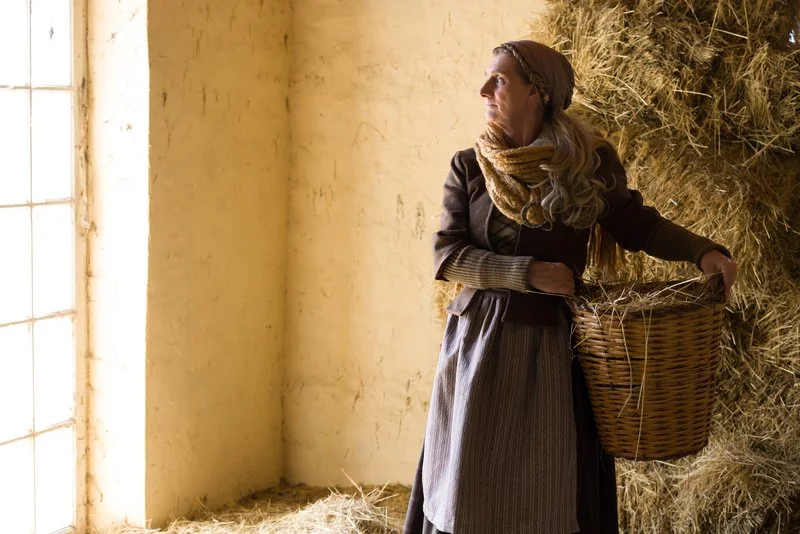
Much of the routine care of chickens, ie feeding, collecting eggs, setting broody hens, protecting chicks, probably fell to women and children, fitted around other household work. Poultry and egg sales could provide women with a modest but useful income. On a demesne farm, officials recorded birds and eggs bought, sold, consumed or delivered to the lord's household in far more systematic terms. The chicken connected the peasant cottage to the manor, and the manor to the tables of the powerful, but it was the ongoing, largely unrecorded labour of noticing which hen had stopped laying, or which chick needed protecting from a rat, that kept the whole system running.
Then and Now: Are We Any Kinder to Male Chickens Today?
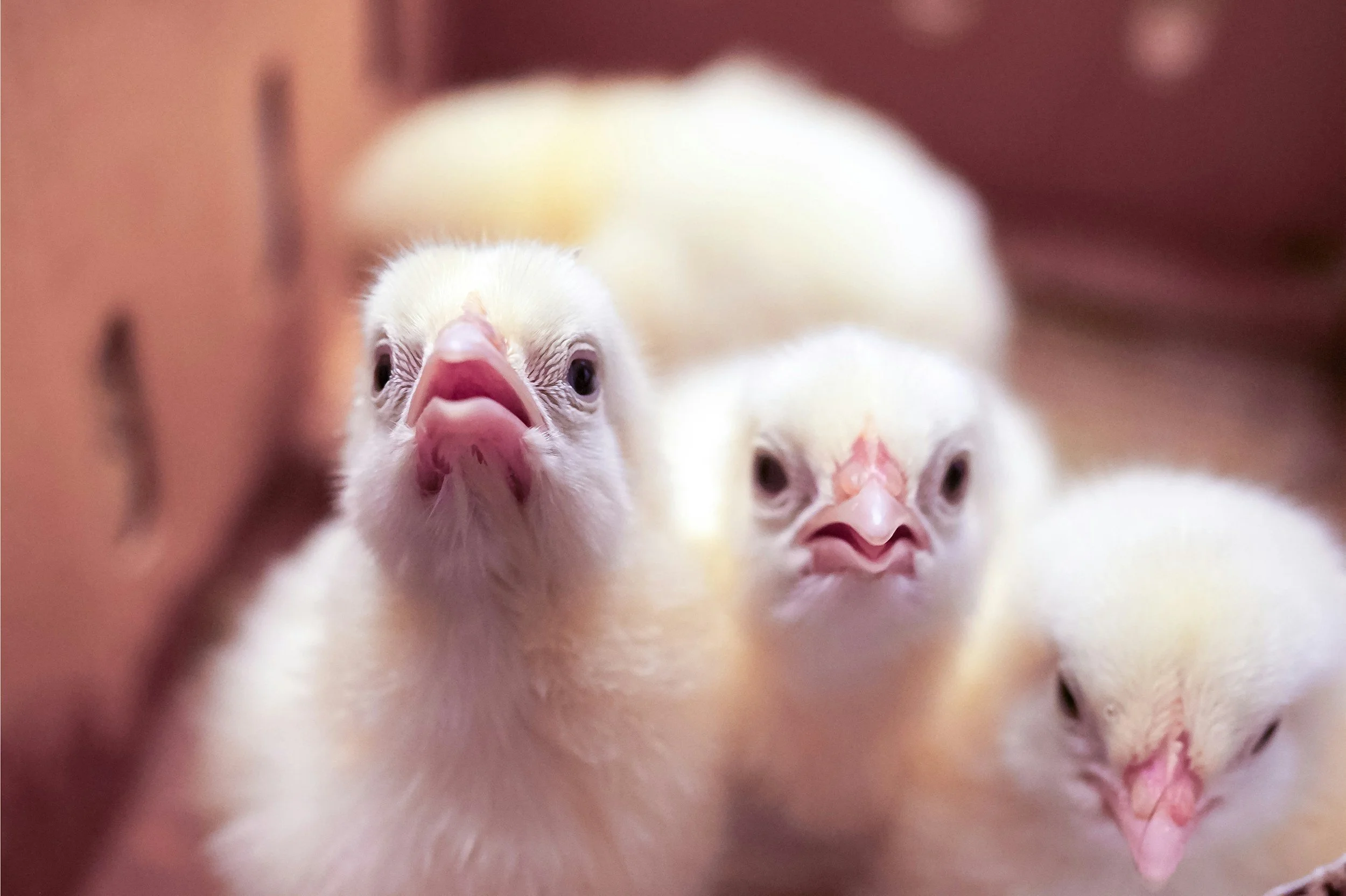
It would be comfortable to file all of this under "things people used to do." But the male chicken's basic problem of having no eggs, limited value as meat, and being expensive to feed didn't disappear with the Middle Ages. It just found a more ‘efficient’ solution.
In the modern commercial egg industry, male chicks are separated from females within hours or days of hatching, usually by vent sexing or feather sexing on a conveyor line. The females go on to become laying hens. The males, unable to lay and not bred to grow large enough for profitable meat, are culled, typically by gassing or mechanical maceration.
It’s horrifying to think of.
Billions are destroyed worldwide on their first day of life. Some culled chicks are frozen and used as feed for zoo animals, birds of prey or reptiles. A newer technology, in-ovo sexing, aims to determine sex before hatching, so male eggs are never incubated to term at all, thereby removing the need for culling, though it isn't yet universal.
Set the two systems side by side and they look very different. The medieval capon at least lived some months, however hazardous his surgery. The fighting cock died badly, but visibly: his death was the whole point, watched by a crowd who'd paid to see it. People knew what they were watching, and they knew it was cruel. Many couldn’t countenance it.
But the modern male chick is dispatched within a day of hatching, unseen by anyone who will ever eat the resulting eggs, at a scale — literally billions a year — with no medieval equivalent whatsoever.
So: is a single afternoon in a cockpit worse than a day-old life ended in a gas chamber or a macerator? Is an unhistoried death, multiplied by the billion, more or less troubling than a smaller number of documented cruelties conducted in daylight, for entertainment, in a schoolyard? I don't think there's a comfortable answer to that. What I do think is that we should be wary of awarding ourselves the moral high ground over the medieval farmyard, simply because our version of the same old problem is better hidden, more efficient, and takes place somewhere none of us has to watch.
The Sound of the Medieval Farmyard
The chicken was an unremarkable but essential presence in medieval England. Hens turned scraps and insects into valuable eggs. Cocks maintained the flock. Their surplus sons supplied occasional meat, a fattened capon for someone else's table, or, for some, a far crueller end in the pit. It's a reminder that medieval society ran not only on kings, warfare and great estates, but on countless small, uneven acts of household management. Some of those acts were kind. Most days for a medieval farm animal probably were probably not that bad at all, in contrast to many appalling farming methods in the UK and abroad.
But, if you happened to be born male and feathered, your lot wasn’t so good, and in that respect, at least, we haven't moved on quite as far as we'd like to think.
My Conclusion
Humans are cruel to animals, and always have been, despite a desire by most of us to be compassionate. We have improved animal welfare in some regards, for which I thank goodness, but the industrial scale of what we do, and how we hide it behind closed doors, with our meat packaged and so remote from the animal that it had once been and the cruelty of its treatment and death so remote, is both hypocritical and shameful.
Sources and Further Reading
On medieval poultry keeping and capons
ScienceDirect — on flock sizes and egg-laying in later medieval England. Philip Slavin, "Peasants and poultry in England, 1250–1540"
https://www.sciencedirect.com/science/article/abs/pii/S1040618220301208Science Press — on medieval poultry husbandry and egg yields. Philip Slavin, "Chicken Husbandry in Late-Medieval Eastern England: c. 1250–1400," Anthropozoologica 44(2)
https://sciencepress.mnhn.fr/en/periodiques/anthropozoologica/44/2/l-elevage-des-poulets-en-angleterre-orientale-durant-la-periode-medievale-tardive-ca-1250-1400A Dollop of History — on capon dishes in The Forme of Cury "Capon or Chicken in Gravy, c. 1390"
https://historydollop.com/2018/03/15/chicken-in-egg-gravy-c-1390/The Modern Homestead — on the anatomy and technique of traditional caponisation
"Caponizing" https://themodernhomestead.us/poultry/markets/caponizing/
On medieval cockfighting
William FitzStephen, Description of London (c. 1174), the earliest English reference to schoolboy cockfighting on Shrove Tuesday — a translated extract is available via Medievalists.net: https://www.medievalists.net/2019/09/sports-medieval-london/
"Cock-fighting," Encyclopædia Britannica, 11th edition (1911), via Wikisource, on the schoolroom tradition and the 1849 ban: https://en.wikisource.org/wiki/1911_Encyclop%C3%A6dia_Britannica/Cock-fighting
On modern male chick culling
RSPCA, "Chick maceration": https://www.rspcaassured.org.uk/blog/chick-maceration
RSPCA Science Group, "The culling of male chicks" information sheet (April 2025): https://science.rspca.org.uk/documents/d/science/the-culling-of-male-chicks-information-sheet-april-2025
RSPCA Australia knowledge base, "What happens with male chicks in the egg industry": https://kb.rspca.org.au/categories/farmed-animals/poultry/layer-hens/what-happens-with-male-chicks-in-the-egg-industry
A note on sourcing: this post draws on secondary and popular-history sources rather than primary manorial accounts, which is reflected in the confidence of the claims made above. Where the medieval evidence is thin or later poultry manuals may not reflect medieval practice precisely, I've said so in the text rather than in this list.
Read more about NIcola de la Haye: https://www.rachelelwissjoyce.com/nicola-de-la-haye
discover lady of lincoln

Click the image to find out more about Lady of Lincoln