Princes Without Power: Why Henry the Young King Rebelled
The Road to the Great Rebellion, Part 2

Henry the Young King being served by this father, Henry II, at his coronation banquet
On 14 June 1170, in Westminster Abbey, England witnessed a rare spectacle: a king crowned in his father’s lifetime. The boy was Henry, eldest surviving son of Henry II and Eleanor of Aquitaine. At just fifteen, he was anointed, crowned, and hailed as rex iunior — the Young King.
It should have been the beginning of a glittering reign. Instead, it became the seed of betrayal.
Did you know? Henry the Young King’s coronation feast is covered in Lady of Lincoln.
A King Without a Kingdom
Despite the grandeur of his coronation, the Young King had no real authority. His father ruled with a firm hand and was unwilling to share power. Henry II kept hold of the castles, the revenues, and the decision-making. The son was left with ceremony but no substance.
Contemporaries pitied him. William of Newburgh remarked that the lad “was king in name only, while his father held the reins of government.” Others saw a prince who enjoyed the tournaments and glittering life of a knight but lacked the lands and soldiers that made a medieval ruler truly powerful.
Marriage Without Reward
The situation might have improved in 1172, when Henry married Margaret (Marguerite) of France, daughter of King Louis VII. The union was meant to cement peace between the old rivals, and a second coronation at Winchester celebrated the match.
But once again, the marriage brought prestige without resources. Margaret had no dowry of lands, and the Young King’s household remained dependent on his father’s purse. Imagine being a crowned king, husband to a French princess, and yet unable to grant a single estate or castle to your followers.
The Breaking Point
The final insult came in early 1173. Henry II announced he would provide estates and castles to his youngest son, John — nicknamed “Lackland” precisely because he had none. To the Young King, this was unbearable. How could the baby of the family be granted what the heir to the empire had long been denied?
Stung by pride and encouraged by his mother, Eleanor, the Young King fled his father’s court. In March 1173, he rode to Paris and placed himself under the protection of his father-in-law, Louis VII. There, he declared open defiance. The Great Rebellion had begun.
A Prince in Revolt
Why did the Young King rebel? At heart, it was about power denied. He wanted lands to govern, castles to garrison, and revenues to spend: the lifeblood of medieval kingship. Instead, Henry II gave him parades and pageantry.
His rebellion was not only a son’s quarrel with a father, but also a spark that set the whole Angevin empire aflame. English barons seized the chance to rise against the king. Scottish armies crossed the northern border. Flemish mercenaries landed in East Anglia. And Eleanor herself would attempt to join her sons in revolt.
Revolt of the Eaglets
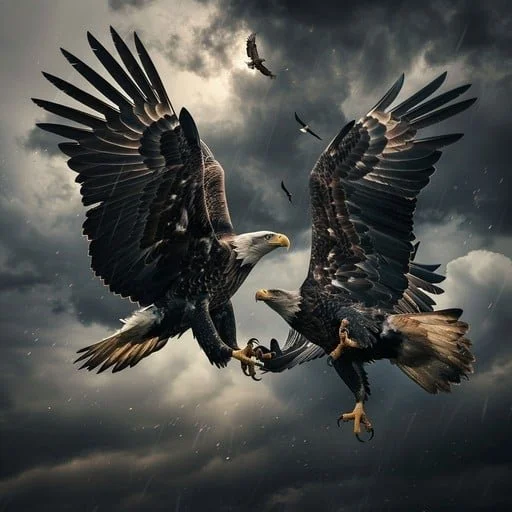
A story of an eagle and eaglets painting comes from Ralph Niger (Radulphus Niger), a cleric and chronicler writing in the late 12th century. He claimed that in Henry II’s palace there was an image of an eagle with its chicks pecking at it, and that the king explained it as a symbol of his sons rebelling against him — the eaglets attacking the parent bird that had reared them.
Ralph writes (paraphrased):
“In the king’s chamber was painted an eagle, torn by the beaks of its young. When asked what it signified, he said, ‘These are my sons who will not cease to persecute me, even to my death.’”
Why This Matters for Lady of Lincoln
In my novel Lady of Lincoln, Nicola de la Haye grows up in this stormy world where kings crowned sons but denied them power, where castles were pawns in a dangerous game. The conspiracy to rebel involved her first husband, William FitzErneis, and the consequences, and the rebellion that began with the Young King’s flight to Paris would ripple all the way to Lincolnshire, shaping Nicola’s destiny.
This blog series, The Road to the Great Rebellion, continues next month with: Eleanor of Aquitaine: Queen, Duchess, and Mother of Rebels.
Read more about Nicola de la Haye: https://www.rachelelwissjoyce.com/nicola-de-la-haye