The Treaty of Lambeth, 1217
And how the Battle of Lincoln Helped Save Henry III’s Crown

The Battle of Lincoln by Matthew Paris
In September 1217, a series of negotiations brought one of the most extraordinary episodes in English history to an end.
A French prince had been proclaimed King of England. Much of the country had fallen into his hands. King John was dead, his heir was nine years old, and England had been fighting a civil war in which English barons stood on both sides.
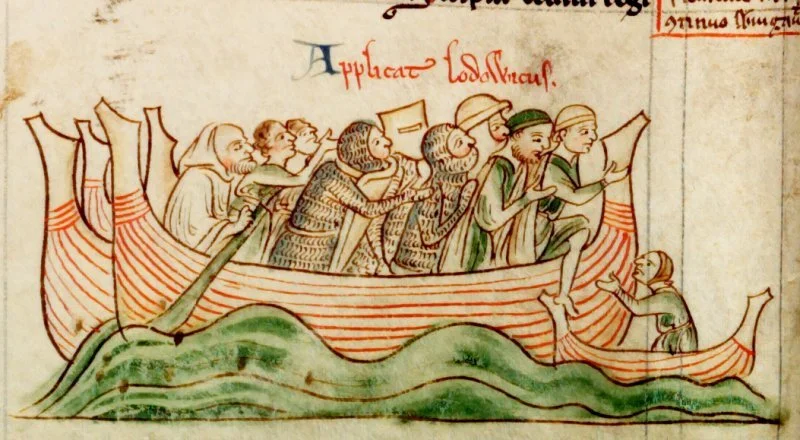
Arrival of Louis, heir to the French throne, in England (1216)

King John vs Prince Louis fighting for the throne of England
But by the end of September, Prince Louis of France had renounced his claim to the English throne and was preparing to leave the country.
The settlement is usually known as the Treaty of Lambeth. And one of the events that made that peace possible had taken place four months earlier, at Lincoln Castle, where Nicola de la Haye had refused to surrender.
What and when was the Treaty of Lambeth?
The peace of September 1217 did not come out of nowhere. Negotiations had already begun after the royalist victory at Lincoln in May. William Marshal’s aim was not simply to crush the defeated English rebels, but to bring them back into Henry III’s allegiance and restore some kind of political order.
Those first talks came close to agreement. Marshal was prepared to offer generous terms to the rebel barons, including the restoration of their lands. But one major obstacle was the treatment of churchmen who had supported Louis. The papal legate, Guala Bicchieri, was far less willing than Marshal to forgive them, and the negotiations broke down.
Then came the second great royalist victory of 1217.
On 24 August, an English fleet defeated French ships off Sandwich, destroying or capturing reinforcements, money and supplies intended for Louis. After Lincoln, Louis had lost many of his most important English allies. After Sandwich, his hopes of rebuilding his position were badly damaged.
Peace talks resumed. Messengers passed between the two camps and short truces were agreed while representatives met at Staines and Kingston upon Thames. Sources refer to agreements at Lambeth on 11 September and Kingston on 12 September, while a further settlement on 20 September appears to have confirmed the terms. So rather than imagining a single medieval equivalent of a modern treaty-signing ceremony, it is probably better to think of the Treaty of Lambeth as a peace process completed over several weeks in September 1217.
One of the most striking accounts places the opposing forces on different banks of the Thames near Kingston while the leaders met on an island in the river. Louis and his counsellors came face to face with the nine-year-old Henry III, his mother Isabella of Angoulême, William Marshal and the papal legate Guala.
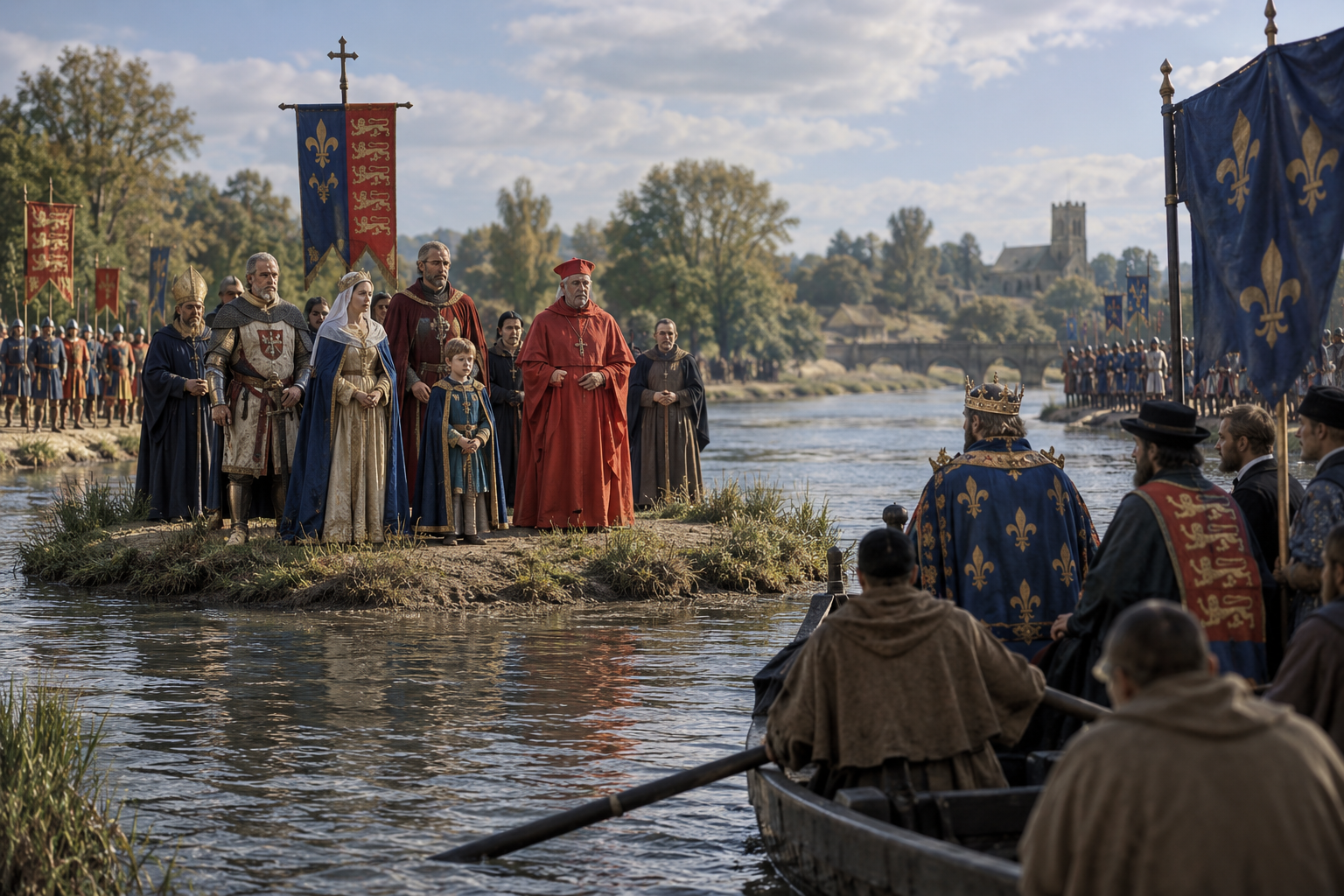
English and French leaders met on an island on the River Thames as part of the negotiations
Its most important result was clear enough:
Louis of France abandoned his claim to the English crown.
His English supporters were largely allowed to return to Henry’s allegiance and recover their lands. Louis, meanwhile, agreed to leave England and received 10,000 marks as part of the settlement.
It was an unusually pragmatic peace. Marshal had won a decisive military victory at Lincoln, but he understood that England could not be rebuilt by permanently dispossessing half its baronage.
Louis had been invited into England by rebel barons fighting King John and, after landing in May 1216, had been proclaimed king in London—although he was never crowned.
For a time his prospects had been formidable. But then John died.
Suddenly the enemy was no longer an unpopular adult king but his nine-year-old son, Henry III. William Marshal became guardian of the young king and led a government deliberately seeking to bring rebel barons back into the royal fold. Magna Carta was reissued in Henry's name in November 1216 as part of that attempt at reconciliation.
But Louis still had an army in England, and in the spring of 1217, one of the places standing in his way was Lincoln Castle.
Nicola de la Haye and the siege of Lincoln Castle
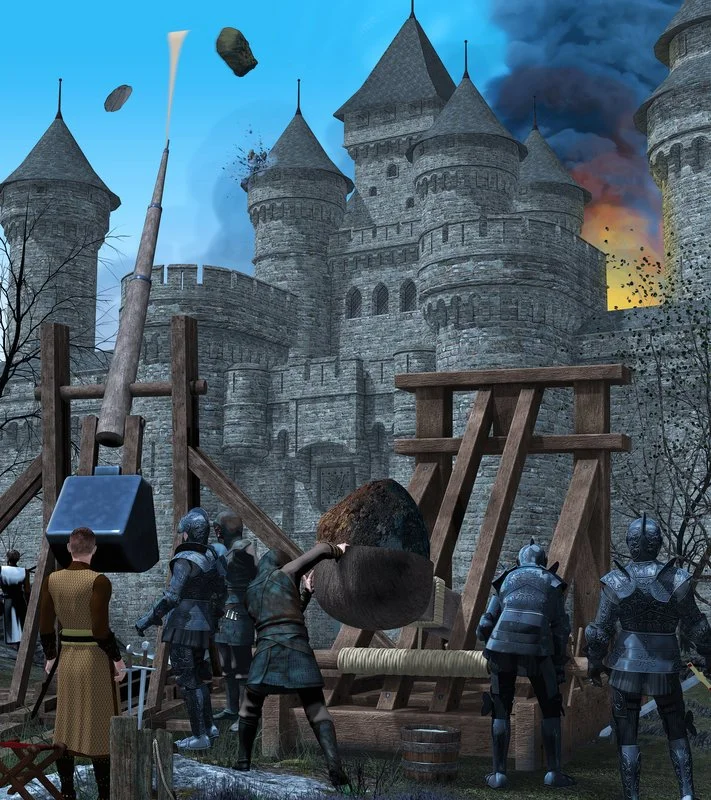
A medieval siege
By then Nicola de la Haye had been defending Lincoln Castle for months.
She was its hereditary castellan and one of the most remarkable female landholders of medieval England. In October 1216, only days before King John's death, she had also been appointed to the shrievalty of Lincolnshire—the earliest known woman formally appointed to be an English sheriff in her own right.
The city of Lincoln was largely in rebel hands. The castle was not. French and rebel forces intensified the siege in 1217, reinforced by Thomas, Count of Perche, while Nicola remained inside with her garrison.
The Annals of Dunstable recorded that at Lincoln a noblewoman named Nicola
“defended herself manfully”.
The History of William Marshal was rather warmer: when Peter des Roches, Bishop of Winchester, reached the castle shortly before the battle, its author described Nicola as a
“worthy lady”, still defending the fortress to the best of her ability.
Nicola was not winning the war single-handed, but she was doing something strategically vital: keeping the castle out of French and rebel hands.
Why did the Battle of Lincoln matter?
Crossbowmen rained down bolts at the French from Nicola de la Haye’s Lincoln Castle
On 20 May 1217, William Marshal's royalist army arrived to relieve Lincoln. The importance of Nicola's defence becomes much clearer when you look at the geography. Marshal was not approaching a wholly enemy-held fortress and city. Inside Lincoln's defences remained a royalist stronghold.
Falkes de Bréauté entered the castle with his men and crossbowmen. From the ramparts and nearby high positions they fired into the besieging forces below before Falkes led men out from the castle itself. Meanwhile Marshal's army forced its way into Lincoln and savage fighting spread through the streets.
The Count of Perche was killed. Robert FitzWalter, Saer de Quincy and many other leading rebel barons were captured, together with hundreds of knights. The defeated army fled south. The aftermath was ugly. The victorious troops plundered Lincoln so thoroughly that the sack became known ironically as the “Lincoln Fair”.
But militarily the result was devastating for Louis. Historian David Carpenter has described the battle as
“second only to Hastings as the most decisive in English history.”
That is a more defensible claim than saying that Lincoln alone saved England; because the war still wasn't yet over.
From Lincoln to Sandwich—and peace
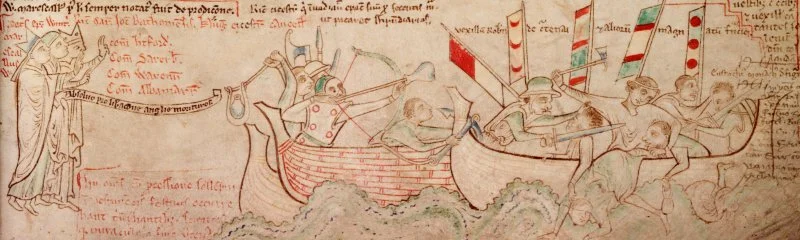
The Battle of Sandwich
Louis remained in England after Lincoln, despite his war-making abilities being badly damaged. But then, on 24 August 1217, another major blow fell. An English fleet defeated the French off Sandwich and destroyed or captured ships carrying desperately needed men, money and supplies.
After Lincoln, Louis had lost much of the army upon which his claim depended. After Sandwich, his ability to rebuild it was badly damaged.
Peace negotiations began almost immediately.
By September, Louis agreed to renounce his claim to the English throne. Henry's government offered an amnesty to his English supporters, while Louis received 10,000 marks as part of the settlement and ultimately returned to France.
Henry III remained king. And that was vital for something else whose story runs through my novels: Magna Carta.
Lincoln, Nicola de la Haye and Magna Carta
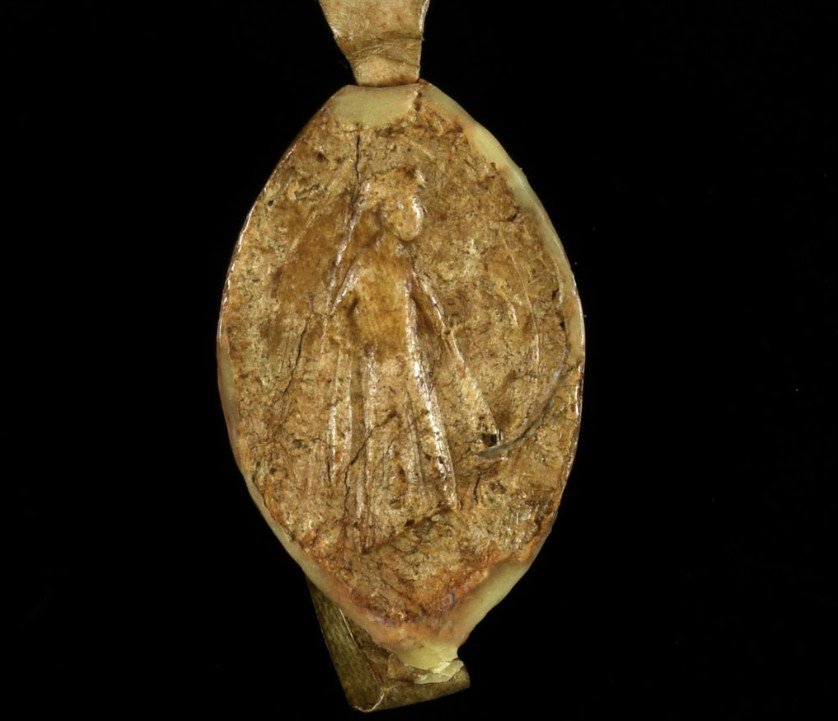
Nicola de la Haye’s seal
It is tempting to say Nicola de la Haye “saved Magna Carta”.
John had repudiated Magna Carta, but after his death, Henry III's minority government used Magna Carta very differently. It reissued the Charter in 1216 while the war was still raging. After peace was achieved in 1217, Magna Carta was issued again, this time alongside the Charter of the Forest.
So the chain of events is important.
Nicola held Lincoln Castle. Its survival helped make the royalist victory at Lincoln possible. Lincoln, followed by Sandwich, helped secure Henry III's throne. And Henry's government was then able to turn Magna Carta from the failed peace treaty of 1215 into part of a lasting political settlement.
That is a remarkable legacy for a woman whose name is still absent from most people's idea of medieval history.
Writing the Battle of Lincoln in Lady of England
This is the history I am currently immersed in while revising Lady of England, the third novel in my Nicola de la Haye series.
Readers who have met Nicola in Lady of Lincoln will know that I have never seen her principally as a warrior. She uses a crossbow in the novels, but her real strength lay elsewhere: in command, stubbornness, administration and an extraordinary sense of obligation towards the people and lands placed in her keeping.
That becomes particularly important in Lady of England. By the final weeks of the siege, the Nicola of the novel has lost people she loves, watched her castle battered by siege engines and is running desperately short of time. When one of her officers proposes a final sally, she refuses:
“No.” Nicola's voice was flat. “Dickon died leading a sally to buy us time. We will not throw that away on a desperate gesture. We hold, and wait for Marshal. If he doesn't come...” Her voice faded. She didn't need to say any more.
…
“Pray for Marshal,” Nicola said. “That's the miracle we need.”
That passage comes from the current draft of Lady of England, where the siege is not simply a military episode but the culmination of the question Nicola has been wrestling with throughout her life: what does it actually mean to hold something in trust?
For her, Lincoln Castle is never simply stone walls and towers. It is the garrison inside them. The servants. The children. The townspeople and tenants whose lives are affected by the decisions of those who wield power. It is the legacy her father left her.
And that is why I find the road from Lincoln to Lambeth so fascinating. The famous men came afterwards: William Marshal negotiating, Hubert de Burgh victorious at sea, Guala lending papal authority to the peace. But before any peace could be negotiated, there had to be something left to negotiate from.
At Lincoln, Nicola de la Haye held. And in September 1217, the consequences of that refusal to surrender were still being felt all the way down the country.
The Nicola de la Haye Series
Nicola's remarkable story begins in Lady of Lincoln. The second novel, Lady of the Castle, continues her story through the turbulent final years of Henry II and the reign of Richard the Lionheart, and is published in September 2026.
Lady of England will cover King John, Magna Carta, the siege and Battle of Lincoln and the struggle for Henry III's throne.
John my email list for updates on my Nicola de la Haye and other novels.