Barlings Abbey: The White Canons and the Medieval World Behind Lady of the Castle
Founded in 1154 by Ralph de Haya, uncle of Nicola de la Haye, Barlings Abbey was a Premonstratensian monastery seven miles east of Lincoln. For nearly four centuries, its White Canons lived, prayed and worked in the Lincolnshire fenland. Today, almost nothing remains of the abbey that inspired part of my historical novel, Lady of the Castle.
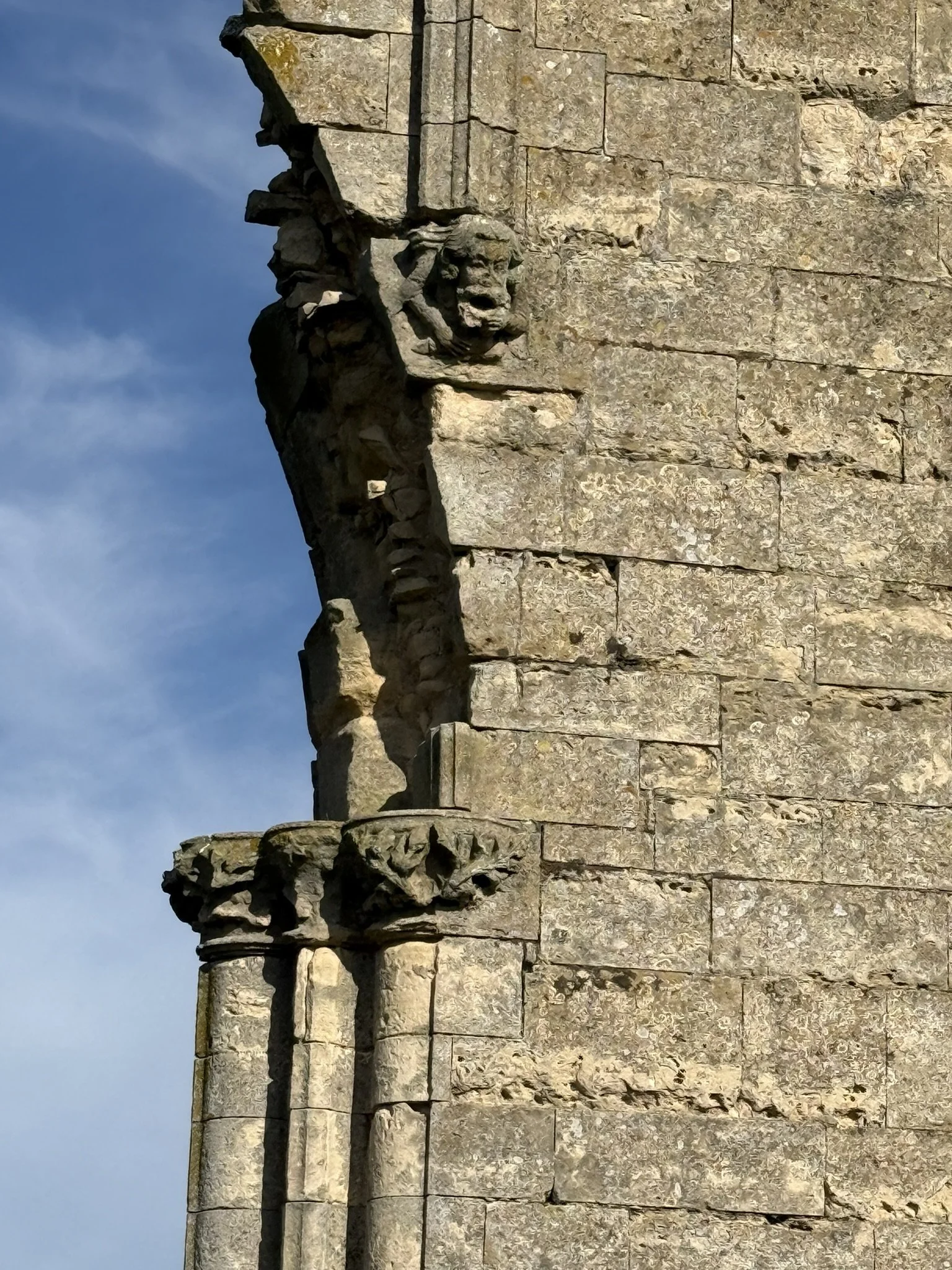
A gargoyle among the surviving ruins of Barlings Abbey, Lincolnshire
There is very little left of Barlings Abbey today. A fragment of medieval masonry rises from a field beside the Barlings Eau, surrounded by grass, earthworks and the flat Lincolnshire countryside. Seven miles to the west, the towers of Lincoln Cathedral are visible on the skyline.
It is difficult to imagine what once stood here: a great abbey church, cloisters, dormitory, chapter house, refectory, infirmary, fishponds and all the other buildings needed to sustain a medieval religious community.
For nearly four centuries, Barlings was one of England's substantial Premonstratensian monasteries. At its height, it was among the wealthiest religious houses in Lincolnshire.
Its end was brutal. In 1537, following the Lincolnshire Rising against Henry VIII, the abbot and six of his canons were executed. The abbey was suppressed, its property confiscated and its buildings gradually dismantled.
But Barlings has another significance for me. In Lady of the Castle, this is where Turstin FitzErneis, Nicola de la Haye's fictional foster son, is sent as a young novice. Much of his story is invented, but the monastery in which I placed him was real. And its connection with Nicola's family goes back to its foundation.
Who founded Barlings Abbey?
Barlings Abbey was founded in about 1154 by Ralph de Haya, Nicola de la Haye's uncle, during the reign of King Henry II.
Ralph belonged to a family already deeply established in Lincolnshire. His father, Robert de la Haye, had become constable of Lincoln Castle and Baron of Brattleby through his marriage to Muriel of Lincoln. Robert's elder son, Richard, inherited the family's principal estates and the hereditary constableship. Richard's daughter was Nicola, who would eventually become one of the most remarkable women in medieval English history.
Ralph, the younger son, was lord of Burwell and Carlton. Like many wealthy landowners of the twelfth century, he used some of his lands to establish a religious house.
His foundation was dedicated to the Virgin Mary and entrusted to the Premonstratensians, a relatively new religious order that had originated in northern France.
Thirteen canons came from Newsham Abbey, near Grimsby, the first Premonstratensian foundation in England. They brought with them the Rule of St Augustine, the statutes of their order and the experience of communal religious life.
Ralph provided land at Barlings, and further gifts followed from members of his family and other benefactors. The de la Hayes' relationship with the abbey did not end with its foundation. Nicola herself was associated with its patronage, and records of the abbey's early endowments include gifts from her family.
So when I sent Turstin to Barlings in Lady of the Castle, I was sending Nicola's foster son to a monastery founded by her own uncle a generation earlier.
There was a direct family connection.
Why did the canons move to Oxney?
The first community did not settle permanently on the site whose ruins survive today. Their original home was about a mile to the north, near what became Barlings Grange. The first buildings were probably modest, perhaps constructed largely of timber while the new religious community established itself.
Within a few years, the canons had moved south to Oxney, the site of the later abbey. The name itself tells us something about the landscape. Oxney meant an island where oxen grazed, an ey being an island or area of raised ground surrounded by water or marsh. The surrounding countryside was part of Fiskerton Fen, a low-lying landscape crossed by rivers, streams, drainage channels and flood banks. Much of the land was vulnerable to seasonal flooding. Oxney offered a slightly elevated site close to the Barlings Eau, which connected with the River Witham. It provided both protection from the wettest ground and access to transport by water.
The surviving evidence does not establish that a particular flood forced the canons to abandon their first home. It is possible that their original settlement was always intended to be temporary while more permanent buildings were constructed at Oxney. What is clear is that the new position was carefully chosen. The abbey was approached along a raised causeway across the fen, and part of the modern approach still follows this historic route. For the canons, water was both a problem and an advantage. It threatened buildings and fields, but it also provided fish, transport and the means to drain and manage their estates.
This was no isolated wilderness. Goods travelled between the abbey and its properties. Tenants came to conduct business. Travellers sought accommodation. Clergy moved between the religious houses and parish churches scattered across the countryside.
And Lincoln, with its castle, cathedral and busy streets, was never far away.
How close was Barlings Abbey to Lincoln?
Barlings stands only about seven miles east of Lincoln. Today, the journey takes minutes by car, but in the twelfth century it meant a walk or ride across a landscape dominated by fields, waterways and religious estates.
From the abbey site, the towers of Lincoln Cathedral can still be seen on the distant skyline.
That mattered enormously when I was writing Turstin's story.
In Lady of the Castle, he stands outside the abbey after Nicola has visited him. He looks towards Lincoln, where he grew up in her household, surrounded by soldiers, servants, horses and the noise of castle life.
Half a day's walk to Lincoln, but a lifetime away.
The photographs below show the view from Barlings today.
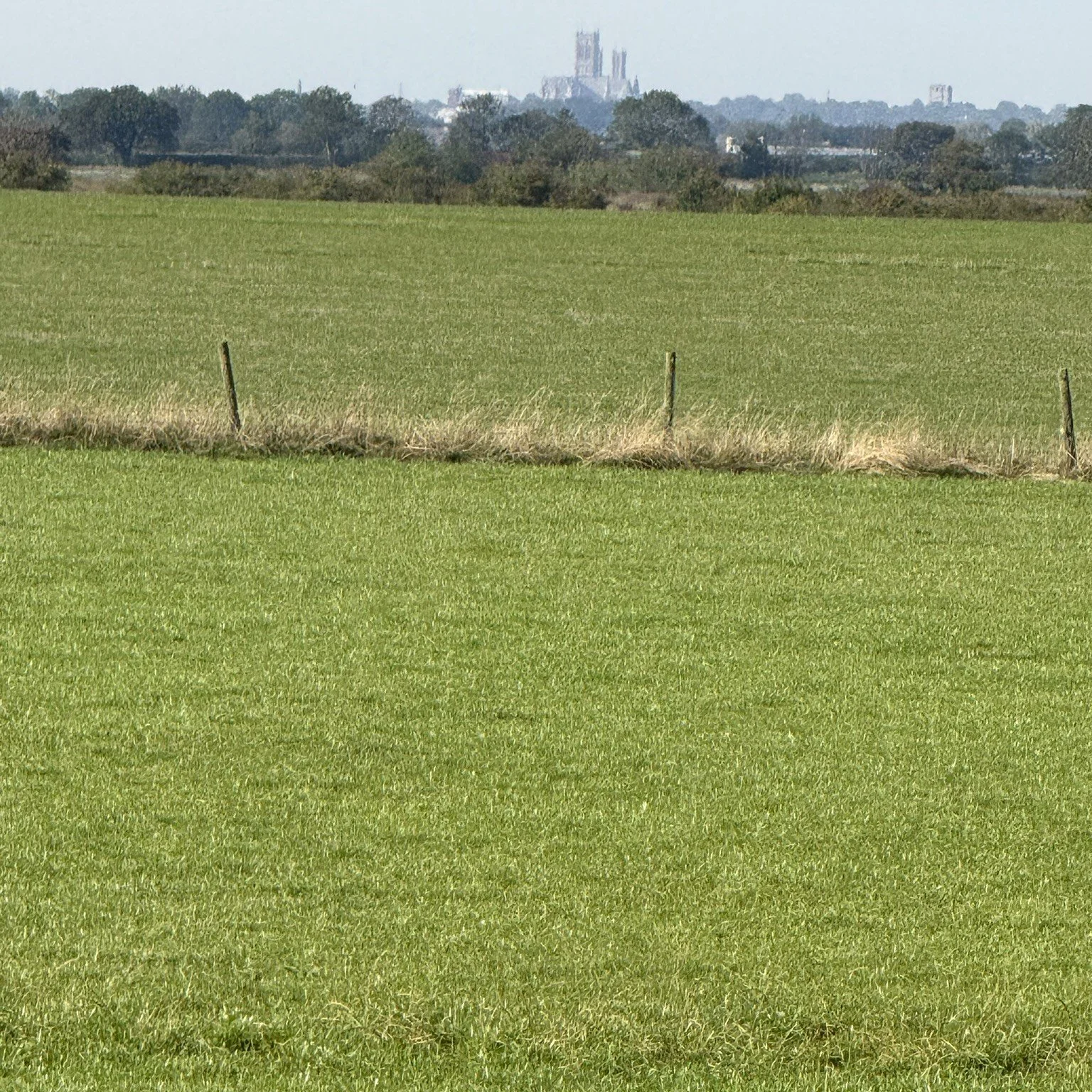
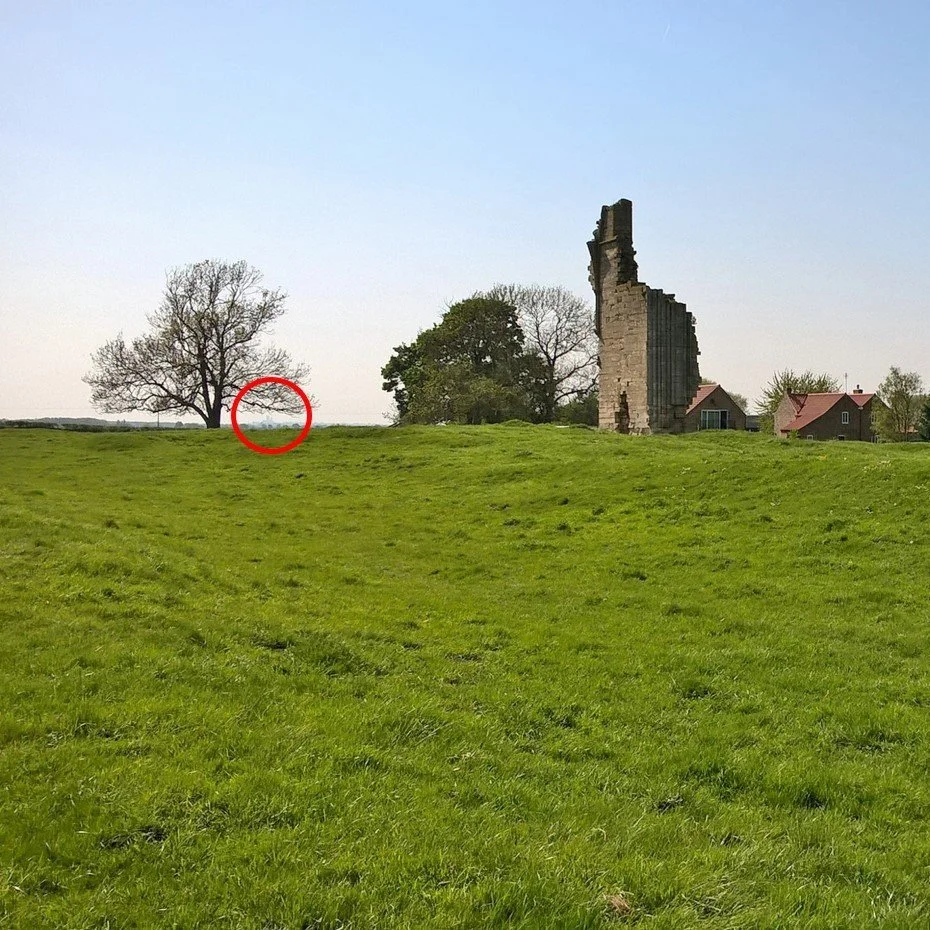
Lincoln Cathedral's towers seen from the site of Barlings Abbey, approximately seven miles away.
The geography makes Turstin's homesickness all the more painful.
Lincoln is close enough for him to see, but the life he once knew there is beyond his reach.
In the 1180s, the cathedral would not have looked exactly as it does today. The great rebuilding campaigns that created much of the present structure belonged to later decades, following the earthquake of 1185. But the cathedral already dominated Lincoln's hilltop, and its distant presence offered me a tangible connection between the abbey and Turstin's former home.
Who were the Premonstratensian White Canons?
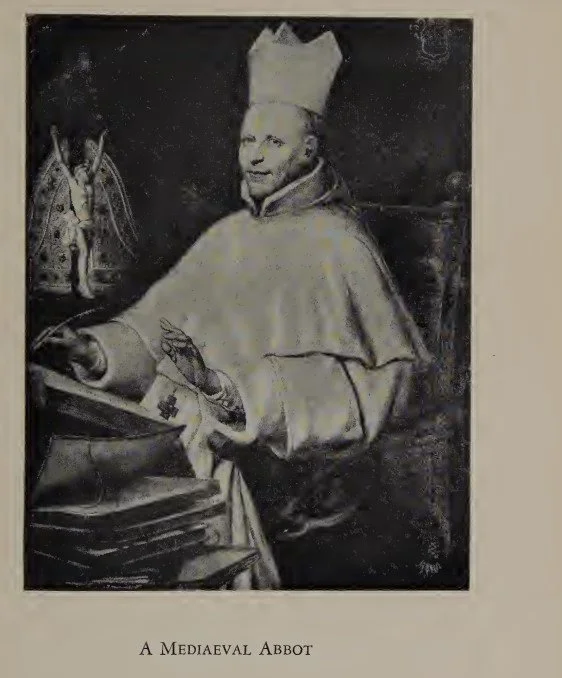
A medieval Premonstratensian abbot. Barlings was governed by an abbot and inhabited by Premonstratensian canons, commonly known in England as the White Canons
The Premonstratensians, also called Norbertines or White Canons, were founded by Norbert of Xanten at Prémontré, near Laon in northern France, in the early twelfth century. Their white habits gave them their familiar English name. Although they lived in monasteries and followed a disciplined communal religious life, Premonstratensians were not technically monks. They were canons regular, following the Rule of St Augustine.
That distinction is important. Monastic orders such as the Benedictines traditionally placed particular emphasis on prayer and the enclosed life of the monastery. The Premonstratensians combined communal religious observance with pastoral responsibilities beyond their abbey walls.
Their canons might serve parish churches, preach, teach, administer religious institutions or minister to local communities. Norbert's vision drew on the religious reform movements sweeping across Europe during the twelfth century. He believed that clergy should embrace poverty, discipline and communal life, abandoning the wealth and personal comforts that had attracted criticism within the medieval Church.
The new order adopted many of the austere practices associated with the Cistercians, but maintained its own particular emphasis on pastoral service. Its members owned little personally, lived under obedience to their superiors and followed a demanding programme of worship. Their life combined two obligations that could sometimes pull in different directions: withdrawal from the world and service within it. A canon might spend hours singing the Divine Office in the abbey church, eat and sleep within a tightly regulated community, and yet also leave the monastery to serve people in the surrounding countryside.
That combination was one of the reasons the order spread so rapidly during the twelfth century. By the time Ralph de Haya founded Barlings, the Premonstratensians were already establishing houses across England.
What was daily life like at Barlings Abbey?
Life at Barlings was regulated by bells.
The canons followed the eight traditional services of the Divine Office, beginning with the night office of Matins and ending with Compline before sleep.
The precise times varied with the season, but the night office interrupted the canons' sleep, sometimes requiring them to rise when the rest of the world was still in darkness.
Between services came study, manual and administrative work, meals, chapter meetings and whatever duties had been assigned to individual members of the community.
The canons ate communally, observed restrictions on conversation and followed rules governing dress, movement, possessions and behaviour.
Their lives were organised around obedience.
The chapter house: where discipline was enforced
Every day, the community assembled in the chapter house, usually situated on the eastern side of the cloister. A chapter from the Rule could be read aloud, instructions issued and abbey business discussed. It was also a place where faults might be confessed or reported and discipline imposed.
For a novelist, this offers considerable possibilities.
One of Turstin's Barlings scenes in Lady of the Castle opens in the chapter house in August 1186. By the time the community gathers, Turstin has already been awake for hours. He has stood through candlelit Matins, attended Prime, eaten a meagre breakfast in silence and undertaken his studies. Now he must endure another lengthy period of sitting or standing while the abbot conducts the business of the community. For a young man with Turstin's crooked back, the physical demands of religious life matter as much as its spiritual ones.
Medieval religious life was not simply a succession of serene men walking through cloisters chanting psalms. It was cold stone beneath sandalled feet, interrupted sleep, long periods of standing, rules governing eating and speaking, and obedience to men you might neither admire nor like. It could also mean punishment and humiliation.
The surviving records of Premonstratensian visitations reveal that discipline was an enduring concern. Abbots and visitors investigated misconduct, imposed corrections and attempted to maintain the standards of the order. Of course, the ideals of religious life were not always matched by the behaviour of individual canons.
That was something I wanted Turstin's story to explore. He believes in God and takes his duties seriously, but he begins to question whether every form of punishment imposed in God's name is either necessary or just. It is a difficult question for a young novice who has been taught that obedience is a virtue.
And at Barlings, obedience was expected.
What did Barlings Abbey look like in the Middle Ages?
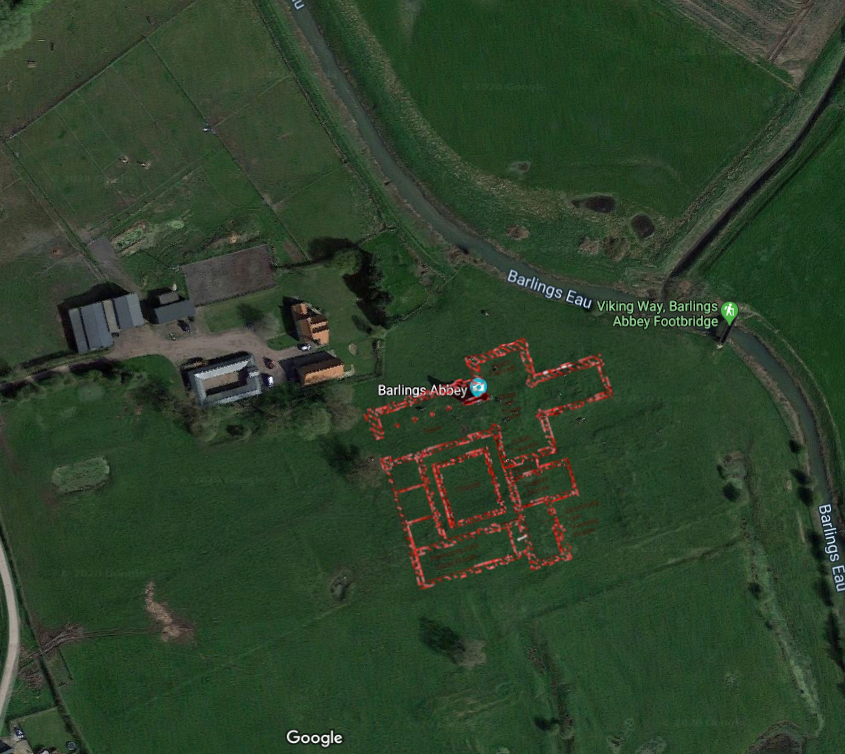
he site of Barlings Abbey today, with a reconstruction of the layout of its principal medieval buildings
Very little medieval masonry survives above ground, but the site's earthworks, documentary evidence and antiquarian illustrations have allowed archaeologists and historians to reconstruct much of its layout.
The abbey church occupied the northern side of the cloister complex. The fragment that survives today forms part of the north-west crossing pier, with a short adjoining section of wall between the nave and north transept. Its architectural detail dates from the thirteenth century.
To the south lay the cloister, a square courtyard surrounded by covered walkways, which connected the principal buildings of the community. This was the centre of the canons' daily life.
The chapter house stood on the eastern side. Nearby were the dormitory, or dorter, where the canons slept communally, and other rooms associated with religious observance and study. The reconstructed plan also identifies a warming room, one of the few places where the canons could find some relief from the winter cold. To the south stood the refectory, where they ate their meals. Kitchens, stores and other domestic buildings served the needs of the household. An infirmary probably occupied a position farther east, although its precise location is less certain.
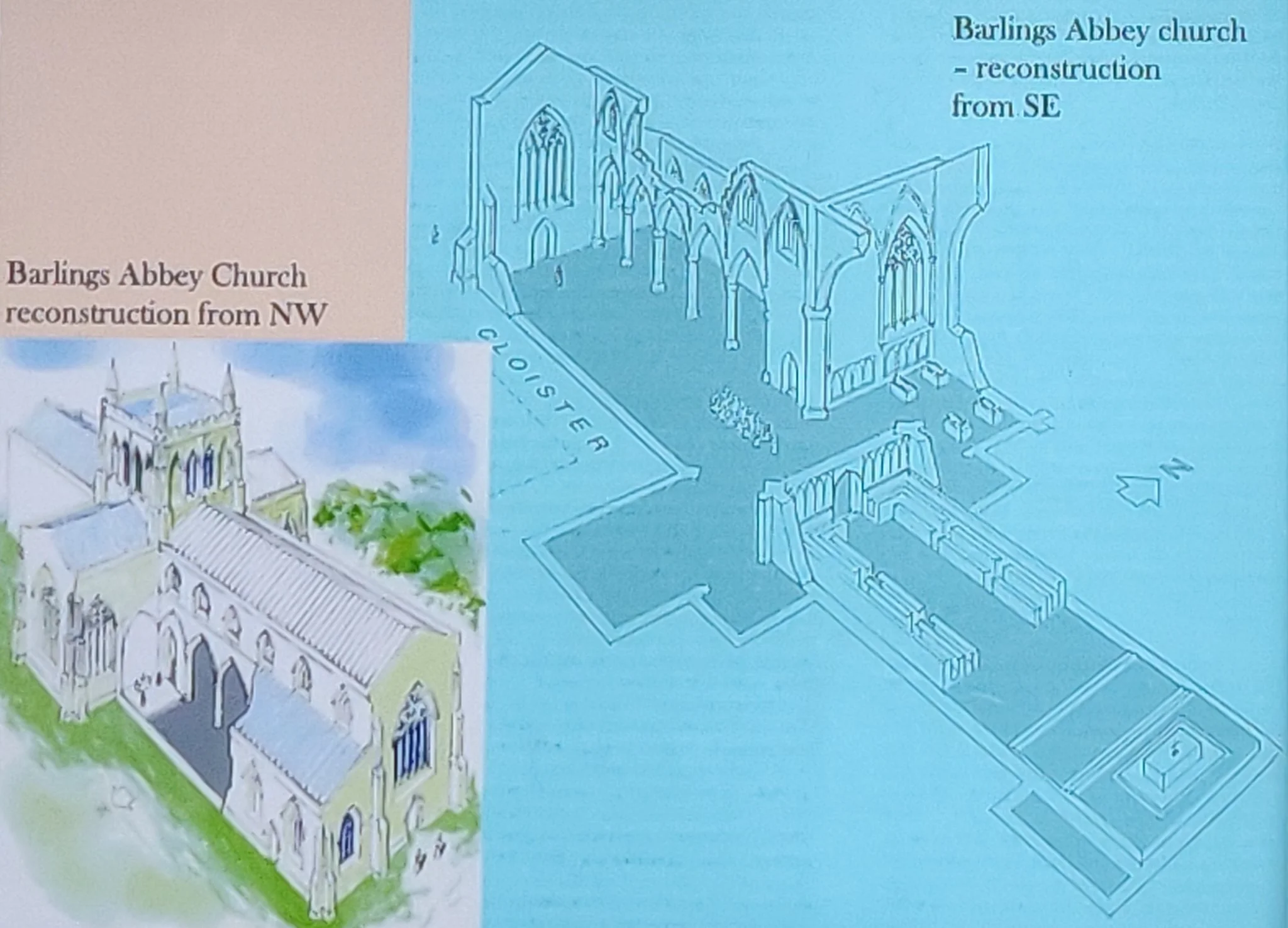
Reconstruction of Barlings Abbey church and cloister buildings, showing how the religious complex may have appeared in the Middle Ages
Surrounding these principal buildings were the practical elements without which the abbey could not function. There were agricultural buildings, storage areas, gardens, workshops, water supplies and fishponds.
Water management was particularly important. The abbey precinct lay within a landscape shaped by channels, ponds, leats and drainage works. Some supplied water, others helped control flooding or provided fish for the community's table. Fish were especially valuable because the canons observed numerous days when eating meat was forbidden.
Barlings was an institution that required considerable organisation. Its religious life depended on food production, building maintenance, estate management and the labour of people living both inside and outside its walls.
The canons might have devoted their lives to God, but someone still had to keep the roofs watertight, the drains clear and the kitchens supplied.
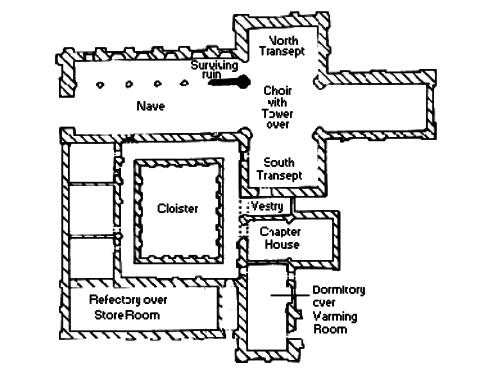
Possible reconstruction of Barlings Abbey, identifying the church, cloister and principal buildings used by the canons
That is partly why I placed several of Turstin’s scenes in the infirmary. He volunteers there during his recreation periods and befriends Herrig, a servant boy whom he begins to teach to read. The setting allowed me to show another side of medieval religious life: medicine, literacy, charity and the enormous value of books.
Turstin and Herrig work from an old medical manuscript - Bald’s leechbook (whih will feature in other novels of mine), reading remedies involving garlic, onion, goose fat and rather less appetising ingredients. Their friendship also lets Turstin discover something important about himself. He may not be certain that he is suited to the religious life, but he likes teaching and caring for people.
The infirmary: medicine, books and learning
The infirmary is one of the settings I particularly enjoyed recreating for Lady of the Castle. Turstin volunteers there during his recreation periods and befriends Herrig, a young servant whom he begins to teach to read. Their friendship allows me to explore another side of medieval religious life: medicine, literacy, charity and the enormous value of books.
In the novel, Turstin and Herrig study an old medical manuscript, Bald's Leechbook, a collection of remedies compiled in Anglo-Saxon England. The real manuscript survives in the British Library. Its remedies include ingredients such as garlic, onion, animal fats and substances that modern patients might find distinctly unappealing. Some treatments were based on observation and practical experience; others drew on medical traditions that seem strange to us today.
Medieval medicine was not simply a matter of superstition. Practitioners inherited bodies of medical knowledge from earlier generations, including classical and Anglo-Saxon texts, and attempted to understand illness using the theories and remedies available to them.
In Turstin's story, the infirmary becomes somewhere he can put his learning to practical use. He may not be certain that he is suited to the religious life, but he discovers that he enjoys teaching and caring for people. And that raises an uncomfortable question. If he can serve God by helping others, must he necessarily become a priest?
How did medieval canons manage without modern toilets?
There was another essential feature of monastic architecture that rarely appears in romantic images of abbey life: the toilets.
Large medieval monasteries generally had a communal latrine block connected to the dormitory. This was called a reredorter, sometimes referred to as the necessarium.
The arrangement was practical. The canons could reach the latrines directly from their sleeping quarters, while a watercourse or drainage system carried away the waste. Where geography permitted, latrines could be built over flowing water, although monasteries also used managed drains and other sanitation arrangements.
The surviving reconstruction of Barlings does not identify its reredorter with certainty, so we cannot point to one particular patch of earth and declare that it was the medieval loo. It probably stood close to the dormitory, as was customary in monastic buildings of this kind.
A community containing numerous canons, servants and visitors certainly required sanitation. And somewhere within that complex, Turstin and his fellow novices had to deal with exactly the same bodily necessities as everyone else.
It is one of those details I love about researching medieval life. The past becomes much more real once everyone needs the toilet.
Why were there so many medieval monasteries in the Witham Valley?
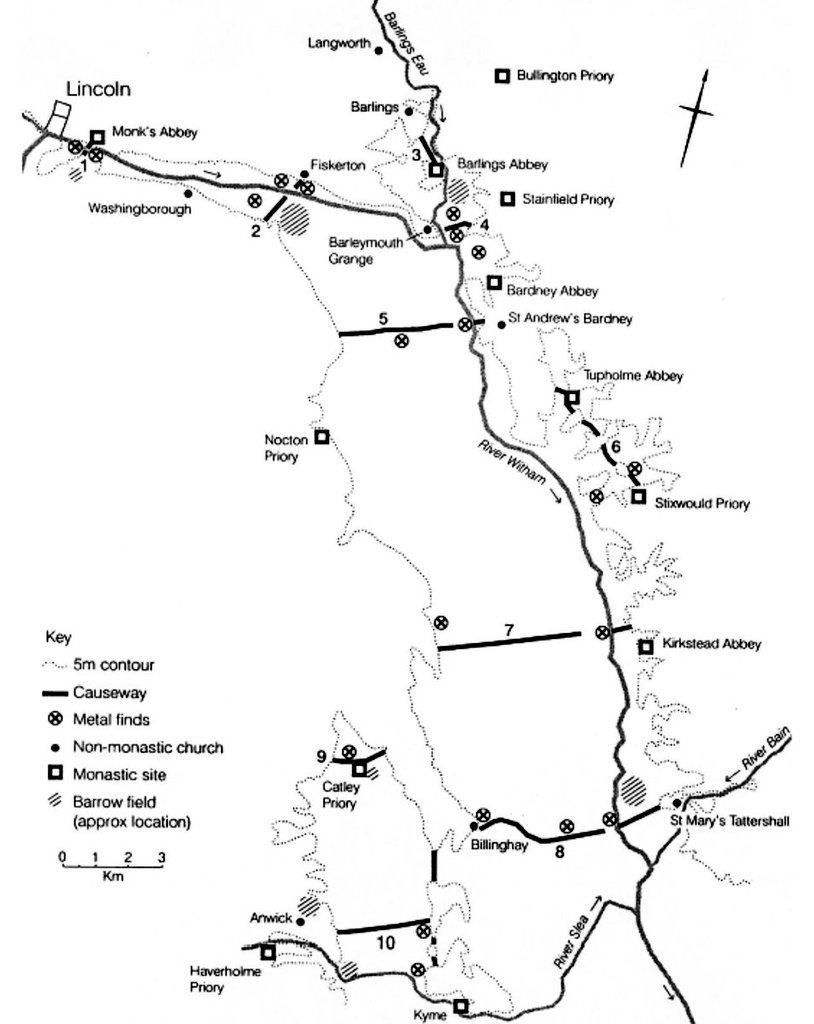
Barlings Abbey formed part of an extraordinary concentration of medieval religious houses in Lincolnshire's Witham Valley
Barlings was part of a much larger religious landscape. The Witham Valley, extending east and south from Lincoln, contained an extraordinary concentration of medieval monasteries and priories. Nearby stood Stainfield Priory, Bardney Abbey, Tupholme Abbey, Stixwould Priory, Nocton Priory and Kirkstead Abbey, among others.
Different religious orders occupied these houses. Benedictines, Cistercians, Augustinians and Premonstratensians all established communities in this part of Lincolnshire. Tupholme, only a few miles from Barlings, was another Premonstratensian foundation.
The concentration is striking when viewed on a map. These houses were linked by waterways, roads, causeways, agricultural estates, parish churches and networks of aristocratic patronage. The River Witham provided a means of communication as well as a source of water and food. Monasteries owned land on both sides of it. Their estates were worked by tenants and labourers, while their churches and buildings required supplies of timber, stone, grain, wool and other materials.
Religious houses were also important centres of administration and landholding. Their abbots dealt with landlords, bishops, royal officials and neighbouring monasteries. Disputes over property, rights and income could occupy as much attention as the spiritual affairs of the community.
The Witham Valley was therefore a busy and economically important landscape. For someone travelling from Lincoln to Barlings in the twelfth century, the journey was not a departure from civilisation into an empty wilderness.
It was a movement into a different world, one dominated by water, farmland, religious estates and bells.
How wealthy and important did Barlings Abbey become?
Barlings began with a comparatively modest endowment, but it acquired substantial property during the centuries that followed. Gifts from wealthy patrons increased its holdings, while income from its lands and churches supported the canons, their buildings and their religious responsibilities. Among its possessions were estates and interests in North Carlton, Caenby, Glentham, Scothern, Swaton and other Lincolnshire villages.
By the fourteenth century, the abbey had attracted royal favour. Two successive abbots enjoyed the patronage of Edward III and Queen Philippa, receiving exemptions from certain financial burdens that helped support the rebuilding of the abbey church.
The community's later records suggest that Barlings generally enjoyed a good reputation. But that did not mean its canons were immune from misconduct.
In 1491, Bishop Richard Redman, who conducted visitations of Premonstratensian houses, punished two members of the community for serious breaches of discipline. Three years later, he criticised the adoption of fashionable clothing, including excessively wide shoes known as slippers. Apparently, even men who had renounced worldly vanity could be tempted by unsuitable footwear.
But Redman's reports were not uniformly critical. In 1500, he found the abbey in excellent condition, praising both its religious observance and its financial management.
The records are valuable because they offer glimpses of real individuals, their behaviour and the efforts of their superiors to maintain discipline.
By the 1530s, Barlings was one of Lincolnshire's wealthiest religious houses. Its annual income was valued at more than £300, comfortably above the £200 threshold used to distinguish the smaller monasteries targeted in the first phase of Henry VIII's suppression.
Its wealth should have offered some protection. Instead, the abbey became caught up in one of the most dangerous episodes of the Tudor Reformation.
Why was Barlings Abbey destroyed?
In October 1536, rebellion broke out in Lincolnshire. Henry VIII's government had begun suppressing smaller monasteries, confiscating their property and dismantling communities that had existed for centuries.
The changes provoked widespread anger. Many people feared the loss of religious houses that provided charity, employment and spiritual services. Others objected to royal interference in traditional religion or resented the influence of Thomas Cromwell and the king's advisers.
The Lincolnshire Rising brought thousands of people into rebellion. Barlings Abbey became involved, although the extent to which its abbot and canons participated willingly remains disputed. The last abbot, Matthew Mackarel, was accused of helping the rebels. Later accounts portrayed him as a leading figure in the rising, sometimes associated with the name Captain Cobbler.
But the evidence deserves caution. Mackarel maintained that he had acted under pressure and feared violence against his monastery. His account suggests that he initially refused to join the rebels and offered prayers instead, but eventually provided food and sent canons to accompany them. He also admitted taking precautions against the possible dissolution of the abbey, concealing money and valuables so that his community would not be left destitute.
Such actions did little to help his case once the rebellion collapsed. Mackarel and several canons were arrested. In March 1537, the abbot and six of his brethren were executed. Barlings was declared a traitorous house and suppressed. Its property passed to the Crown, and its estates were subsequently granted to Charles Brandon, Duke of Suffolk.
The monastery's long history had come to an end. Its buildings did not disappear immediately. Parts were adapted for later use, while others were gradually dismantled for building materials. Illustrations from the eighteenth century show considerably more surviving masonry than can be seen today.
The remaining church tower finally collapsed in 1757. What survives now is a fragment of the abbey church, surrounded by earthworks that mark the positions of buildings where generations of canons had lived.
The monastery founded by Ralph de Haya in the reign of Henry II was gone.
How did Barlings Abbey inspire Lady of the Castle?
Turstin FitzErneis is fictional, but placing him at Barlings allowed me to explore a world that was very real, and one with a direct connection to the family who raised him.
He has grown up in Nicola de la Haye's household at Lincoln Castle. He knows soldiers, horses, servants, politics, family quarrels and the noisy life of a great medieval household. Now he enters an abbey founded by Nicola's own uncle some thirty years earlier.
Barlings demands something entirely different. Silence, obedience, study and prayer. A white habit, a tonsure, a communal dormitory and eight daily offices. He is expected to accept the authority of his abbot and follow the customs of a religious community whose rules govern almost every aspect of his life.
Eventually, he must decide whether this is merely somewhere he lives or the life to which God has called him.
He studies theology and canon law. He helps in the infirmary and teaches Herrig to read. He begins questioning some of the harsher disciplinary practices around him. And whenever he can, he looks west towards Lincoln and misses home.
Most importantly, he begins to discover the difference between faith and vocation. He believes in God. But that does not necessarily mean God wants him to become a priest.
That question follows Turstin far beyond Barlings and eventually becomes one of the most important choices of his life.
What remains of Barlings Abbey today?
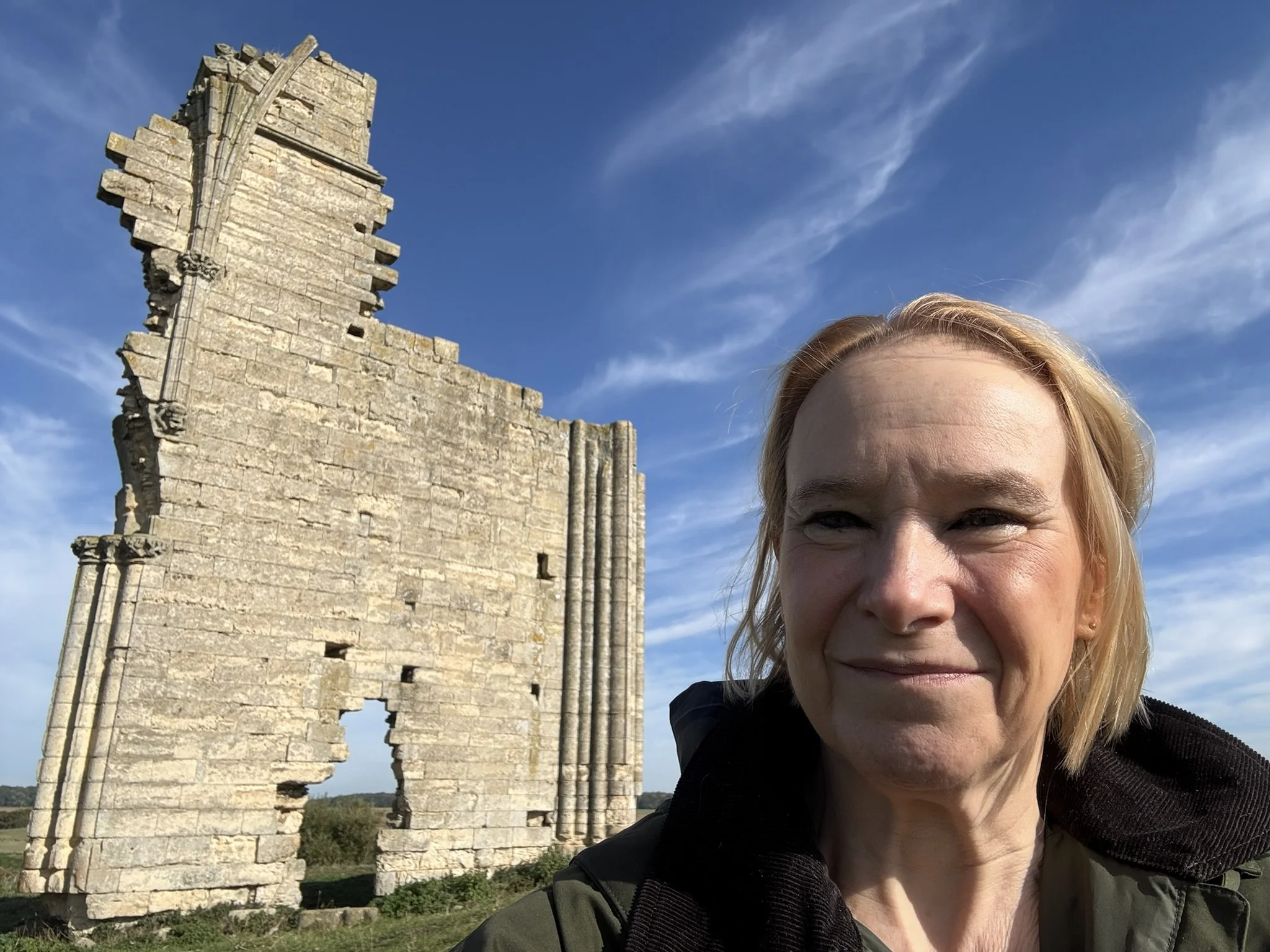
Rachel Elwiss Joyce at the surviving ruins of Barlings Abbey, Lincolnshire
Standing among the ruins of Barlings is a curious experience. There is so little to see, and yet there was once so much here. The abbey church, hundreds of feet long, stood where there is now grass. The cloister and chapter house have vanished, their positions marked by changes in the ground. The dormitory, kitchens and refectory are gone.
But the landscape remains. The Barlings Eau still flows nearby, and the raised ground of Oxney still stands above the surrounding fenland.
And to the west, Lincoln Cathedral remains visible on the skyline.
That is what makes visiting places such as Barlings so valuable to me as a historical novelist. On the page, I can rebuild the walls. The chapter house fills again with canons sitting on its stone benches. Novices shuffle their aching feet. Bells summon them from sleep. Smoke rises from the kitchens. Someone carries food towards the refectory. A sick old canon lies in the infirmary. Servants hurry between buildings. Beyond the precinct, carts grind along the causeway and water moves sluggishly through the fen.
And somewhere among them is a lonely young man from Lincoln, looking west whenever he gets the chance.
The real canons who lived at Barlings left only fragments of their individual stories. We know the names of some abbots, the lands the community held, the rules its members followed and something of the events that eventually destroyed it. But standing beside that remaining piece of stone, looking towards the city that Nicola de la Haye spent so much of her life defending, it becomes easier to imagine the people who once lived here.
And for a novelist, that is where the story begins.
Barlings Abbey: Key Historical Facts
Name: Barlings Abbey, also known as St Mary's Abbey of Oxney
Location: Barlings, Lincolnshire, approximately seven miles east of Lincoln
Founded: c. 1154
Founder: Ralph de Haya, uncle of Nicola de la Haye
Religious order: Premonstratensians (White Canons or Norbertines)
Mother house: Newsham Abbey, Lincolnshire
Original community: Thirteen canons
Rule: Rule of St Augustine
Original location: Near Barlings Grange
Permanent location: Oxney, beside the Barlings Eau
Last abbot: Matthew Mackarel
Suppressed: 1537, following the Lincolnshire Rising
Surviving remains: Part of the abbey church's north-west crossing pier and adjoining wall
Barlings Abbey: A Brief Timeline
1154–55: Ralph de Haya founds Barlings Abbey. Thirteen Premonstratensian canons arrive from Newsham.
Mid-twelfth century: The community relocates from its first site near Barlings Grange to Oxney.
Late twelfth century: The abbey receives further endowments from the de Haya family and other patrons.
Fourteenth century: Royal patronage under Edward III and Queen Philippa helps fund rebuilding of the abbey church.
1491–1500: Bishop Richard Redman's visitation records reveal details of the abbey's discipline and administration.
October 1536: The Lincolnshire Rising brings Barlings into conflict with Henry VIII's government.
March 1537: Abbot Matthew Mackarel and six canons are executed. The abbey is suppressed.
1757: The remaining church tower collapses, leaving only fragments of the once extensive monastery.
Frequently Asked Questions About Barlings Abbey
Can you visit Barlings Abbey?
The ruins of Barlings Abbey lie in the countryside east of Lincoln, near Low Barlings. The Viking Way public footpath passes through the site close to the surviving remains. Visitors should follow public rights of way and respect the surrounding agricultural land.
Who founded Barlings Abbey?
Barlings Abbey was founded in about 1154 by Ralph de Haya, a Lincolnshire landowner and uncle of Nicola de la Haye, the hereditary constable of Lincoln Castle.
What were the White Canons?
The White Canons were members of the Premonstratensian order, founded by Norbert of Xanten in the early twelfth century. They followed the Rule of St Augustine and combined communal religious observance with pastoral service.
Why was Barlings Abbey destroyed?
Barlings Abbey was suppressed in 1537 after its abbot and several canons were accused of involvement in the Lincolnshire Rising against Henry VIII. The extent of their voluntary participation remains disputed.
What remains of Barlings Abbey?
The principal surviving medieval structure is part of the north-west crossing pier of the abbey church, together with a short section of adjoining wall. Extensive earthworks indicate the positions of other buildings.
What is the connection between Barlings Abbey and Nicola de la Haye?
The abbey was founded by Nicola's uncle, Ralph de Haya, and members of her family contributed to its early endowments. In Rachel Elwiss Joyce's historical novel Lady of the Castle, Nicola's fictional foster son Turstin becomes a novice at Barlings.
Historical Sources and Further Reading
The history and archaeological interpretation of Barlings Abbey are documented in several important sources.
Paul Everson and David Stocker, Custodians of Continuity? The Premonstratensian Abbey at Barlings and the Landscape of Ritual (2011). A major archaeological and historical study of Barlings, examining its buildings, landscape, religious functions and relationship with the surrounding countryside.
Premonstratensian Abbeys in the UK: Barlings Abbey. An accessible account of the abbey's history, archaeological remains, endowments and eventual suppression, drawing on specialist scholarship and documentary evidence. Read the Barlings Abbey research.
Lincolnshire Museums, Barlings Abbey, Archaeology Information Sheet No. 5. A useful illustrated introduction to the monastery's foundation, architectural development and surrounding landscape. Read the Lincolnshire Museums information sheet
Lincolnshire Historic Environment Record: Barlings Abbey (MLI54215). Archaeological information concerning the surviving medieval masonry and the wider abbey site. View the historic environment record
Historic England: Barlings Abbey. Information on the abbey's foundation, the Lincolnshire Rising and the surviving historic structures.
Richard Redman's visitation records, published in Collectanea Anglo-Premonstratensia, provide evidence of the organisation and discipline of English Premonstratensian houses during the late fifteenth and early sixteenth centuries.
Discover Barlings Abbey in Lady of the Castle
Lady of the Castle is the second novel in my award-winning Nicola de la Haye series.
Set in England during the final years of Henry II's reign and the turbulent period that followed, it tells the story of a remarkable medieval woman fighting to protect her family, her marriage and the castle entrusted to her care.
Turstin's experiences at Barlings Abbey form part of a much wider story of love, loyalty, betrayal and the difficult choices people make between duty and conscience.
Discover Lady of the Castle. An award-winning medieval historical novel based on real people and events.