The Real Sheriff of Nottingham?
William de Wenneval and the Price of Loyalty
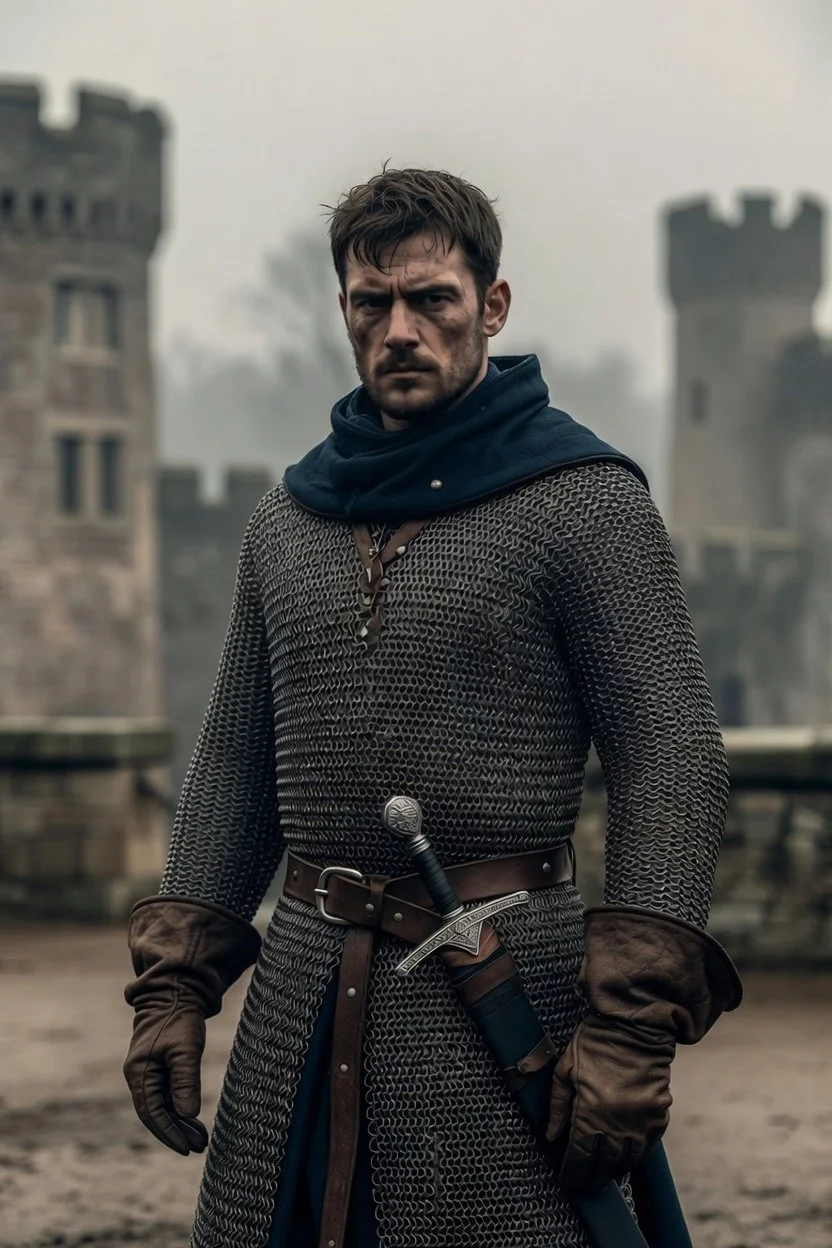
William de Wenneval, John’s man, sheriff of Nottingham, may well have died horribly for his loyalty when Richard the Lionheart returned from crusade.
Every Robin Hood story needs its villain, and for centuries that villain has worn one title above all others: the Sheriff of Nottingham. Cruel, greedy, complicit in every injustice done to the poor of Sherwood while good King Richard bled for Christendom on crusade and wicked Prince John schemed at home.
It's one of the most durable double acts in English folklore.
It’s also probably completely wrong.
Strip away the ballads and pantomime, and the officeholders behind that legendary title were real men, doing a real and often thankless job. One of the strongest candidates for the historical figure behind the "bad" sheriff of the Robin Hood tales is a man called William de Wenneval (his name also appears as Wendenal, Wendeval, or Wendenall, depending on which chronicle or charter you're reading: spelling in the 1190s was a moving target). He is a minor figure in the great chronicles, mentioned only in passing by Roger of Howden.
But the little that survives of his story is enough to suggest he paid an appalling price for his loyalty.
From steward to sheriff
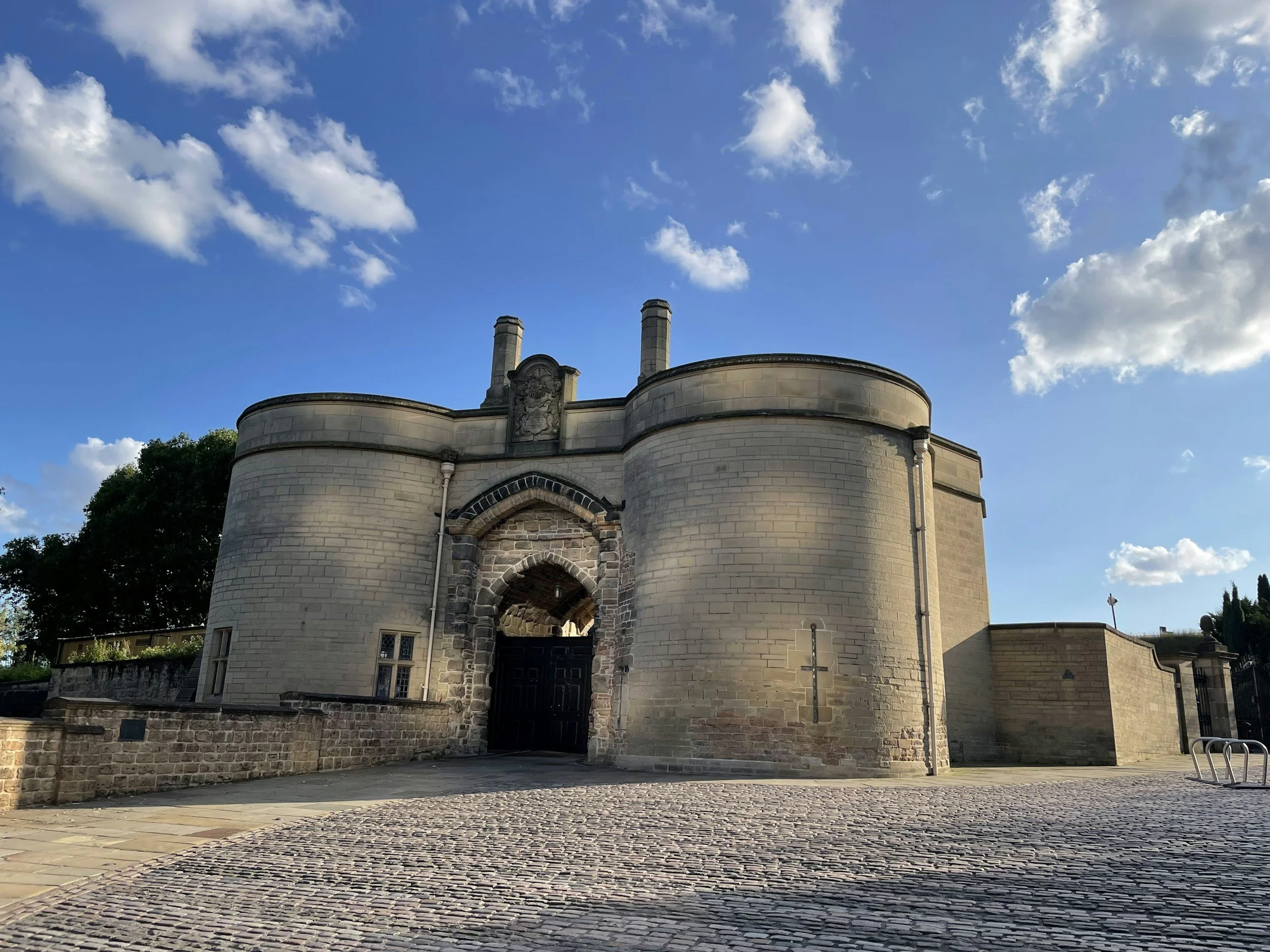
Nottingham Castle Gatehouse
Before he was ever a sheriff, William de Wenneval seems to have served Prince John directly, as his ‘dapifer’, or steward, during the 1180s, in the years when John held the title Lord of Ireland. That earlier connection is important, because it tells us Wenneval wasn't some random royal appointee dropped into Nottinghamshire. He was one of John's own men, trusted with the running of his household, years before John had a kingdom's worth of enemies to make.
By 1191, with Richard away on the Third Crusade and John jockeying for power against the chancellor, William (Guillaume) Longchamp, Wenneval's name surfaces again, this time attached to Nottingham Castle. The Treaty of Winchester, brokered that July to defuse the standoff between John and Longchamp, saw John yield up the castles of Nottingham and Tickhill, which he'd seized the previous spring. Tickhill went into the custody of Reginald de Wasseville; Nottingham went to William de Wenneval: both men drawn from John's own affinity, and both required to hand over a hostage to Longchamp as surety.
It's very likely, from this, that Wenneval held two overlapping roles at once: sheriff of Nottinghamshire and Derbyshire, and constable of Nottingham Castle itself - a post he shared, at least by 1194, with Ralph Murdac. This dual authority - shire and stronghold both - is exactly the kind of concentrated local power the Robin Hood legend imagines in its sheriff (and that Nicola de la Haye and her husband, Gerard de Camville, had secured in Lincolnshire), and precisely the arrangement that made a man like Wenneval indispensable to John's grip on the Midlands while his brother was away.
The siege of Nottingham
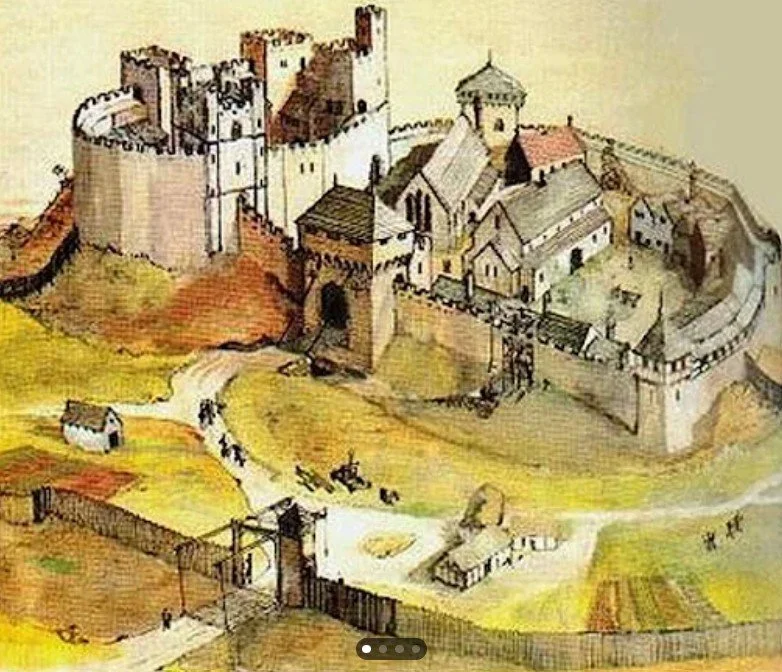
A reconstruction of Nottingham Castle at the time
That grip on Nottighamhsire held for years, right up until Richard came home.
Released from imperial captivity in Germany, Richard landed in England in March 1194 to find two of his own castles, Nottingham and Tickhill, still held for his brother. He rode straight for them. Tickhill's garrison had the sense to sue for terms as soon as they learned the king himself had arrived. Nottingham's did not, or it may be that they did not believe it was Richard. According to Roger of Howden, the defenders were so alarmed by the size and noise of Richard's approaching army that they assumed it was a trick, a bluff got up by lesser commanders to frighten them into surrender. It took two full days of hard fighting, and, by Richard's own choice, the hanging of several of John's captured sergeants outside the walls, precisely in order to terrorise the men still holding out inside, before Wenneval and the other constables finally sent messengers to confirm it truly was the king. Once they knew, William de Wenneval, Roger de Montbegon and a dozen others left the castle at once and threw themselves on Richard's mercy. The rest held out one day more before following them.
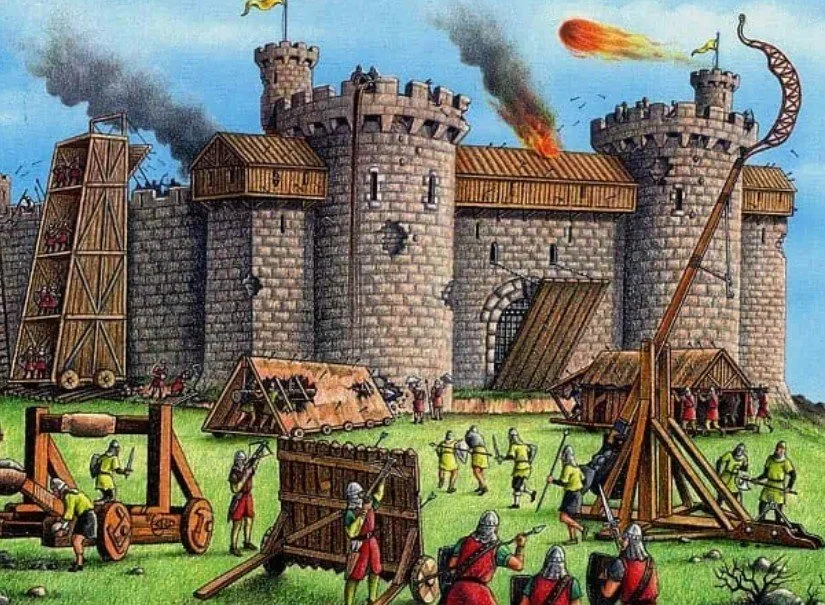
A castle siege
Richard was not in a forgiving mood. He'd already shown at Acre and at Darum, and years earlier against the Young King's men in 1183, that he regarded unconditional surrender as the only acceptable term, and mercy as something to be doled out sparingly, if at all. The Nottingham garrison had no guarantee of safety in life or limb - they had to place themselves entirely in the king's mercy for "life, limb and worldly honour," and it was only through the intervention of Hubert Walter that most were spared outright execution.
But only most.
What happened to Wenneval?
After the siege, William de Wenneval simply vanishes from the record. His lands turn up on the Pipe Rolls among the escheats, that is, the estates confiscated from the king's enemies, alongside those of his fellow constable, Robert de la Mare. And then: nothing. No further charter, no further office, no death recorded in any chronicle that names him directly.
But one chronicler may, indirectly, tell us what became of him.
Andreas of Marchiennes, a Benedictine monk and historian writing at the abbey of Marchiennes in Hainault, recorded a belief that Richard had John's dapifer flayed alive following the fall of Nottingham.
The historian John Gillingham, in his 2002 biography of Richard I, notes this reference and suggests it may well refer to Wenneval: the one man we know for certain had held that exact position in John's household.
I want to be honest about the limits of this evidence, because I think unexamined certainty does worse damage to history than an honest maybe. Andreas doesn't name Wenneval outright. No English chronicler I've found corroborates the flaying directly. What we have is a near-contemporary continental source describing an unnamed dapifer of John's being flayed alive after Nottingham, and a strong circumstantial case - his known career, the totality of his disappearance, and the timing - that this was our man. It's not proof. It is, I think, a very reasonable likelihood.
And it fits everything else we know about Richard the Lionheart.
This was a king who had ordered the beheading of the Young King's captured men without regard to rank back in 1183; who had 2,700 Muslim prisoners massacred outside Acre in 1191 when Saladin missed a deadline; who refused surrender terms outright to the garrison at Darum in 1192; who, on the very afternoon of the Nottingham siege, hanged captured sergeants outside the walls simply to unsettle the men still inside.
A king capable of all of that was entirely capable of ordering a man flayed alive as a public lesson to anyone who might think of following Prince John again.
The romantic image of Richard the crusading hero tends to crowd out this harder truth, but the record doesn't really support separating the two men. He was both, often within the same week.
There's also a bitter irony contemporaries clearly felt keenly. At the very council where Wenneval's fate was apparently being sealed, Roger de Lacy, constable of Chester, the same man who, back in 1191, had summarily hanged two deputy castellans and a squire guilty of nothing worse than driving carrion birds off their corpses, was rewarded with the honour of Pontefract for three thousand marks.
Loyalty to John earned one man an agonising death; brutality in the king's service earned another a promotion.
Wenneval in Lady of the Castle
This story runs directly through my forthcoming novel, Lady of the Castle, where I imagine William de Wenneval as exactly what the sparse record suggests: a decent man, caught on the wrong side of a family war he never started.
Nicola and Gerard spend much of the novel trying to keep their heads down and stay out of the schemes both John and Longchamp keep dragging them into - and finding, again and again, that it comes looking for them regardless. Their son, Dickon, sent to Nottingham to complete his training as a squire, serves under Wenneval as his lord, and is caught inside the castle when Richard's army finally arrives at the gates.
Writing Wenneval's end, I kept coming back to that same unresolved question historians have wrestled with for eight hundred years:
What does it cost a family, and a child, when loyalty to the wrong prince becomes a capital offence?
Read more about Nicola de la Haye: https://www.rachelelwissjoyce.com/nicola-de-la-haye