WELCOME TO RACHEL’S BLOG

Scroll down to see the most recent posts, or use the search bar to find previous blogs, news, and other updates

Medieval Stories
Another Accolade for LADY OF LINCOLN!
Book Award, Book Reviews, Lady of Lincoln, Nicola de la Haye Rachel Elwiss Joyce Book Award, Book Reviews, Lady of Lincoln, Nicola de la Haye Rachel Elwiss Joyce

Another Accolade for LADY OF LINCOLN!

Besides winning a gold medal and ‘Book of the Year’ from the Coffee Pot Book Club, a ‘Notable Book’ Award from BlueInk Review (their highest accolade), and Five Stars from Reader’s Favorite, LADY OF LINCOLN has now been shortlisted for the Chaucer Award by the Chanticleer International Book Awards!.
Read More
Wu Zetian: The Woman Who Ruled an Empire
Forgotten Women of History, Historical Fiction Rachel Elwiss Joyce Forgotten Women of History, Historical Fiction Rachel Elwiss Joyce

Wu Zetian: The Woman Who Ruled an Empire

When we think of medieval power, the mind rarely leaps to a woman occupying the highest throne in one of the world’s greatest empires. Yet in 7th-century China, one woman did precisely that. Wu Zetian (624–705 CE) rose from low-ranking concubine to become China’s only female emperor; not merely empress consort, nor regent, but sovereign ruler in her own right.

In a world shaped by Confucian ideals that explicitly declared women inferior and unfit for leadership, her ascent was nothing short of astonishing.

And like many powerful women in history, Wu Zetian has been remembered through a haze of scandal, propaganda, and deliberate distortion. It’s time to peel back the layers and re-examine the woman behind the legend.

From Concubine to Emperor: A Rise Unlike Any Other

Wu Zetian entered the palace of Emperor Taizong as a teenage concubine; one among hundreds, hardly expected to influence politics. After Taizong’s death she should, by custom, have been sent to a Buddhist convent. Instead, she returned to the palace of his successor, Emperor Gaozong, beginning her ascent through skill, cunning, and what later historians would call “unwomanly ambition.”

Smooth Operator

But ambition alone did not place her on the throne. She possessed a sharp intelligence and administrative brilliance; a talent for identifying capable officials, many of whom became her loyal supporters; and a capacity to counter, outmanoeuvre, or neutralise rival factions.

When Gaozong suffered debilitating strokes, Wu Zetian took charge of state affairs. After his death, she ruled first through her sons and eventually dispensed with that formality entirely, proclaiming her own dynasty: the Zhou, and naming herself Huangdi, the imperial title previously reserved for male rulers.

Read More
‘King and Conqueror’: How much truth-stretching is acceptable?
Historical Fiction, Norman Invasion, Historical Drama Rachel Elwiss Joyce Historical Fiction, Norman Invasion, Historical Drama Rachel Elwiss Joyce

‘King and Conqueror’: How much truth-stretching is acceptable?

Welcome back to another Medieval Monday blog. After several posts dissecting the lead up to the Great Rebellion of 1173-4, today I’m switching focus to another seismic moment in English history: the Norman Conquest of England, as reimagined in the TV programme King & Conqueror.

The show has stirred plenty of excitement, and equally as much critique, about just how faithful a retelling it is. Because of that, I was loathe to watch it, but now I have, and here’s my view.

In short: yes, it draws on real events, but takes dramatic licence freely. The question is: when storytelling trumps scholarship, how much is too much?

Read More
Lady of Lincoln Awarded the Prestigious BlueInk ‘Notable Book’ Seal!

Lady of Lincoln Awarded the Prestigious BlueInk ‘Notable Book’ Seal!

I’m delighted to share some wonderful news:
Lady of Lincoln has been awarded the BlueInk Notable Book Seal — an honour reserved for a very small number of books judged to be of exceptional merit.

BlueInk Review is one of the publishing industry’s most respected editorial review services, created by professional critics and editors who have written for outlets such as Publishers Weekly, Kirkus, and major newspapers.

The Notable Book Seal is BlueInk’s highest distinction, highlighting titles that stand out for their literary quality, authenticity, and craftsmanship. Fewer than five percent of submissions receive this accolade.

Here’s some of what the reviewer wrote about Lady of Lincoln:

“Joyce’s rich characterization unfolds against a vivid, meticulously researched historical backdrop… a gripping account of courage amid the brutal realities of civil war.”

For a historical novel rooted in the real life of Nicola de la Haye, England’s indomitable Lady of Lincoln Castle, this accolade is deeply meaningful. It celebrates not only the countless hours of research and writing but also the historical women who refused to be forgotten.

Read More
Empress Theodora of Byzantium: She Saved an Empire

Empress Theodora of Byzantium: She Saved an Empire

The latest in the blog series is a special treat for me. I’ve long been fascinated, but a bit in the dark, about the Byzantine Empire.

But it seems few women of the early Middle Ages rose as far—or have been judged as harshly—as Empress Theodora of Byzantium. Rising from the margins of Constantinople’s theatre world to become one of the most powerful women in imperial history, Theodora’s story is one of intelligence, ambition, resilience, and reinvention. And like so many extraordinary women, she was both celebrated and vilified by her contemporaries.

Who Was Empress Theodora?

Born around 500 CE, Theodora started life far from the purple. Her father was a bear trainer for the Hippodrome’s Blue faction, and after his death, Theodora and her sisters were pushed into the theatre—an environment that in Byzantium sat somewhere between entertainment, politics, and scandal. According to the hostile historian Procopius (more on him later), Theodora’s early life involved performance, satire, and possibly sex work—though his account is so malicious that modern historians tread carefully.

What we do know is that Theodora was:

  • Exceptionally intelligent, known for her quick wit and sharp political instincts

  • Socially mobile in a rigid society, rising from performer to respected mistress of the imperial court

  • Deeply religious, eventually embracing Monophysite Christianity

  • A political partner, not merely a wife, to Emperor Justinian I

When Justinian became emperor in 527 CE, Theodora ruled alongside him as Augusta, wielding extraordinary influence—sometimes surpassing that of her husband.

The Nika Riots: A Moment That Defined an Empress

Read More
Medieval Advent
Medieval Festivals Rachel Elwiss Joyce Medieval Festivals Rachel Elwiss Joyce

Medieval Advent

Everyone is talking about what they have in their advent calendars: chocolates, toys, even Star Wars characters! Advent also brings to mind glittering candles on wreaths, festive jumpers, Christmas markets, mulled wine, and the countdown to Christmas morning.

I haven’t met a single person (other than fellow medieval fiction authors) who have any idea that for medieval people, Advent was not a season of indulgence or celebration. It was a period of fasting, penance, self-examination, and preparation for the Second Coming rather than Santa’s sleigh.

The earliest evidence for Advent appears in the 4th century, particularly in Gaul and Spain, where Christians observed a multi-week fast before Epiphany rather than Christmas. This early “Nativity Fast” resembled Lent: No meat, no dairy, no rich foods, no marital relations (yes, this was explicitly addressed!). By the 6th century, Rome formalised a four-week liturgical season leading up to Christmas. But unlike today’s “anticipatory joy,” medieval Advent preached repentance, vigilance, and apocalyptic expectation.

The focus wasn’t solely on celebrating Christ’s birth. Advent was designed to prepare the soul for Christ’s return in judgement. Medieval sermons emphasised humility, fear of sin, confession, charitable giving, and moral renewal. The message was clear: Christmas might be coming, but so was Judgement Day!

If modern Advent is “countdown to the festivities,” medieval Advent was “brace yourself and prepare your soul.”

Read More
Book Review: The Traitor's Son by Wendy Johnson
Blog Tour, Book Review, Historical Fiction Rachel Elwiss Joyce Blog Tour, Book Review, Historical Fiction Rachel Elwiss Joyce

Book Review: The Traitor's Son by Wendy Johnson

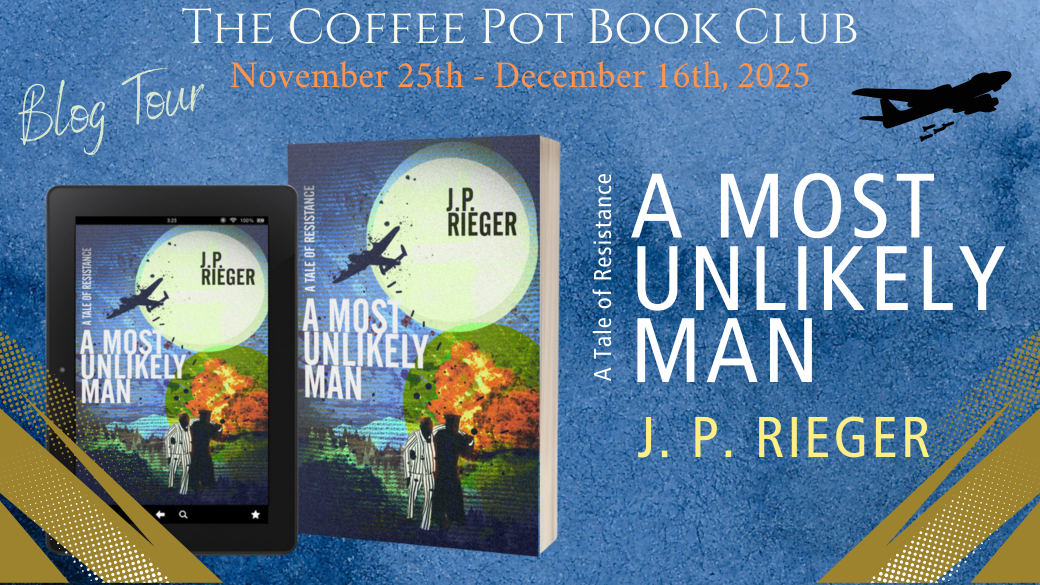
Today I’m hosting The Traitor’s Son by Wendy Johnson, a story about the early life of Richard, Duke of Gloucester (later Richard III), as part of the Coffee Pot Blog Tour. I read the novel (thank you for the Advanced Reader Copy), and have written a review (see below). But first, the blurb:

Caught between a king and a kingmaker, young Richard Plantagenet knows he’ll have to choose...

1461: Richard Duke of York, King by Right, has been branded a traitor and slain by his Lancastrian foes. For his eight-year-old son—Richard Plantagenet—England has become a dangerous place.

As the boy grapples with grief and uncertainty, his elder brother, Edward, defeats the enemy and claims the throne. Dazzled by his glorious sibling, young Richard soon discovers that imperfections lurk beneath his brother's majestic façade. Enter Richard Neville, Earl of Warwick—cousin, tutor, luminary—whose life has given him everything but that which he truly craves: a son. A filial bond forms between man and boy as they fill the void in each other’s lives. Yet, when treachery tears their world asunder, Richard faces an agonizing dilemma: pledge allegiance to Edward—his blood brother and anointed king—or to Warwick, the father figure who has shaped his life and affections.

Painfully trapped between duty and devotion, Richard faces a grim reality: whatever he decides will mean a fight to the death.

In "The Traitor’s Son", Wendy Johnson weaves a tapestry of loyalty, love, and sacrifice against the backdrop of England's turbulent history. Through the eyes of a young Richard III, readers are transported into a world where every choice is fraught with peril, and the bonds of kinship are tested to their limits.

Read More
The Cameo Keeper by Deborah Swift
Blog Tour, Historical Fiction Rachel Elwiss Joyce Blog Tour, Historical Fiction Rachel Elwiss Joyce

The Cameo Keeper by Deborah Swift

I’m delighted to be hosting The Cameo Keeper today on the Coffee Pot Book Club Blog Tour. (Isn’t it a beautiful cover?)

I’m doing an excerpt, but first, the description:

Rome 1644: A Novel of Love, Power, and Poison

Remember tonight... for it is the beginning of always ― Dante Alighieri

In the heart of Rome, the conclave is choosing a new Pope, and whoever wins will determine the fate of the Eternal City.

Astrologer Mia and her fiancé Jacopo, a physician at the Santo Spirito Hospital, plan to marry, but the election result is a shock and changes everything.

As Pope Innocent X takes the throne, he brings along his sister-in-law, the formidable Donna Olimpia Maidalchini, known as La Papessa – the female Pope. When Mia is offered a position as her personal astrologer, she and Jacopo find themselves on opposite sides of the most powerful family in Rome.

Mia is determined to protect her mother, Giulia Tofana, a renowned poisoner. But with La Papessa obsessed with bringing Giulia to justice, Mia and Jacopo's love is put to the ultimate test.

As the new dawn of Renaissance medicine emerges, Mia must navigate the dangerous political landscape of Rome while trying to protect her family and her heart. Will she be able to save her mother, or will she lose everything she holds dear?

For fans of "The Borgias" and "The Crown," this gripping tale of love, power, and poison will keep you on the edge of your seat until the very end.

Praise:

'historical fiction that is brisk, fresh and bristling with intrigue' 
~
Bookmarked Reviews ★★★★★

Read More
Hypatia of Alexandria
Forgotten Women of History, Historical Fiction, Antiquity Rachel Elwiss Joyce Forgotten Women of History, Historical Fiction, Antiquity Rachel Elwiss Joyce

Hypatia of Alexandria

Few figures from the ancient world deserve as much wonder, controversy, and myth-making as Hypatia of Alexandria. Renowned as a philosopher, astronomer, and mathematician in a city often riven by political and religious turbulence, Hypatia has come to symbolise both the intellectual heights of late antiquity and the dangers faced by women who dared to wield knowledge and influence.

Who Was Hypatia?

Hypatia (c. 355–415 CE) was the daughter of Theon of Alexandria, himself a respected scholar and the last recorded member of the Museum—the great scholarly institution associated with the Library of Alexandria (interesting fact of the day about the term ‘Museum’). Raised in this environment, Hypatia received an exceptional education in mathematics, astronomy, and Platonic philosophy. By adulthood she had surpassed her father’s reputation, becoming:

  • A leading lecturer in Neoplatonism, attracting Christian, pagan, and Jewish students alike;

  • An authority in mathematics, editing and refining works such as Diophantus’s Arithmetica and Apollonius’s Conics;

  • A public intellectual, known for her counsel to civic leaders, including the Roman prefect Orestes

She was, quite simply, quite a woman!

Murder Most Foul

Read More
LADY OF LINCOLN Wins Book of the Year Award!

LADY OF LINCOLN Wins Book of the Year Award!

I can’t quite believe I’m posting this, but besides winning the Gold Medal for Historical Biographical Fiction, LADY OF LINCOLN won the Book of the Year Award in the Coffee Pot Book Club annual awards!

I’m so honoured that my novel has been recognised amongst such great fiction, and so pleased to have done the memory of NIcola de la Haye proud! 😀

Read More
LADY OF LINCOLN wins the Gold Medal Award!
Book Award, Lady of Lincoln, Nicola de la Haye Rachel Elwiss Joyce Book Award, Lady of Lincoln, Nicola de la Haye Rachel Elwiss Joyce

LADY OF LINCOLN wins the Gold Medal Award!

I’m absolutely thrilled that LADY OF LINCOLN has won the Gold Medal in the Historical Biographical Fiction category in the Coffee Pot Book Club ‘Book of the Year’ awards!

I cannot thank the committee enough for recognising the novel, the hard work in putting it together, but also Nicola de la Haye’s story!

Read More
Medieval Succession: When Henry II’s Empire Imploded

Medieval Succession: When Henry II’s Empire Imploded

When Succession first aired, audiences were transfixed by its portrait of a modern dynasty at war with itself: scheming heirs, a manipulative patriarch, and a fortune vast enough to make loyalty negotiable. But centuries before Logan Roy was terrifying his children in glass-walled boardrooms, another ruthless family feud was playing out across medieval Europe.

In 1173, the most powerful man in Christendom—King Henry II of England—faced a rebellion led not by rivals or barons, but by his own wife and sons. Chroniclers called it the Great Rebellion; historians often dub it the Revolt of the Eaglets, after the young “eagles” who turned on the parent bird.

And just like in Succession, the real question was: who inherits the empire?

Read More
Finalist in Book of the Year! 🥳

Finalist in Book of the Year! 🥳

I was overwhelmed last night to receive this surprise email:

“I am pleased to announce that your book, Lady of Lincoln, is a Finalist in The Coffee Pot Book Club Book Of The Year Awards 2025.”

Lady of Lincoln is a finalist for Book of the Year Award with the Coffee Pot Book Club

I’m overjoyed and delighted. 🎊🎊🎊🎊🥂🥂🥂🥳🥳🥳

In particular, I’m so pleased that Nicola (Nicholaa) de la Haye’s story is gaining recognition! 🏰

Read More