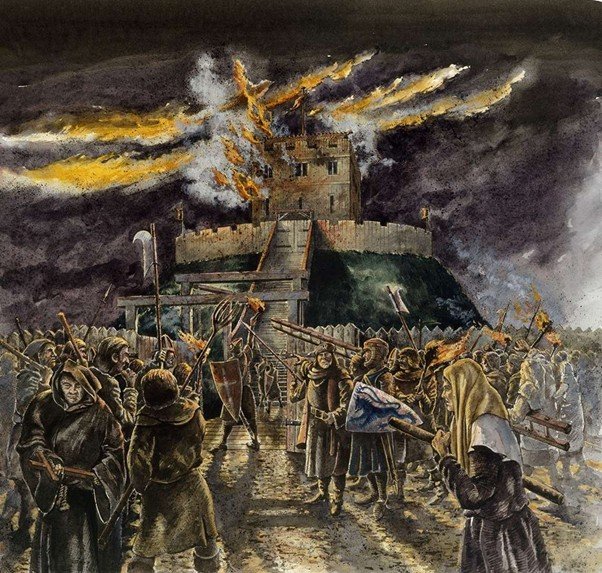
The York Massacre, 16 March 1190: On this Day in History
When England turned on its Jewish communities, and what happened when a few brave souls refused to look away
On the night of 16 March 1190, around 150 Jewish men, women, and children huddled inside a wooden tower in York Castle. Outside, a mob—some of them the city's most respectable merchants and noblemen—bayed for their blood.
By morning, almost all of them were dead.
They hadn’t committed any kind of crime, but they’d been trapped, besieged, and given a choice: forced baptism or death.
Most chose death on their own terms.
It remains one of the darkest episodes in medieval English history, and one that haunted me throughout the writing of Lady of the Castle, my upcoming historical fiction novel, the second in the Nicola de la Haye series.
The Wave of Violence
The York massacre didn’t come out of nowhere. It was the bloodiest peak of a wave of anti-Jewish violence that had been building since the accession of King Richard I in 1189. When Richard was crowned, riots broke out in London and quickly spread north—to Norwich, Stamford, King's Lynn, Lincoln, Bury St Edmunds, and York.
The causes were tangled together: religious prejudice inflamed by crusading fervour, resentment of Jewish moneylenders by nobles drowning in debt, and the age-old power of conspiracy and rumour to transform neighbours into enemies.
In some places, royal authority held. In others, it collapsed entirely.
The Dead Beneath Norwich
A medieval depiction of the persecution of Jews
We don't only know about this violence from chronicles and court records.
In 2004, construction workers digging the foundations for a shopping centre in central Norwich broke through into a medieval well. At the bottom, they found seventeen people. Six adults. Eleven children, aged roughly two to fifteen.
The bodies had been thrown in head-first. The adults had landed first, cushioning the children’s fall. Because the skeletons showed no signs of trying to break a fall, researchers concluded the victims were already dead when dropped in. All seventeen appeared to have been deposited in a single event, their bodies still complete and intact, placed in the well shortly after death.
The well lay just south of what had been Norwich’s medieval Jewish quarter. Radiocarbon dating placed the deaths between 1161 and 1216—a range that includes the recorded massacre of Norwich’s Jewish community on 6 February 1190, when, according to the chronicler Ralph de Diceto, men heading for the Crusade attacked Jewish homes before leaving the city.
DNA analysis of six of the individuals, published in 2022, confirmed what the location and circumstances had long suggested: they were almost certainly Ashkenazi Jews. Four of the six were related to each other. Three of them were sisters—the youngest between five and ten years old. A toddler boy, probably between infancy and three years of age, likely had blue eyes and red hair.
Three sisters. A red-haired toddler. Thrown into a well in the dark, and forgotten for eight hundred years.
A Rat, a Skull, and a Murder That History Never Solved
On This Day: The Death of William Longespée, Third Earl of Salisbury. 7th March 1226
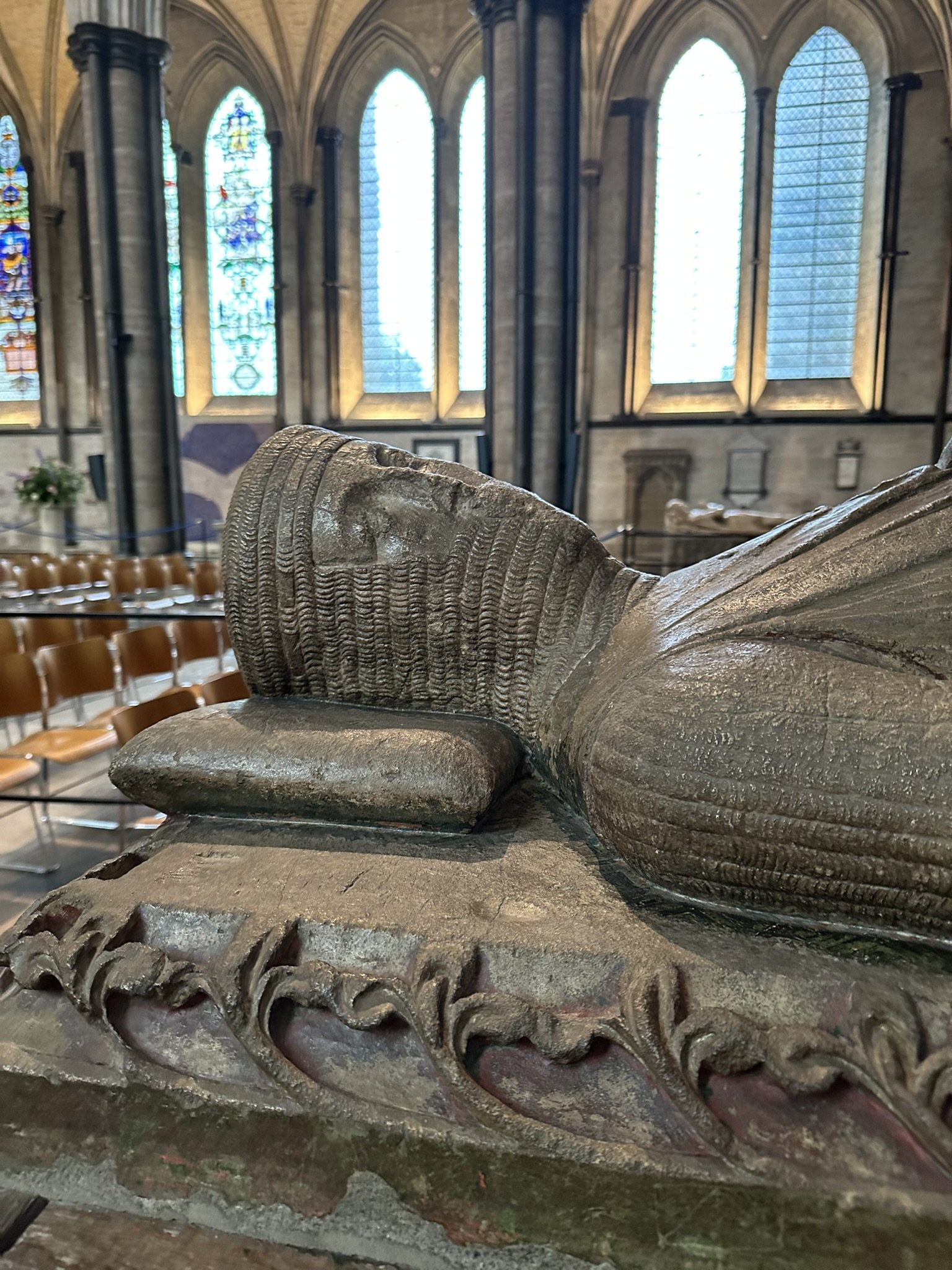
William Longespée’s Tomb at Salisbury Cathedral
When they opened the tomb, they found a rat. And not just any rat, but a dead one, curled inside a man's skull, centuries after both had gone into the dark. And when investigators ran the chemical analysis, the results sent a chill down historians’ spines.
Arsenic.
This is the story of William Longespée, Earl of Salisbury: soldier, crusader, half-brother to a king, and the death that eight hundred years of history has never been able to explain.
The King's Bastard Who Rose to Power
Born around 1176 as the illegitimate son of King Henry II, Longespée had no business becoming one of the most powerful men in England. But he did.
Through marriage to Ela of Salisbury, he became Earl and acquired one of the great titles of the realm. But he didn't coast on it; he fought, he commanded, and he mostly won.
His military career contained at least two moments that changed the course of history.
The Destruction of the French Fleet
In May 1213, King Philip II of France was massing an invasion fleet near the port of Damme, in what is now Belgium. The ships stretched across the harbour; hundreds of vessels, loaded with supplies, troops, and the ambition to bring England to its knees.
Longespée led the English fleet across the Channel to meet them.
What followed was less a battle than a systematic destruction. The English found the French fleet largely undefended as many of the ships sat at anchor with skeleton crews while the main force was raiding inland. Longespée's men fell upon them, seized what they could carry, and burned much of the rest.
It was one of the most decisive naval actions of the entire medieval period, and Philip's planned invasion collapsed. England, which had looked dangerously exposed, was suddenly safe.
Longespée had just saved the kingdom, and was hailed a hero.
He did it again four years later.
In 1217, with the young Henry III barely clinging to his throne, a French prince was being supplied and reinforced by sea. Longespée commanded the English fleet at the Battle of Sandwich, intercepting the French supply convoy in the Channel and destroying it with ruthless efficiency.
The strategy was brutally effective. Without reinforcement, the French campaign collapsed, and Henry III kept his throne.
His success (and probably his arrogance) meant he made enemies; powerful ones, in high places.
The Enemy You Already Know
One of those enemies was Nicola de la Haye; the indomitable castellan of Lincoln Castle, the woman who held the city against all odds and shaped the fate of England. But Nicola and Longespée were not allies. They were rivals, moving through the same treacherous political landscape from opposite sides.
It went further than politics. Longespée held the wardship of Nicola's granddaughter, Idonea. He’d essentially bought her wardship and betrothal to his son from John when she was captured during the Baron’s Revolt.
In the medieval world, controlling a child's wardship meant controlling their future, their inheritance, their marriage prospects. It was power over everything that mattered.
Nicola was not happy. What happens between them next is covered in the third novel in my Nicola de la Haye series, Lady of England.
A Storm at Sea. Then Something Worse.
In early 1226, Longespée's ship was wrecked.
He survived, battered, exhausted, exposed to the sea, and made his way to Salisbury. It was the obvious explanation when he fell ill shortly afterwards and died: a man weakened by shipwreck, a body pushed past its limits; the kind of death that happened all the time in the thirteenth century.
On 7 March 1226, he died.
His body was carried into the new cathedral at Salisbury, which was still rising from the water-meadows, still smelling of fresh stone and lime, and buried with the honours due an earl.
A model of Salisbury Cathedral still under construction, as it was when Longespée was buried there
But the rumours started almost immediately.
The Poison Rumours
William Longespée may well have been murdered by Hubert de Burgh with arsenic
The official verdict was illness, but the unofficial verdict was murder.
Suspicion gathered around Hubert de Burgh, the formidable royal justiciar who had long tangled with Longespée in the brutal politics of Henry III's court. In a world where power changed hands fast and rivals had everything to gain, poisoning wasn't paranoia. It was a reasonable fear.
But there was no proof. The rumours circulated, faded, and were eventually filed away under unsolved.
Then, in 1791, during a major reordering of Salisbury Cathedral, the tomb was opened.
The Rat and the Skull
When Longespée’s tomb was opened, an eerie detail emerged: a rat skeleton trapped inside the earl’s skull. Later testing revealed arsenic in the rat’s bones, giving chilling new life to the medieval whispers that the great earl had been poisoned.

Richard de Brito: The Forgotten Killer; and a very Dangerous Friend
In legend he struck the final blow; in fiction, he will cause a torrent of trouble for his friend William FitzErneis in Lady of Lincoln.
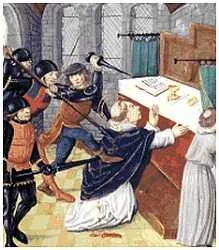
When Archbishop Thomas Becket was cut down before the altar of Canterbury Cathedral in December 1170, the man who delivered the fatal stroke was Richard de Brito—sometimes styled le Breton. His sword, witnesses said, split Becket’s skull so deeply that the blade snapped on the flagstones.
Unlike the other knights, de Brito cried out as he struck:
“Take that for the love of my lord William FitzEmpress!”
The words stunned those who heard them. He was killing the archbishop not in Henry II’s name, but in that of Henry’s brother—the late William FitzEmpress, Henry II’s brother.
William de Tracy: The Penitent Knight of Canterbury
William de Tracy helped slay Thomas Becket—then sought forgiveness on a pilgrimage to Rome and the Holy Land. Can a murderer find redemption?
On that bitter December evening in 1170, when Thomas Becket, the Archbishop of Canterbury, fell beneath four flashing swords, one of those four blades belonged to Sir William de Tracy. Chroniclers called him the calmest of the murderers; steady-handed, methodical, a man who believed he was acting under royal command. Yet for the rest of his life, remorse and infamy would drive him abroad.

Henry II of England – The Jailer of Queens
When Henry of Anjou (later Henry II, also known as Henry Plantagenet) married Eleanor of Aquitaine in 1152, they created a political alliance of breath taking scale. Henry was heir to the English throne; Eleanor, just divorced from King Louis VII of France, brought with her the duchy of Aquitaine, one of the wealthiest and most independent regions in Europe.
For a time, their marriage was a true partnership. Eleanor rode beside Henry on campaign, governed Aquitaine in his name, and bore him eight children. Together, they forged the Angevin Empire stretching from the Scottish borders to the Pyrenees.
But power and passion soured into mistrust. By the 1170s, the marriage had collapsed into open hostility.
Geoffrey de Mandeville – The Terror of Widows and Nuns
It was in the chaos of the Anarchy that one man carved out a reputation so dark that even in an age of violence, his name stood out: Geoffrey de Mandeville, Earl of Essex.
Geoffrey inherited immense lands and titles but he wanted even more, shifting loyalties between Stephen and Matilda whenever it suited him, extorting charters and privileges from both. When Stephen finally moved against him in 1143, Geoffrey unleashed a reign of terror across eastern England.
Chroniclers such as the Peterborough Chronicle and Orderic Vitalis described him as a robber baron, commanding brutal mercenaries who pillaged the countryside. Hardly chivalric, the man was a misogynist bully who preyed on the weak. For women, especially widows and nuns, he was the Devil’s own demon.

Philippe II (Augustus) of France Humiliated Queen Ingeborg
A Wedding Day Turned Nightmare
On 14 August 1193, the cathedral at Amiens was filled with splendour. Nobles crowded in, candles glowed, and choirs sang as King Philip II of France — called Augustus for his ambition — married Ingeborg of Denmark, a daughter of King Valdemar I.
It was a diplomatic triumph. The marriage would secure French ties to Denmark, giving Philip allies in the north and prestige across Christendom. Ingeborg, known for her piety and education, arrived prepared to be queen of France.
But before the day was out, her life turned into a nightmare.

Fulk V of Anjou: the King Who Beat His Queen
When Fulk arrived in Jerusalem, he wasted no time in asserting himself. Rather than rule alongside Queen Melisende as Baldwin had intended, he began sidelining her in every act of government. Charters that once bore her name alone now appeared only with Fulk’s. The Angevin knights who followed him filled the court, and Melisende’s supporters were dismissed.
Chroniclers tell us that Fulk acted as if Jerusalem were his by right, ignoring the fact that he was only there through his wife’s inheritance. To medieval men, this seemed natural. To Melisende’s followers, it was an outrage.

Matthew of Boulogne: The Count Who Kidnapped a Nun
In 1160, Matthew seized Marie from Romsey Abbey and forced her into marriage. Chroniclers condemned the act as a violation of holy vows. John of Salisbury, writing in the period, described the outrage with which churchmen viewed the marriage. It was a scandal even by the rough standards of the age.
Marie was wrenched from her abbey, stripped of her religious identity, and thrust into the role of countess against her will. For women in the Middle Ages, the cloister was often seen as protection from such forced unions — but not for Marie.
-
Biographies
- 31 Aug 2026 She Didn't Wait for Permission 31 Aug 2026
- 26 Aug 2026 Eleanor of Vermandois 26 Aug 2026
- 26 Aug 2026 Richard the Lionheart at Sixteen: the Making of a Warrior Duke 26 Aug 2026
- 25 Aug 2026 Hugh de Morville: The Knight Who Would Not Repent 25 Aug 2026
- 12 Aug 2026 Reginald FitzUrse: The Bear Knight Who Slayed a Saint 12 Aug 2026
- 12 Aug 2026 Eleanor of Aquitaine: Queen, Duchess, and Mother of Rebels 12 Aug 2026
- 12 Aug 2026 Henry II of England – The Jailer of Queens 12 Aug 2026
- 11 Aug 2026 Geoffrey of Anjou: The Handsome Count Who Founded the Plantagenet Dynasty (Died 7th September 1151) 11 Aug 2026
- 3 Jul 2026 Lucy of Bolingbroke: The Woman Behind Lincoln Castle's Lucy Tower 3 Jul 2026
- 3 Jul 2026 Muriel of Lincoln 3 Jul 2026
-
CrimeAndJustice
- 31 Aug 2026 The York Massacre, 16 March 1190: On this Day in History 31 Aug 2026
- 26 Aug 2026 A Rat, a Skull, and a Murder That History Never Solved 26 Aug 2026
- 25 Aug 2026 Richard de Brito: The Forgotten Killer; and a very Dangerous Friend 25 Aug 2026
- 25 Aug 2026 William de Tracy: The Penitent Knight of Canterbury 25 Aug 2026
- 12 Aug 2026 Henry II of England – The Jailer of Queens 12 Aug 2026
- 11 Aug 2026 Geoffrey de Mandeville – The Terror of Widows and Nuns 11 Aug 2026
- 11 Aug 2026 Philippe II (Augustus) of France Humiliated Queen Ingeborg 11 Aug 2026
- 11 Aug 2026 Fulk V of Anjou: the King Who Beat His Queen 11 Aug 2026
- 11 Aug 2026 Matthew of Boulogne: The Count Who Kidnapped a Nun 11 Aug 2026
-
EnglandAndAngevinEmpire
- 12 Oct 2026 Barlings Abbey: The White Canons and the Medieval World Behind Lady of the Castle 12 Oct 2026
- 1 Oct 2026 Black Shuck: The Devil’s Dog That Haunted Medieval England 1 Oct 2026
- 7 Sept 2026 The Treaty of Lambeth, 1217 7 Sept 2026
- 24 Aug 2026 How Nicola de la Haye and Gerard de Camville Conquered the Sea, and Made a Deadly Enemy 24 Aug 2026
- 10 Aug 2026 Willikin of the Weald: Was He the Real Inspiration for Robin Hood? 10 Aug 2026
- 3 Aug 2026 The Real Sheriff of Nottingham? 3 Aug 2026
- 6 Jul 2026 Lincoln's Lost Castle: The Rise and Fall of Thorngate 6 Jul 2026
- 23 Jun 2026 Why the Plantenet Angevins Ruled Half of Europe 23 Jun 2026
-
EverydayLife
- 12 Oct 2026 Barlings Abbey: The White Canons and the Medieval World Behind Lady of the Castle 12 Oct 2026
- 26 Aug 2026 Medieval New Year's Eve: When Chaos Was the Point 26 Aug 2026
- 26 Aug 2026 Feasts, Folklore & Boar: A Medieval Christmas with a Dash of Wild Hunt Magic 26 Aug 2026
- 26 Aug 2026 A’Wassailing We Come! 26 Aug 2026
- 26 Aug 2026 Medieval Advent 26 Aug 2026
- 17 Aug 2026 Capons, Cocks and Hens: Keeping Chickens in Medieval England 17 Aug 2026
- 12 Aug 2026 All Souls’ Day: Soul Cakes, Prayer and Memory 12 Aug 2026
- 12 Aug 2026 All Hallows’ Day: The Feast of All Saints 12 Aug 2026
- 12 Aug 2026 All Hallows’ Eve: The Vigil of the Departed 12 Aug 2026
- 12 Aug 2026 Lanterns and Mischief: From Samhain Fires to Punkie Night 12 Aug 2026
- 12 Aug 2026 What Is Allhallowtide? The Three Days of the Dead… 12 Aug 2026
- 22 Jun 2026 What Languages Did Jews Speak in Medieval England? 22 Jun 2026
-
HistoricalEvents
- 17 Oct 2026 The Battle of Fornham 17 October 1217 17 Oct 2026
- 16 Sept 2026 The Prayer That Outlived Him: Rabbi Yom Tov of Joigny (and York) 16 Sept 2026
- 7 Sept 2026 The Treaty of Lambeth, 1217 7 Sept 2026
- 31 Aug 2026 Magna Carta Day: The Meadow Where a King Was Made to Yield, and the Woman Who Saved It from Ruin 31 Aug 2026
- 31 Aug 2026 Battle of Lincoln 1217: The Woman Who Held the Castle That Saved England 31 Aug 2026
- 31 Aug 2026 The Sky is Falling! Halley's Comet, the Bayeux Tapestry, and the Four Portents in ‘Lady of the Castle’ 31 Aug 2026
- 31 Aug 2026 How a Birthday Party at Chinon Kickstarted a Civil War (5 March 1173) 31 Aug 2026
- 26 Aug 2026 A Rat, a Skull, and a Murder That History Never Solved 26 Aug 2026
- 26 Aug 2026 ‘King and Conqueror’: How much truth-stretching is acceptable? 26 Aug 2026
- 25 Aug 2026 Medieval Succession: When Henry II’s Empire Imploded 25 Aug 2026
- 25 Aug 2026 Richard de Brito: The Forgotten Killer; and a very Dangerous Friend 25 Aug 2026
- 25 Aug 2026 William de Tracy: The Penitent Knight of Canterbury 25 Aug 2026
- 12 Aug 2026 Reginald FitzUrse: The Bear Knight Who Slayed a Saint 12 Aug 2026
- 12 Aug 2026 The Shadow of Becket: How a Murder Shook the Kingdom 12 Aug 2026
- 11 Aug 2026 Princes Without Power: Why Henry the Young King Rebelled 11 Aug 2026
- 27 Jul 2026 What really burned at York Castle in 1190? 27 Jul 2026
- 22 Jun 2026 The Battle of Fornham: When a Countess Rode to War and Changed Medieval England Forever 22 Jun 2026
-
HistoricalFiction
- 26 Aug 2026 Warrior Monks on the Lincolnshire Heath 26 Aug 2026
- 26 Aug 2026 Nicola de la Haye 26 Aug 2026
- 26 Aug 2026 Fastrada: Charlemagne’s Queen History Tried to Forget 26 Aug 2026
- 26 Aug 2026 Wu Zetian: The Woman Who Ruled an Empire 26 Aug 2026
- 26 Aug 2026 ‘King and Conqueror’: How much truth-stretching is acceptable? 26 Aug 2026
- 26 Aug 2026 Empress Theodora of Byzantium: She Saved an Empire 26 Aug 2026
- 26 Aug 2026 Hypatia of Alexandria 26 Aug 2026
- 25 Aug 2026 Zenobia of Palmyra: the Queen Who Defied Rome 25 Aug 2026
- 25 Aug 2026 Vibia Sabina: Empress, Wife of Hadrian 25 Aug 2026
- 25 Aug 2026 Claudia Procula, Pontius Pilate’s wife 25 Aug 2026
- 12 Aug 2026 Zipporah, the Wife of Moses 12 Aug 2026
- 12 Aug 2026 The Revenant of Hereford: Walter Map’s Medieval Walking Dead 12 Aug 2026
-
People
- 26 Aug 2026 The Saxon Secret to Avoiding a Bad Ruler 26 Aug 2026
- 25 Aug 2026 Medieval Succession: When Henry II’s Empire Imploded 25 Aug 2026
- 24 Aug 2026 How Nicola de la Haye and Gerard de Camville Conquered the Sea, and Made a Deadly Enemy 24 Aug 2026
- 12 Aug 2026 The Shadow of Becket: How a Murder Shook the Kingdom 12 Aug 2026
- 11 Aug 2026 Princes Without Power: Why Henry the Young King Rebelled 11 Aug 2026
- 10 Aug 2026 Willikin of the Weald: Was He the Real Inspiration for Robin Hood? 10 Aug 2026
- 3 Aug 2026 The Real Sheriff of Nottingham? 3 Aug 2026
-
ReligionMagicandBelief
- 12 Oct 2026 Barlings Abbey: The White Canons and the Medieval World Behind Lady of the Castle 12 Oct 2026
- 1 Oct 2026 Black Shuck: The Devil’s Dog That Haunted Medieval England 1 Oct 2026
- 16 Sept 2026 The Prayer That Outlived Him: Rabbi Yom Tov of Joigny (and York) 16 Sept 2026
- 3 Sept 2026 Bloodbath at the Lionheart’s Coronation 3 Sept 2026
- 31 Aug 2026 The Sky is Falling! Halley's Comet, the Bayeux Tapestry, and the Four Portents in ‘Lady of the Castle’ 31 Aug 2026
- 31 Aug 2026 The York Massacre, 16 March 1190: On this Day in History 31 Aug 2026
- 26 Aug 2026 Warrior Monks on the Lincolnshire Heath 26 Aug 2026
- 26 Aug 2026 Friday the 13th Superstitions? 26 Aug 2026
- 26 Aug 2026 Feasts, Folklore & Boar: A Medieval Christmas with a Dash of Wild Hunt Magic 26 Aug 2026
- 26 Aug 2026 Medieval Advent 26 Aug 2026
- 25 Aug 2026 Hugh de Morville: The Knight Who Would Not Repent 25 Aug 2026
- 12 Aug 2026 All Souls’ Day: Soul Cakes, Prayer and Memory 12 Aug 2026
- 12 Aug 2026 All Hallows’ Day: The Feast of All Saints 12 Aug 2026
- 12 Aug 2026 All Hallows’ Eve: The Vigil of the Departed 12 Aug 2026
- 12 Aug 2026 The Revenant of Hereford: Walter Map’s Medieval Walking Dead 12 Aug 2026
- 12 Aug 2026 Lanterns and Mischief: From Samhain Fires to Punkie Night 12 Aug 2026
- 12 Aug 2026 What Is Allhallowtide? The Three Days of the Dead… 12 Aug 2026
- 27 Jul 2026 What really burned at York Castle in 1190? 27 Jul 2026
- 22 Jun 2026 What Languages Did Jews Speak in Medieval England? 22 Jun 2026
-
TimePeriods
- 31 Aug 2026 How a Birthday Party at Chinon Kickstarted a Civil War (5 March 1173) 31 Aug 2026
- 26 Aug 2026 Friday the 13th Superstitions? 26 Aug 2026
- 26 Aug 2026 Richard the Lionheart at Sixteen: the Making of a Warrior Duke 26 Aug 2026
- 11 Aug 2026 Geoffrey of Anjou: The Handsome Count Who Founded the Plantagenet Dynasty (Died 7th September 1151) 11 Aug 2026
- 23 Jun 2026 Why the Plantenet Angevins Ruled Half of Europe 23 Jun 2026
-
WomeninHistory
- 17 Oct 2026 The Battle of Fornham 17 October 1217 17 Oct 2026
- 31 Aug 2026 Magna Carta Day: The Meadow Where a King Was Made to Yield, and the Woman Who Saved It from Ruin 31 Aug 2026
- 31 Aug 2026 Battle of Lincoln 1217: The Woman Who Held the Castle That Saved England 31 Aug 2026
- 31 Aug 2026 She Didn't Wait for Permission 31 Aug 2026
- 26 Aug 2026 The Saxon Secret to Avoiding a Bad Ruler 26 Aug 2026
- 26 Aug 2026 Nicola de la Haye 26 Aug 2026
- 26 Aug 2026 Eleanor of Vermandois 26 Aug 2026
- 26 Aug 2026 Fastrada: Charlemagne’s Queen History Tried to Forget 26 Aug 2026
- 26 Aug 2026 Wu Zetian: The Woman Who Ruled an Empire 26 Aug 2026
- 26 Aug 2026 Empress Theodora of Byzantium: She Saved an Empire 26 Aug 2026
- 26 Aug 2026 Hypatia of Alexandria 26 Aug 2026
- 25 Aug 2026 Zenobia of Palmyra: the Queen Who Defied Rome 25 Aug 2026
- 25 Aug 2026 Vibia Sabina: Empress, Wife of Hadrian 25 Aug 2026
- 25 Aug 2026 Claudia Procula, Pontius Pilate’s wife 25 Aug 2026
- 12 Aug 2026 Zipporah, the Wife of Moses 12 Aug 2026
- 12 Aug 2026 Eleanor of Aquitaine: Queen, Duchess, and Mother of Rebels 12 Aug 2026
- 11 Aug 2026 Geoffrey de Mandeville – The Terror of Widows and Nuns 11 Aug 2026
- 11 Aug 2026 Philippe II (Augustus) of France Humiliated Queen Ingeborg 11 Aug 2026
- 11 Aug 2026 Fulk V of Anjou: the King Who Beat His Queen 11 Aug 2026
- 11 Aug 2026 Matthew of Boulogne: The Count Who Kidnapped a Nun 11 Aug 2026
- 3 Jul 2026 Lucy of Bolingbroke: The Woman Behind Lincoln Castle's Lucy Tower 3 Jul 2026
- 3 Jul 2026 Muriel of Lincoln 3 Jul 2026
- 22 Jun 2026 The Battle of Fornham: When a Countess Rode to War and Changed Medieval England Forever 22 Jun 2026
- 1173-4 Great Rebellion
- 12th Century
- 12th Century History
- All Hallow Tide
- Angevin Empire
- Battle of Fornham
- Battle of Fornham St Genevieve
- Battle of Lincoln
- Battle of Lincoln 1217
- Becket Martyrdom 1170
- Becket's Assassins
- Becket's murder 1170
- Biblical Women
- Canterbury Cathedral
- Christianity
- Christmas
- Clifford's Tower
- Clifford's Tower massacre
- Countess of Leicester
- Crusade
- Earl of Leicester
- Eleanor of Aquitaine
- Eleanor of Aquitane Imprisonment
- England
- English civil war
- female warriors
- Folklore
- Forgotten Women
- Forgotten Women of History
- Geoffrey of Anjou
- Gerard de Camville
- Halloween
- Henry II
- Henry II and Becket conflict
- Henry II and Eleanor of Aquitaine
- Henry the Young King
- Historical Fiction
- Household Knights
- King John
- Knights Who Killed Thomas Becket
- Lady of England
- Lady of Lincoln
- Lady of Lincoln Novel
- Lady of the Castle
- Lincoln Castle
- Lincoln Castle history
- Magna Carta
- Medieval
- Medieval Antisemitism
- Medieval battles
- Medieval Christmas
- Medieval Customs
- Medieval England
- Medieval England and France
- Medieval Feasts
- Medieval Folklore
- Medieval France
- Medieval historical fiction
- Medieval Historical Fiction
- Medieval History
- medieval Jewish history
- Medieval Jews
- Medieval Lincolnshire
- Medieval Misogyny
- Medieval Queens
- Medieval Superstitions
- medieval warfare
- medieval women
- Misogyny in the Middle Ages
- Muriel of Lincoln
- Nicholaa de la Haye
- Nicholaa de la Haye novel
- Nicola de la Haye
- Nicola de la Haye historical fiction
- Nicola de la Haye novel
- Norman Conquest
- Norman Invasion
- Paganism
- Petronilla de Grandmesnil
- Plantagenet dynasty
- Plantagenet Princes
- Revolt of the Eaglets
- Richard I
- Richard the Lionheart
- Robert de Beaumont
- Romans
- Samhain
- Saxons
- Suffolk history
- The Anarchy
- Thomas Becket
- Thomas Becket Murder
- William FitzErneis
- Women in armour
- Women in History
- women in medieval England
- women warriors
- Women who fought in battles
- York Jewish massacre 1190
- York massacre 1190