
Warrior Monks on the Lincolnshire Heath
Stand on the open heathland six miles north of Sleaford, and you can still feel it: the particular silence of a place that once held great power. (Well, actually not that silent, the birdsong in the hedgerows was almost deafening when I went there).
A single limestone tower rises above the farmyard, weathered but still standing tall, its spiral staircase worn smooth by eight centuries of footsteps.
This is Temple Bruer: the most important Knights Templar preceptory in England outside London, and a place that has fascinated me ever since I began researching the medieval world of Nicola de la Haye.
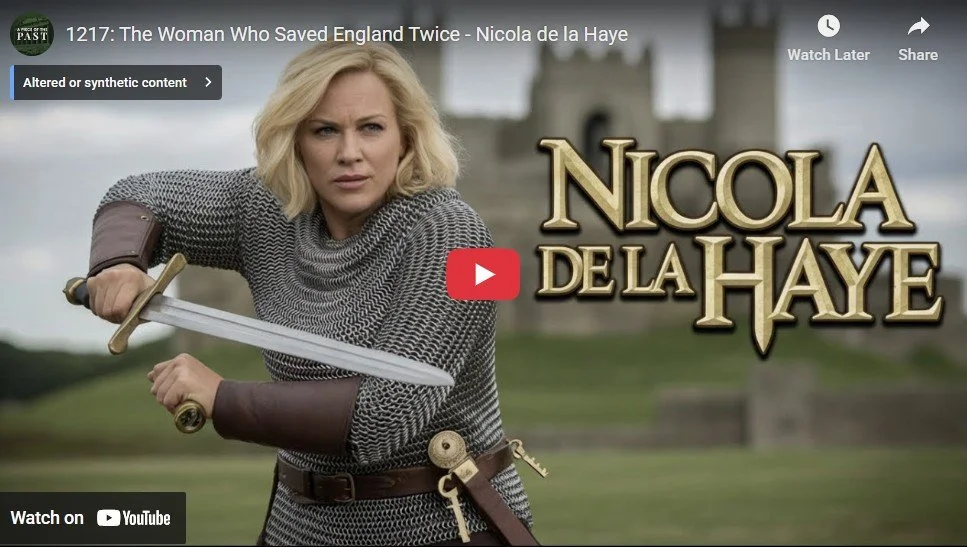
Nicola de la Haye
The inspiration of Brienne of Tarth, Nicola de la Haye saved England twice. Watch the video below and discover the legend. (Spoilers alerts!).
And when you’ve finished, it’s time to find out more about the medieval heroine, the world she lived in, the corrupt men she had to deal with, and how the medieval badass sorted them all out!
Buy the first book in the Nicola de la Haye series, Lady of Lincoln, here.
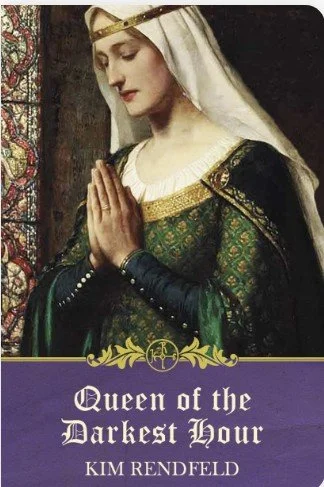
Fastrada: Charlemagne’s Queen History Tried to Forget
Charlemagne is usually thought of as the iron-willed king, crowned Emperor of the Romans in 800, architect of a European empire and champion of learning and reform. What we never hear about, however, are the women who stood beside him: women whose influence shaped politics, justice, and the fragile stability of his realm.
One of the most controversial of these women was Fastrada, Charlemagne’s fourth wife and queen, a woman remembered less for what she did than for how male chroniclers chose to describe her.
A Frankish Noblewoman in a Dangerous Court
Fastrada was born into the high Frankish nobility around the mid-8th century, the daughter of Count Radulf. Her marriage to Charlemagne in 783 was not a romantic match but a strategic one, strengthening ties between powerful families within the Frankish heartlands. This was a period when Charlemagne’s empire was expanding rapidly through conquest, forced conversion, and ruthless suppression of revolt.
Queens in the Carolingian world were not crowned consorts in the later medieval sense, but they were far from ornamental. They managed households, acted as intermediaries, dispensed patronage, and, crucially, advised the king. Fastrada arrived at court at a moment when Charlemagne’s rule was under strain from internal rebellion, particularly in Saxony.
“Cruel” Queen or Convenient Scapegoat?
Our surviving sources paint Fastrada in dark colours. Einhard, Charlemagne’s biographer, describes her as harsh and cruel, claiming that her influence made the king more severe in judgement. Later chroniclers echoed this, blaming her for brutal punishments meted out against rebels and dissenters.
But this raises an uncomfortable question: Was Fastrada truly cruel, or was she blamed for decisions Charlemagne himself made?
Early medieval queens were often held responsible when kings ruled harshly. Advising firmness could easily be reframed as bloodthirstiness, especially when the adviser was a woman. Fastrada’s reputation may tell us more about medieval anxieties over female influence than about her actual character.
It is worth noting that Charlemagne’s most notorious acts of brutality, including the mass executions of Saxons, predated and outlasted Fastrada’s life. Yet only she became a symbol of excessive severity.
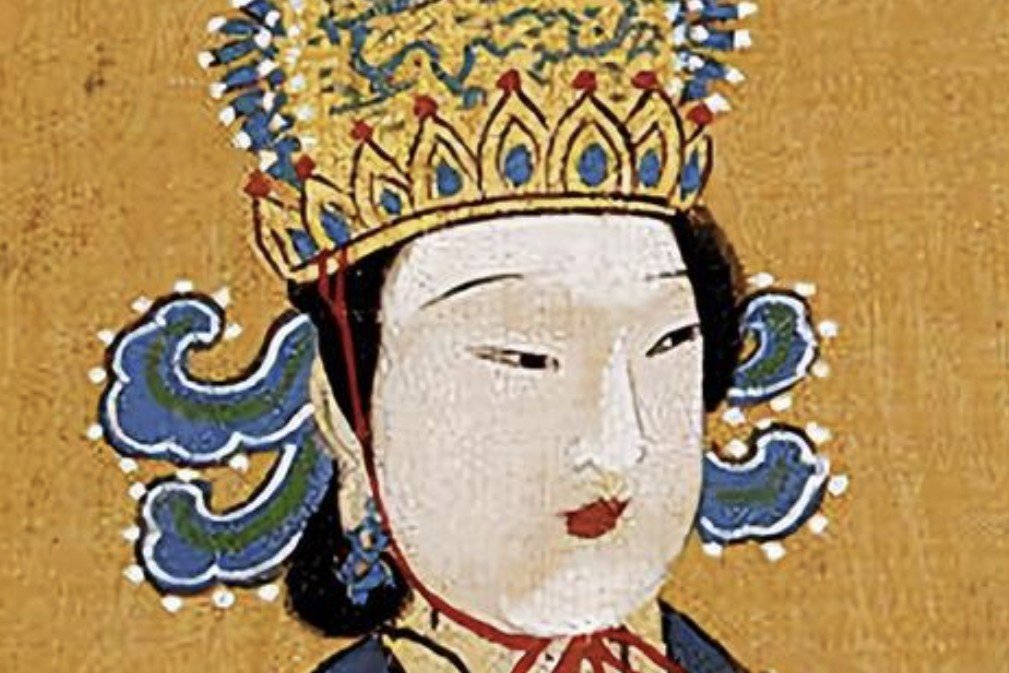
Wu Zetian: The Woman Who Ruled an Empire
When we think of medieval power, the mind rarely leaps to a woman occupying the highest throne in one of the world’s greatest empires. Yet in 7th-century China, one woman did precisely that. Wu Zetian (624–705 CE) rose from low-ranking concubine to become China’s only female emperor; not merely empress consort, nor regent, but sovereign ruler in her own right.
In a world shaped by Confucian ideals that explicitly declared women inferior and unfit for leadership, her ascent was nothing short of astonishing.
And like many powerful women in history, Wu Zetian has been remembered through a haze of scandal, propaganda, and deliberate distortion. It’s time to peel back the layers and re-examine the woman behind the legend.
From Concubine to Emperor: A Rise Unlike Any Other
Wu Zetian entered the palace of Emperor Taizong as a teenage concubine; one among hundreds, hardly expected to influence politics. After Taizong’s death she should, by custom, have been sent to a Buddhist convent. Instead, she returned to the palace of his successor, Emperor Gaozong, beginning her ascent through skill, cunning, and what later historians would call “unwomanly ambition.”
Smooth Operator
But ambition alone did not place her on the throne. She possessed a sharp intelligence and administrative brilliance; a talent for identifying capable officials, many of whom became her loyal supporters; and a capacity to counter, outmanoeuvre, or neutralise rival factions.
When Gaozong suffered debilitating strokes, Wu Zetian took charge of state affairs. After his death, she ruled first through her sons and eventually dispensed with that formality entirely, proclaiming her own dynasty: the Zhou, and naming herself Huangdi, the imperial title previously reserved for male rulers.

‘King and Conqueror’: How much truth-stretching is acceptable?
Welcome back to another Medieval Monday blog. After several posts dissecting the lead up to the Great Rebellion of 1173-4, today I’m switching focus to another seismic moment in English history: the Norman Conquest of England, as reimagined in the TV programme King & Conqueror.
The show has stirred plenty of excitement, and equally as much critique, about just how faithful a retelling it is. Because of that, I was loathe to watch it, but now I have, and here’s my view.
In short: yes, it draws on real events, but takes dramatic licence freely. The question is: when storytelling trumps scholarship, how much is too much?
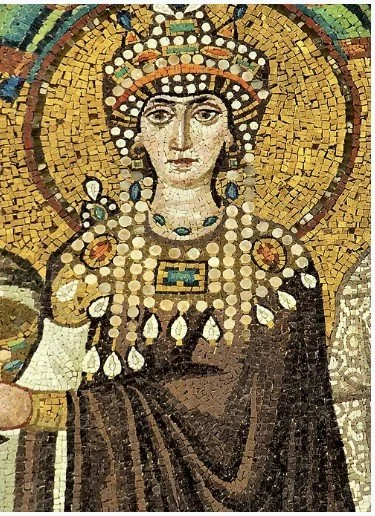
Empress Theodora of Byzantium: She Saved an Empire
The latest in the blog series is a special treat for me. I’ve long been fascinated, but a bit in the dark, about the Byzantine Empire.
But it seems few women of the early Middle Ages rose as far—or have been judged as harshly—as Empress Theodora of Byzantium. Rising from the margins of Constantinople’s theatre world to become one of the most powerful women in imperial history, Theodora’s story is one of intelligence, ambition, resilience, and reinvention. And like so many extraordinary women, she was both celebrated and vilified by her contemporaries.
Who Was Empress Theodora?
Born around 500 CE, Theodora started life far from the purple. Her father was a bear trainer for the Hippodrome’s Blue faction, and after his death, Theodora and her sisters were pushed into the theatre—an environment that in Byzantium sat somewhere between entertainment, politics, and scandal. According to the hostile historian Procopius (more on him later), Theodora’s early life involved performance, satire, and possibly sex work—though his account is so malicious that modern historians tread carefully.
What we do know is that Theodora was:
Exceptionally intelligent, known for her quick wit and sharp political instincts
Socially mobile in a rigid society, rising from performer to respected mistress of the imperial court
Deeply religious, eventually embracing Monophysite Christianity
A political partner, not merely a wife, to Emperor Justinian I
When Justinian became emperor in 527 CE, Theodora ruled alongside him as Augusta, wielding extraordinary influence—sometimes surpassing that of her husband.
The Nika Riots: A Moment That Defined an Empress
Hypatia of Alexandria
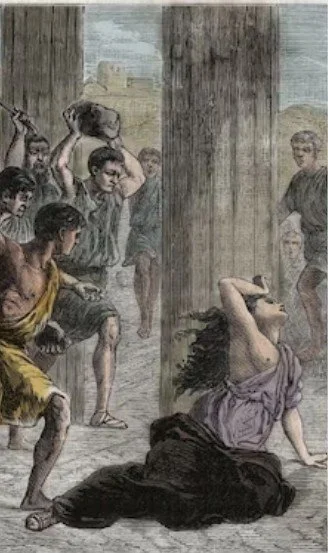
Few figures from the ancient world deserve as much wonder, controversy, and myth-making as Hypatia of Alexandria. Renowned as a philosopher, astronomer, and mathematician in a city often riven by political and religious turbulence, Hypatia has come to symbolise both the intellectual heights of late antiquity and the dangers faced by women who dared to wield knowledge and influence.
Who Was Hypatia?
Hypatia (c. 355–415 CE) was the daughter of Theon of Alexandria, himself a respected scholar and the last recorded member of the Museum—the great scholarly institution associated with the Library of Alexandria (interesting fact of the day about the term ‘Museum’). Raised in this environment, Hypatia received an exceptional education in mathematics, astronomy, and Platonic philosophy. By adulthood she had surpassed her father’s reputation, becoming:
A leading lecturer in Neoplatonism, attracting Christian, pagan, and Jewish students alike;
An authority in mathematics, editing and refining works such as Diophantus’s Arithmetica and Apollonius’s Conics;
A public intellectual, known for her counsel to civic leaders, including the Roman prefect Orestes
She was, quite simply, quite a woman!
Murder Most Foul
Zenobia of Palmyra: the Queen Who Defied Rome
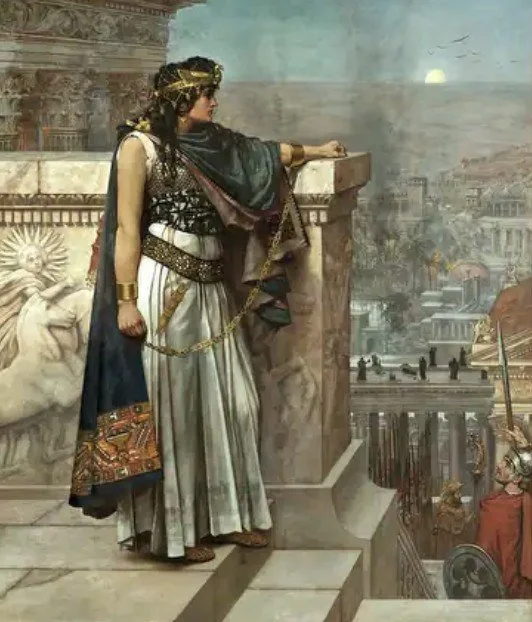
In the third century CE, as Rome teetered on the brink of fragmentation, a woman from the desert city of Palmyra rose to challenge the empire itself.
Her name was Zenobia — scholar, strategist, queen, and for a brief, extraordinary moment, empress of the East.
Vibia Sabina: Empress, Wife of Hadrian
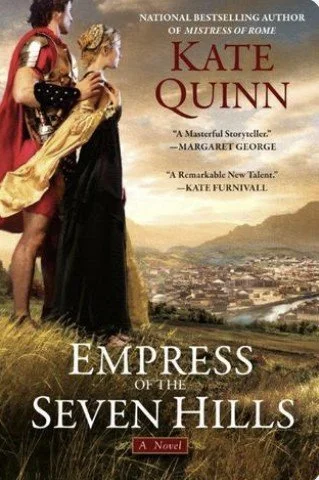
I bet that if you think of Emperor Hadrian, you think about his great wall in the north of England. Possibly you might think of the Roman decadence of villas and statues made from marble. Yet beside him, often erased from the narrative, stood Vibia Sabina, his wife and Rome’s empress for more than four decades.
Her likeness survives on hundreds of coins, but her voice does not. She remains one of antiquity’s most silent women.

Claudia Procula, Pontius Pilate’s wife
Most of us know Pontius Pilate — the Roman governor who condemned Jesus to death. But how many of us know the woman who tried to stop him?
Claudia Procula (sometimes called Procula or Procla) appears only once in the New Testament, yet her brief act of conscience made her one of the most intriguing women in early Christian history, a woman caught between empire, superstition, and moral conviction.

Zipporah, the Wife of Moses
Most people, when they think of Moses, imagine him standing alone before Pharaoh or parting the Red Sea. Yet at his side was a woman—a wife, a foreigner, and a figure of quiet defiance: Zipporah, daughter of Jethro of Midian.
Who Was Zipporah?
Zipporah appears only briefly in the Book of Exodus, but her presence is unforgettable. She was one of seven daughters of a Midianite priest. When Moses fled Egypt after killing an overseer, he found refuge in Midian— and at a well, defended Jethro’s daughters from abusive shepherds. In gratitude, Jethro offered him hospitality and the hand of his daughter, Zipporah.
That is the story’s surface, but beneath it lies something far more intriguing: a woman who stepped outside her cultural boundaries to follow a fugitive foreigner; who raised children between two worlds; who faced the weight of Moses’s divine calling and still kept her own courage.

The Revenant of Hereford: Walter Map’s Medieval Walking Dead
It’s Halloween, or ‘All Halliow’s Eve’, stolen from the pagans! You might think it’s all jack-o’-lanterns, witches, and restless spirits, but long before pumpkins and trick-or-treaters, medieval storytellers were already spinning tales of the restless dead. One of the most chilling comes from Walter Map, a 12th-century courtier, wit, and author of De Nugis Curialium (Courtiers’ Trifles).
Did you know, Walter Map is a character in Rachel Elwiss Joyce’s second novel in the ‘Nicola de la Haye Series’?
Map’s collection of gossip, marvels, and supernatural tales contains one of England’s earliest written accounts of a revenant — a corpse that would not rest quietly in its grave.
-
Biographies
- 31 Aug 2026 She Didn't Wait for Permission 31 Aug 2026
- 26 Aug 2026 Eleanor of Vermandois 26 Aug 2026
- 26 Aug 2026 Richard the Lionheart at Sixteen: the Making of a Warrior Duke 26 Aug 2026
- 25 Aug 2026 Hugh de Morville: The Knight Who Would Not Repent 25 Aug 2026
- 12 Aug 2026 Reginald FitzUrse: The Bear Knight Who Slayed a Saint 12 Aug 2026
- 12 Aug 2026 Eleanor of Aquitaine: Queen, Duchess, and Mother of Rebels 12 Aug 2026
- 12 Aug 2026 Henry II of England – The Jailer of Queens 12 Aug 2026
- 11 Aug 2026 Geoffrey of Anjou: The Handsome Count Who Founded the Plantagenet Dynasty (Died 7th September 1151) 11 Aug 2026
- 3 Jul 2026 Lucy of Bolingbroke: The Woman Behind Lincoln Castle's Lucy Tower 3 Jul 2026
- 3 Jul 2026 Muriel of Lincoln 3 Jul 2026
-
CrimeAndJustice
- 31 Aug 2026 The York Massacre, 16 March 1190: On this Day in History 31 Aug 2026
- 26 Aug 2026 A Rat, a Skull, and a Murder That History Never Solved 26 Aug 2026
- 25 Aug 2026 Richard de Brito: The Forgotten Killer; and a very Dangerous Friend 25 Aug 2026
- 25 Aug 2026 William de Tracy: The Penitent Knight of Canterbury 25 Aug 2026
- 12 Aug 2026 Henry II of England – The Jailer of Queens 12 Aug 2026
- 11 Aug 2026 Geoffrey de Mandeville – The Terror of Widows and Nuns 11 Aug 2026
- 11 Aug 2026 Philippe II (Augustus) of France Humiliated Queen Ingeborg 11 Aug 2026
- 11 Aug 2026 Fulk V of Anjou: the King Who Beat His Queen 11 Aug 2026
- 11 Aug 2026 Matthew of Boulogne: The Count Who Kidnapped a Nun 11 Aug 2026
-
EnglandAndAngevinEmpire
- 12 Oct 2026 Barlings Abbey: The White Canons and the Medieval World Behind Lady of the Castle 12 Oct 2026
- 1 Oct 2026 Black Shuck: The Devil’s Dog That Haunted Medieval England 1 Oct 2026
- 7 Sept 2026 The Treaty of Lambeth, 1217 7 Sept 2026
- 24 Aug 2026 How Nicola de la Haye and Gerard de Camville Conquered the Sea, and Made a Deadly Enemy 24 Aug 2026
- 10 Aug 2026 Willikin of the Weald: Was He the Real Inspiration for Robin Hood? 10 Aug 2026
- 3 Aug 2026 The Real Sheriff of Nottingham? 3 Aug 2026
- 6 Jul 2026 Lincoln's Lost Castle: The Rise and Fall of Thorngate 6 Jul 2026
- 23 Jun 2026 Why the Plantenet Angevins Ruled Half of Europe 23 Jun 2026
-
EverydayLife
- 12 Oct 2026 Barlings Abbey: The White Canons and the Medieval World Behind Lady of the Castle 12 Oct 2026
- 26 Aug 2026 Medieval New Year's Eve: When Chaos Was the Point 26 Aug 2026
- 26 Aug 2026 Feasts, Folklore & Boar: A Medieval Christmas with a Dash of Wild Hunt Magic 26 Aug 2026
- 26 Aug 2026 A’Wassailing We Come! 26 Aug 2026
- 26 Aug 2026 Medieval Advent 26 Aug 2026
- 17 Aug 2026 Capons, Cocks and Hens: Keeping Chickens in Medieval England 17 Aug 2026
- 12 Aug 2026 All Souls’ Day: Soul Cakes, Prayer and Memory 12 Aug 2026
- 12 Aug 2026 All Hallows’ Day: The Feast of All Saints 12 Aug 2026
- 12 Aug 2026 All Hallows’ Eve: The Vigil of the Departed 12 Aug 2026
- 12 Aug 2026 Lanterns and Mischief: From Samhain Fires to Punkie Night 12 Aug 2026
- 12 Aug 2026 What Is Allhallowtide? The Three Days of the Dead… 12 Aug 2026
- 22 Jun 2026 What Languages Did Jews Speak in Medieval England? 22 Jun 2026
-
HistoricalEvents
- 17 Oct 2026 The Battle of Fornham 17 October 1217 17 Oct 2026
- 16 Sept 2026 The Prayer That Outlived Him: Rabbi Yom Tov of Joigny (and York) 16 Sept 2026
- 7 Sept 2026 The Treaty of Lambeth, 1217 7 Sept 2026
- 31 Aug 2026 Magna Carta Day: The Meadow Where a King Was Made to Yield, and the Woman Who Saved It from Ruin 31 Aug 2026
- 31 Aug 2026 Battle of Lincoln 1217: The Woman Who Held the Castle That Saved England 31 Aug 2026
- 31 Aug 2026 The Sky is Falling! Halley's Comet, the Bayeux Tapestry, and the Four Portents in ‘Lady of the Castle’ 31 Aug 2026
- 31 Aug 2026 How a Birthday Party at Chinon Kickstarted a Civil War (5 March 1173) 31 Aug 2026
- 26 Aug 2026 A Rat, a Skull, and a Murder That History Never Solved 26 Aug 2026
- 26 Aug 2026 ‘King and Conqueror’: How much truth-stretching is acceptable? 26 Aug 2026
- 25 Aug 2026 Medieval Succession: When Henry II’s Empire Imploded 25 Aug 2026
- 25 Aug 2026 Richard de Brito: The Forgotten Killer; and a very Dangerous Friend 25 Aug 2026
- 25 Aug 2026 William de Tracy: The Penitent Knight of Canterbury 25 Aug 2026
- 12 Aug 2026 Reginald FitzUrse: The Bear Knight Who Slayed a Saint 12 Aug 2026
- 12 Aug 2026 The Shadow of Becket: How a Murder Shook the Kingdom 12 Aug 2026
- 11 Aug 2026 Princes Without Power: Why Henry the Young King Rebelled 11 Aug 2026
- 27 Jul 2026 What really burned at York Castle in 1190? 27 Jul 2026
- 22 Jun 2026 The Battle of Fornham: When a Countess Rode to War and Changed Medieval England Forever 22 Jun 2026
-
HistoricalFiction
- 26 Aug 2026 Warrior Monks on the Lincolnshire Heath 26 Aug 2026
- 26 Aug 2026 Nicola de la Haye 26 Aug 2026
- 26 Aug 2026 Fastrada: Charlemagne’s Queen History Tried to Forget 26 Aug 2026
- 26 Aug 2026 Wu Zetian: The Woman Who Ruled an Empire 26 Aug 2026
- 26 Aug 2026 ‘King and Conqueror’: How much truth-stretching is acceptable? 26 Aug 2026
- 26 Aug 2026 Empress Theodora of Byzantium: She Saved an Empire 26 Aug 2026
- 26 Aug 2026 Hypatia of Alexandria 26 Aug 2026
- 25 Aug 2026 Zenobia of Palmyra: the Queen Who Defied Rome 25 Aug 2026
- 25 Aug 2026 Vibia Sabina: Empress, Wife of Hadrian 25 Aug 2026
- 25 Aug 2026 Claudia Procula, Pontius Pilate’s wife 25 Aug 2026
- 12 Aug 2026 Zipporah, the Wife of Moses 12 Aug 2026
- 12 Aug 2026 The Revenant of Hereford: Walter Map’s Medieval Walking Dead 12 Aug 2026
-
People
- 26 Aug 2026 The Saxon Secret to Avoiding a Bad Ruler 26 Aug 2026
- 25 Aug 2026 Medieval Succession: When Henry II’s Empire Imploded 25 Aug 2026
- 24 Aug 2026 How Nicola de la Haye and Gerard de Camville Conquered the Sea, and Made a Deadly Enemy 24 Aug 2026
- 12 Aug 2026 The Shadow of Becket: How a Murder Shook the Kingdom 12 Aug 2026
- 11 Aug 2026 Princes Without Power: Why Henry the Young King Rebelled 11 Aug 2026
- 10 Aug 2026 Willikin of the Weald: Was He the Real Inspiration for Robin Hood? 10 Aug 2026
- 3 Aug 2026 The Real Sheriff of Nottingham? 3 Aug 2026
-
ReligionMagicandBelief
- 12 Oct 2026 Barlings Abbey: The White Canons and the Medieval World Behind Lady of the Castle 12 Oct 2026
- 1 Oct 2026 Black Shuck: The Devil’s Dog That Haunted Medieval England 1 Oct 2026
- 16 Sept 2026 The Prayer That Outlived Him: Rabbi Yom Tov of Joigny (and York) 16 Sept 2026
- 3 Sept 2026 Bloodbath at the Lionheart’s Coronation 3 Sept 2026
- 31 Aug 2026 The Sky is Falling! Halley's Comet, the Bayeux Tapestry, and the Four Portents in ‘Lady of the Castle’ 31 Aug 2026
- 31 Aug 2026 The York Massacre, 16 March 1190: On this Day in History 31 Aug 2026
- 26 Aug 2026 Warrior Monks on the Lincolnshire Heath 26 Aug 2026
- 26 Aug 2026 Friday the 13th Superstitions? 26 Aug 2026
- 26 Aug 2026 Feasts, Folklore & Boar: A Medieval Christmas with a Dash of Wild Hunt Magic 26 Aug 2026
- 26 Aug 2026 Medieval Advent 26 Aug 2026
- 25 Aug 2026 Hugh de Morville: The Knight Who Would Not Repent 25 Aug 2026
- 12 Aug 2026 All Souls’ Day: Soul Cakes, Prayer and Memory 12 Aug 2026
- 12 Aug 2026 All Hallows’ Day: The Feast of All Saints 12 Aug 2026
- 12 Aug 2026 All Hallows’ Eve: The Vigil of the Departed 12 Aug 2026
- 12 Aug 2026 The Revenant of Hereford: Walter Map’s Medieval Walking Dead 12 Aug 2026
- 12 Aug 2026 Lanterns and Mischief: From Samhain Fires to Punkie Night 12 Aug 2026
- 12 Aug 2026 What Is Allhallowtide? The Three Days of the Dead… 12 Aug 2026
- 27 Jul 2026 What really burned at York Castle in 1190? 27 Jul 2026
- 22 Jun 2026 What Languages Did Jews Speak in Medieval England? 22 Jun 2026
-
TimePeriods
- 31 Aug 2026 How a Birthday Party at Chinon Kickstarted a Civil War (5 March 1173) 31 Aug 2026
- 26 Aug 2026 Friday the 13th Superstitions? 26 Aug 2026
- 26 Aug 2026 Richard the Lionheart at Sixteen: the Making of a Warrior Duke 26 Aug 2026
- 11 Aug 2026 Geoffrey of Anjou: The Handsome Count Who Founded the Plantagenet Dynasty (Died 7th September 1151) 11 Aug 2026
- 23 Jun 2026 Why the Plantenet Angevins Ruled Half of Europe 23 Jun 2026
-
WomeninHistory
- 17 Oct 2026 The Battle of Fornham 17 October 1217 17 Oct 2026
- 31 Aug 2026 Magna Carta Day: The Meadow Where a King Was Made to Yield, and the Woman Who Saved It from Ruin 31 Aug 2026
- 31 Aug 2026 Battle of Lincoln 1217: The Woman Who Held the Castle That Saved England 31 Aug 2026
- 31 Aug 2026 She Didn't Wait for Permission 31 Aug 2026
- 26 Aug 2026 The Saxon Secret to Avoiding a Bad Ruler 26 Aug 2026
- 26 Aug 2026 Nicola de la Haye 26 Aug 2026
- 26 Aug 2026 Eleanor of Vermandois 26 Aug 2026
- 26 Aug 2026 Fastrada: Charlemagne’s Queen History Tried to Forget 26 Aug 2026
- 26 Aug 2026 Wu Zetian: The Woman Who Ruled an Empire 26 Aug 2026
- 26 Aug 2026 Empress Theodora of Byzantium: She Saved an Empire 26 Aug 2026
- 26 Aug 2026 Hypatia of Alexandria 26 Aug 2026
- 25 Aug 2026 Zenobia of Palmyra: the Queen Who Defied Rome 25 Aug 2026
- 25 Aug 2026 Vibia Sabina: Empress, Wife of Hadrian 25 Aug 2026
- 25 Aug 2026 Claudia Procula, Pontius Pilate’s wife 25 Aug 2026
- 12 Aug 2026 Zipporah, the Wife of Moses 12 Aug 2026
- 12 Aug 2026 Eleanor of Aquitaine: Queen, Duchess, and Mother of Rebels 12 Aug 2026
- 11 Aug 2026 Geoffrey de Mandeville – The Terror of Widows and Nuns 11 Aug 2026
- 11 Aug 2026 Philippe II (Augustus) of France Humiliated Queen Ingeborg 11 Aug 2026
- 11 Aug 2026 Fulk V of Anjou: the King Who Beat His Queen 11 Aug 2026
- 11 Aug 2026 Matthew of Boulogne: The Count Who Kidnapped a Nun 11 Aug 2026
- 3 Jul 2026 Lucy of Bolingbroke: The Woman Behind Lincoln Castle's Lucy Tower 3 Jul 2026
- 3 Jul 2026 Muriel of Lincoln 3 Jul 2026
- 22 Jun 2026 The Battle of Fornham: When a Countess Rode to War and Changed Medieval England Forever 22 Jun 2026
- 1173-4 Great Rebellion
- 12th Century
- 12th Century History
- All Hallow Tide
- Angevin Empire
- Battle of Fornham
- Battle of Fornham St Genevieve
- Battle of Lincoln
- Battle of Lincoln 1217
- Becket Martyrdom 1170
- Becket's Assassins
- Becket's murder 1170
- Biblical Women
- Canterbury Cathedral
- Christianity
- Christmas
- Clifford's Tower
- Clifford's Tower massacre
- Countess of Leicester
- Crusade
- Earl of Leicester
- Eleanor of Aquitaine
- Eleanor of Aquitane Imprisonment
- England
- English civil war
- female warriors
- Folklore
- Forgotten Women
- Forgotten Women of History
- Geoffrey of Anjou
- Gerard de Camville
- Halloween
- Henry II
- Henry II and Becket conflict
- Henry II and Eleanor of Aquitaine
- Henry the Young King
- Historical Fiction
- Household Knights
- King John
- Knights Who Killed Thomas Becket
- Lady of England
- Lady of Lincoln
- Lady of Lincoln Novel
- Lady of the Castle
- Lincoln Castle
- Lincoln Castle history
- Magna Carta
- Medieval
- Medieval Antisemitism
- Medieval battles
- Medieval Christmas
- Medieval Customs
- Medieval England
- Medieval England and France
- Medieval Feasts
- Medieval Folklore
- Medieval France
- Medieval historical fiction
- Medieval Historical Fiction
- Medieval History
- medieval Jewish history
- Medieval Jews
- Medieval Lincolnshire
- Medieval Misogyny
- Medieval Queens
- Medieval Superstitions
- medieval warfare
- medieval women
- Misogyny in the Middle Ages
- Muriel of Lincoln
- Nicholaa de la Haye
- Nicholaa de la Haye novel
- Nicola de la Haye
- Nicola de la Haye historical fiction
- Nicola de la Haye novel
- Norman Conquest
- Norman Invasion
- Paganism
- Petronilla de Grandmesnil
- Plantagenet dynasty
- Plantagenet Princes
- Revolt of the Eaglets
- Richard I
- Richard the Lionheart
- Robert de Beaumont
- Romans
- Samhain
- Saxons
- Suffolk history
- The Anarchy
- Thomas Becket
- Thomas Becket Murder
- William FitzErneis
- Women in armour
- Women in History
- women in medieval England
- women warriors
- Women who fought in battles
- York Jewish massacre 1190
- York massacre 1190