She Didn't Wait for Permission
International Women's Day asks us to celebrate the women who refused to accept the limits placed upon them. Who pushed back. Who led. Who endured. And every year, we tend to look to the recent past — to suffragettes, trailblazers, and glass-ceiling-breakers of the modern era.
But what about the women who did all of that eight hundred years before anyone thought to name it?
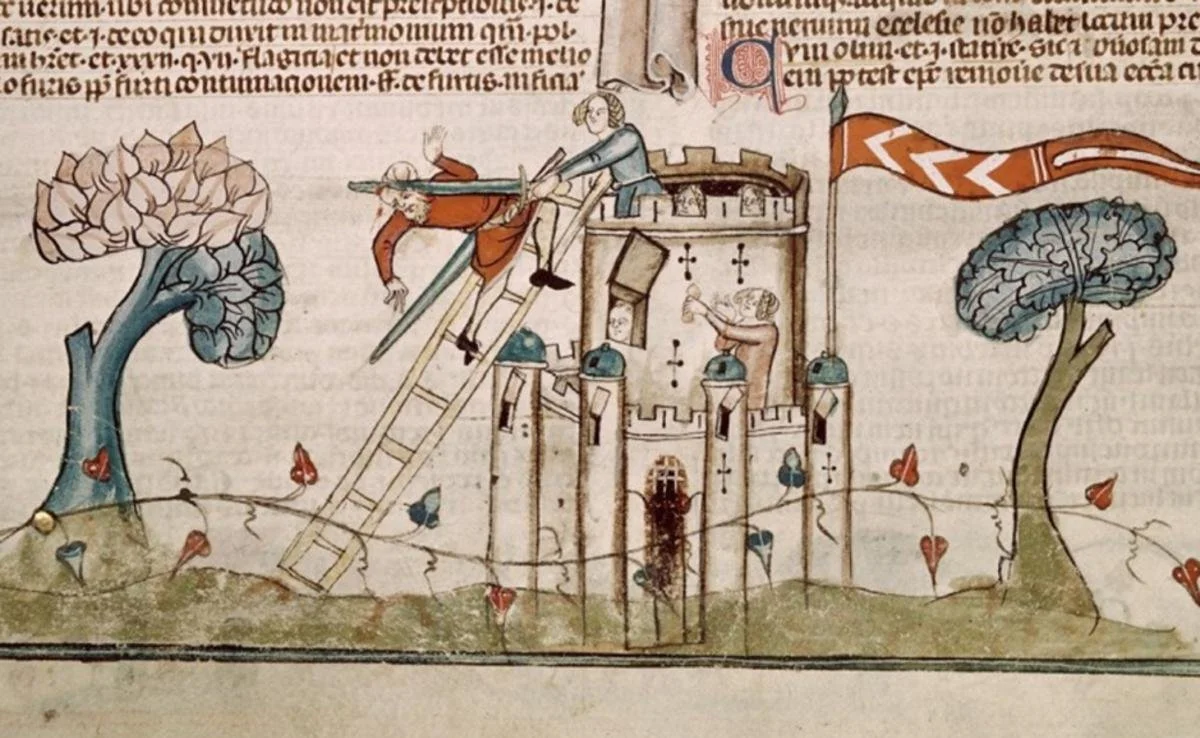
Meet Nicola de la Haye. Sheriff of Lincolnshire. Castellan of Lincoln Castle. The woman who, in 1217, successfully defended one of England's most strategically vital fortresses against a French-backed rebel army: at the age of approximately seventy. She didn't wait for permission, and she didn’t expect plaudits: because no one was going to give it.
What the Twelfth Century Said Women Were
The medieval world had very clear ideas about women's place in society, and those ideas were enforced from pulpit, court, and custom alike. Women were considered intellectually weaker than men, legally subordinate to their fathers and husbands, and spiritually suspect - daughters of Eve, prone to temptation and manipulation(!!!). Church fathers and contemporary writers were emphatic on the subject. Women should be silent, obedient, and invisible in public life.
I've explored just how relentless and inventive that misogyny was in my medieval misogyny series, including a look at the men who competed, with some enthusiasm, for the title of Worst Villain to Women of the 12th Century. It's a crowded field.
What Nicola de la Haye Actually Did
Nicola inherited the hereditary castellanship of Lincoln Castle from her father, and she held it through two marriages, through political upheaval, through sieges and civil wars, and with a grip that no one could prise loose. She administered justice, she negotiated with kings, defied a rogue justiciar who threatened the kingdom whilst Richard the Lionheart was on crusade, and she commanded garrisons and organised castle defences - incredibly well.
When King John's reign collapsed into civil war and a French prince threatened to take the English throne, Nicola was the one defending Lincoln.
She was also, at various points, told she was too old, too female, and too inconvenient. She resigned her position as castellan (constable), but was promptly reappointed, because no one else could do it as well as she could.
And one of King John’s last acts was to make her the first female sheriff in England - Sheriff of Lincoln.
This is the woman at the heart of my novel Lady of Lincoln: not a fictional heroine invented to fit a modern template, but a real woman whose story has simply been waiting to be told.
Eleanor of Vermandois
In the shadowed corridors of twelfth-century French history stands a woman whose story has been largely forgotten—Eleanor of Vermandois (c. 1148–1213). Born into one of medieval Europe's most controversial families, Eleanor's life was marked by political intrigue, personal tragedy, and remarkable resilience as she navigated a world where powerful men controlled women's destinies.
If you're planning to read my popular, and currently free, historical novella Eleanor's Revenge, the first section of this post is spoiler-free, introducing Eleanor and her family background. Further down, after a clear spoiler warning, I delve into the full dramatic arc of her life.
A Scandalous Beginning
Eleanor's very existence was rooted in scandal. Her parents' marriage in 1142 triggered one of the most notorious affairs of the medieval period. Her father, Raoul I, Count of Vermandois, was the powerful seneschal of France and cousin to King Louis VII. Her mother, Petronilla of Aquitaine, was the younger sister of the legendary Eleanor of Aquitaine, who would become Queen of both France and England.
Their love story began at the French court around 1141, when Petronilla met the much older, married Raoul. With her sister's encouragement and the king's approval, Raoul secured an annulment from his first wife, Eleanor of Blois, on dubious grounds of consanguinity. Three compliant bishops—one of whom was Raoul's own brother—officiated at Raoul and Petronilla's wedding in early 1142.
Richard the Lionheart at Sixteen: the Making of a Warrior Duke
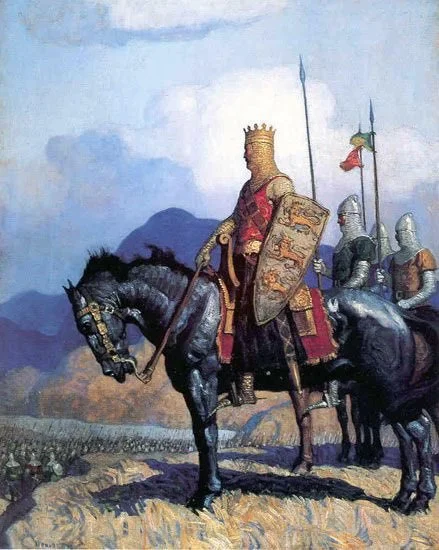
In 1173, a boy of sixteen took his first step onto the stage of war. His name was Richard, Duke of Aquitaine, though he had yet to earn the epithet Lionheart.
Before he became the crusader-king of legend, before his songs and sieges, Richard was a restless teenager thrust into the most dangerous political storm of the twelfth century: the Great Rebellion against his father, King Henry II.
It was a rebellion born of pride, family betrayal, and the impossible weight of expectation. And it was here — amid defeat, shame, and fire — that the making of a warrior began.
A Son in His Mother’s Shadow
Richard was Eleanor of Aquitaine’s favourite son, and in many ways her reflection: intelligent, impulsive, proud. Born in Oxford but raised in the cultured courts of Poitiers and Bordeaux, he was steeped in his mother’s world of poetry and politics. By his mid-teens he could compose in Occitan, debate theology in Latin, and command a hall full of barons — yet he was still a boy in a man’s game.
In 1172, Henry II had forced Eleanor to surrender the duchy of Aquitaine to her teenage son, intending to bind the region more tightly to the English crown. But Aquitaine was Eleanor’s inheritance, her life’s work, and Richard was fiercely loyal to her. The gift was both a promotion and a trap: the young duke found himself governing a proud and fractious land, surrounded by lords twice his age and loyalty only thinly pledged.
When the rebellion of 1173 began, Richard stood between two worlds — son of a king, heir to a duchy, and caught between the two towering figures who defined his destiny.
Hugh de Morville: The Knight Who Would Not Repent
Lord of Westmorland and Knaresborough, de Morville escaped execution, but not history’s judgment.
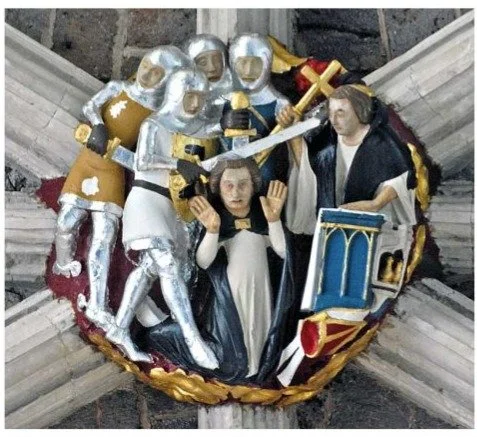
When Thomas Becket fell beneath the knights’ swords on that winter night in Canterbury, Hugh de Morville was there, but whether he struck or simply stood aside remains one of history’s greyest shadows.
He was the oldest of the four and the most powerful: Lord of Westmorland and Knaresborough, baron of the north, and keeper of one of the most formidable castles in England. While Reginald FitzUrse raged, William de Tracy hesitated, and Richard de Brito delivered the fatal blow, de Morville watched . But his silence proved to be as damning as any sword.

Reginald FitzUrse: The Bear Knight Who Slayed a Saint
On 29 December 1170, four armed knights pushed through the freezing rain towards Canterbury Cathedral. Their leader was Reginald FitzUrse—a man whose very name meant “son of the bear.” He would live up to it in every sense: fierce, proud, and dangerously impulsive.
When Thomas Becket fell beneath their swords that night, FitzUrse’s roar echoed through the nave. It was he who first laid hands on the archbishop, striking the blow that turned a quarrel between king and church into one of the most shocking crimes of the Middle Ages.
A Knight of the King’s Household
Little is known of FitzUrse’s early life. He came from a respectable Somerset family, holding lands at Willeton and Barham. Like many younger sons of the gentry, he found advancement in royal service. By the 1160s he was one of Henry II’s household knights—trusted, well-paid, and fiercely loyal to the king who rewarded courage and obedience above all else.
That loyalty, however, would prove fatal.

Eleanor of Aquitaine: Queen, Duchess, and Mother of Rebels
When their sons grew to manhood, Eleanor encouraged them to demand their inheritance. Henry the Young King, Richard, and Geoffrey wanted lands to rule; Henry II refused. In 1173, when the princes fled to France, Eleanor supported them. Chroniclers later claimed she disguised herself as a man to join them—an image that has haunted legend ever since.
Her rebellion failed. Henry II’s forces captured her later that year while she travelled through Poitou. For the next sixteen years she was kept under guard, a queen turned prisoner. Yet even captivity could not erase her influence: her sons would continue to fight in her name.

Henry II of England – The Jailer of Queens
When Henry of Anjou (later Henry II, also known as Henry Plantagenet) married Eleanor of Aquitaine in 1152, they created a political alliance of breath taking scale. Henry was heir to the English throne; Eleanor, just divorced from King Louis VII of France, brought with her the duchy of Aquitaine, one of the wealthiest and most independent regions in Europe.
For a time, their marriage was a true partnership. Eleanor rode beside Henry on campaign, governed Aquitaine in his name, and bore him eight children. Together, they forged the Angevin Empire stretching from the Scottish borders to the Pyrenees.
But power and passion soured into mistrust. By the 1170s, the marriage had collapsed into open hostility.

Geoffrey of Anjou: The Handsome Count Who Founded the Plantagenet Dynasty (Died 7th September 1151)
On September 7, 1151, Geoffrey of Anjou — known as “le Bel” or “the Handsome” — collapsed with a sudden fever and died at just 38 years old.
He was never king. He never wore a crown.
And yet, Geoffrey Plantagenet shaped the medieval world more than many monarchs.
Without him, there would be no Henry II, no Richard the Lionheart, no King John and Magna Carta, and no centuries-long Plantagenet dynasty. Geoffrey’s story isn’t just a footnote — it’s the spark that set medieval England ablaze.

Lucy of Bolingbroke: The Woman Behind Lincoln Castle's Lucy Tower
She paid a king five hundred marks for the right to be left alone. She outlived three husbands, presided over one of the most strategically significant castles in England, and left such an indelible mark on Lincoln Castle that a tower still bears her name nine centuries later. Yet Lucy of Bolingbroke remains one of the least-known powerful women of the Norman era – overshadowed, perhaps, by the very castle she helped to shape.
Today, I’m bringing this important but forgotten woman back into the light (as much as I can).
Muriel of Lincoln
Nicola de la Haye held Lincoln Castle against a French siege and saved England, and everyone remembers her name.
Almost no one remembers her grandmother.
Muriel of Lincoln didn't lead armies or defy kings in any spectacular fashion, but without her calculated survival and strategic positioning, there would be no Nicola, no legend, no castle defense that changed the course of English history.
This is the story of the invisible foundation upon which greatness was built.
-
Biographies
- 31 Aug 2026 She Didn't Wait for Permission 31 Aug 2026
- 26 Aug 2026 Eleanor of Vermandois 26 Aug 2026
- 26 Aug 2026 Richard the Lionheart at Sixteen: the Making of a Warrior Duke 26 Aug 2026
- 25 Aug 2026 Hugh de Morville: The Knight Who Would Not Repent 25 Aug 2026
- 12 Aug 2026 Reginald FitzUrse: The Bear Knight Who Slayed a Saint 12 Aug 2026
- 12 Aug 2026 Eleanor of Aquitaine: Queen, Duchess, and Mother of Rebels 12 Aug 2026
- 12 Aug 2026 Henry II of England – The Jailer of Queens 12 Aug 2026
- 11 Aug 2026 Geoffrey of Anjou: The Handsome Count Who Founded the Plantagenet Dynasty (Died 7th September 1151) 11 Aug 2026
- 3 Jul 2026 Lucy of Bolingbroke: The Woman Behind Lincoln Castle's Lucy Tower 3 Jul 2026
- 3 Jul 2026 Muriel of Lincoln 3 Jul 2026
-
CrimeAndJustice
- 31 Aug 2026 The York Massacre, 16 March 1190: On this Day in History 31 Aug 2026
- 26 Aug 2026 A Rat, a Skull, and a Murder That History Never Solved 26 Aug 2026
- 25 Aug 2026 Richard de Brito: The Forgotten Killer; and a very Dangerous Friend 25 Aug 2026
- 25 Aug 2026 William de Tracy: The Penitent Knight of Canterbury 25 Aug 2026
- 12 Aug 2026 Henry II of England – The Jailer of Queens 12 Aug 2026
- 11 Aug 2026 Geoffrey de Mandeville – The Terror of Widows and Nuns 11 Aug 2026
- 11 Aug 2026 Philippe II (Augustus) of France Humiliated Queen Ingeborg 11 Aug 2026
- 11 Aug 2026 Fulk V of Anjou: the King Who Beat His Queen 11 Aug 2026
- 11 Aug 2026 Matthew of Boulogne: The Count Who Kidnapped a Nun 11 Aug 2026
-
EnglandAndAngevinEmpire
- 1 Oct 2026 Black Shuck: The Devil’s Dog That Haunted Medieval England 1 Oct 2026
- 7 Sept 2026 The Treaty of Lambeth, 1217 7 Sept 2026
- 24 Aug 2026 How Nicola de la Haye and Gerard de Camville Conquered the Sea, and Made a Deadly Enemy 24 Aug 2026
- 10 Aug 2026 Willikin of the Weald: Was He the Real Inspiration for Robin Hood? 10 Aug 2026
- 3 Aug 2026 The Real Sheriff of Nottingham? 3 Aug 2026
- 6 Jul 2026 Lincoln's Lost Castle: The Rise and Fall of Thorngate 6 Jul 2026
- 23 Jun 2026 Why the Plantenet Angevins Ruled Half of Europe 23 Jun 2026
-
EverydayLife
- 26 Aug 2026 Medieval New Year's Eve: When Chaos Was the Point 26 Aug 2026
- 26 Aug 2026 Feasts, Folklore & Boar: A Medieval Christmas with a Dash of Wild Hunt Magic 26 Aug 2026
- 26 Aug 2026 A’Wassailing We Come! 26 Aug 2026
- 26 Aug 2026 Medieval Advent 26 Aug 2026
- 17 Aug 2026 Capons, Cocks and Hens: Keeping Chickens in Medieval England 17 Aug 2026
- 12 Aug 2026 All Souls’ Day: Soul Cakes, Prayer and Memory 12 Aug 2026
- 12 Aug 2026 All Hallows’ Day: The Feast of All Saints 12 Aug 2026
- 12 Aug 2026 All Hallows’ Eve: The Vigil of the Departed 12 Aug 2026
- 12 Aug 2026 Lanterns and Mischief: From Samhain Fires to Punkie Night 12 Aug 2026
- 12 Aug 2026 What Is Allhallowtide? The Three Days of the Dead… 12 Aug 2026
- 22 Jun 2026 What Languages Did Jews Speak in Medieval England? 22 Jun 2026
-
HistoricalEvents
- 16 Sept 2026 The Prayer That Outlived Him: Rabbi Yom Tov of Joigny (and York) 16 Sept 2026
- 7 Sept 2026 The Treaty of Lambeth, 1217 7 Sept 2026
- 31 Aug 2026 Magna Carta Day: The Meadow Where a King Was Made to Yield, and the Woman Who Saved It from Ruin 31 Aug 2026
- 31 Aug 2026 Battle of Lincoln 1217: The Woman Who Held the Castle That Saved England 31 Aug 2026
- 31 Aug 2026 The Sky is Falling! Halley's Comet, the Bayeux Tapestry, and the Four Portents in ‘Lady of the Castle’ 31 Aug 2026
- 31 Aug 2026 How a Birthday Party at Chinon Kickstarted a Civil War (5 March 1173) 31 Aug 2026
- 26 Aug 2026 A Rat, a Skull, and a Murder That History Never Solved 26 Aug 2026
- 26 Aug 2026 ‘King and Conqueror’: How much truth-stretching is acceptable? 26 Aug 2026
- 25 Aug 2026 Medieval Succession: When Henry II’s Empire Imploded 25 Aug 2026
- 25 Aug 2026 Richard de Brito: The Forgotten Killer; and a very Dangerous Friend 25 Aug 2026
- 25 Aug 2026 William de Tracy: The Penitent Knight of Canterbury 25 Aug 2026
- 12 Aug 2026 Reginald FitzUrse: The Bear Knight Who Slayed a Saint 12 Aug 2026
- 12 Aug 2026 The Shadow of Becket: How a Murder Shook the Kingdom 12 Aug 2026
- 11 Aug 2026 Princes Without Power: Why Henry the Young King Rebelled 11 Aug 2026
- 27 Jul 2026 What really burned at York Castle in 1190? 27 Jul 2026
- 22 Jun 2026 The Battle of Fornham: When a Countess Rode to War and Changed Medieval England Forever 22 Jun 2026
-
HistoricalFiction
- 26 Aug 2026 Warrior Monks on the Lincolnshire Heath 26 Aug 2026
- 26 Aug 2026 Nicola de la Haye 26 Aug 2026
- 26 Aug 2026 Fastrada: Charlemagne’s Queen History Tried to Forget 26 Aug 2026
- 26 Aug 2026 Wu Zetian: The Woman Who Ruled an Empire 26 Aug 2026
- 26 Aug 2026 ‘King and Conqueror’: How much truth-stretching is acceptable? 26 Aug 2026
- 26 Aug 2026 Empress Theodora of Byzantium: She Saved an Empire 26 Aug 2026
- 26 Aug 2026 Hypatia of Alexandria 26 Aug 2026
- 25 Aug 2026 Zenobia of Palmyra: the Queen Who Defied Rome 25 Aug 2026
- 25 Aug 2026 Vibia Sabina: Empress, Wife of Hadrian 25 Aug 2026
- 25 Aug 2026 Claudia Procula, Pontius Pilate’s wife 25 Aug 2026
- 12 Aug 2026 Zipporah, the Wife of Moses 12 Aug 2026
- 12 Aug 2026 The Revenant of Hereford: Walter Map’s Medieval Walking Dead 12 Aug 2026
-
People
- 26 Aug 2026 The Saxon Secret to Avoiding a Bad Ruler 26 Aug 2026
- 25 Aug 2026 Medieval Succession: When Henry II’s Empire Imploded 25 Aug 2026
- 24 Aug 2026 How Nicola de la Haye and Gerard de Camville Conquered the Sea, and Made a Deadly Enemy 24 Aug 2026
- 12 Aug 2026 The Shadow of Becket: How a Murder Shook the Kingdom 12 Aug 2026
- 11 Aug 2026 Princes Without Power: Why Henry the Young King Rebelled 11 Aug 2026
- 10 Aug 2026 Willikin of the Weald: Was He the Real Inspiration for Robin Hood? 10 Aug 2026
- 3 Aug 2026 The Real Sheriff of Nottingham? 3 Aug 2026
-
ReligionMagicandBelief
- 1 Oct 2026 Black Shuck: The Devil’s Dog That Haunted Medieval England 1 Oct 2026
- 16 Sept 2026 The Prayer That Outlived Him: Rabbi Yom Tov of Joigny (and York) 16 Sept 2026
- 3 Sept 2026 Bloodbath at the Lionheart’s Coronation 3 Sept 2026
- 31 Aug 2026 The Sky is Falling! Halley's Comet, the Bayeux Tapestry, and the Four Portents in ‘Lady of the Castle’ 31 Aug 2026
- 31 Aug 2026 The York Massacre, 16 March 1190: On this Day in History 31 Aug 2026
- 26 Aug 2026 Warrior Monks on the Lincolnshire Heath 26 Aug 2026
- 26 Aug 2026 Friday the 13th Superstitions? 26 Aug 2026
- 26 Aug 2026 Feasts, Folklore & Boar: A Medieval Christmas with a Dash of Wild Hunt Magic 26 Aug 2026
- 26 Aug 2026 Medieval Advent 26 Aug 2026
- 25 Aug 2026 Hugh de Morville: The Knight Who Would Not Repent 25 Aug 2026
- 12 Aug 2026 All Souls’ Day: Soul Cakes, Prayer and Memory 12 Aug 2026
- 12 Aug 2026 All Hallows’ Day: The Feast of All Saints 12 Aug 2026
- 12 Aug 2026 All Hallows’ Eve: The Vigil of the Departed 12 Aug 2026
- 12 Aug 2026 The Revenant of Hereford: Walter Map’s Medieval Walking Dead 12 Aug 2026
- 12 Aug 2026 Lanterns and Mischief: From Samhain Fires to Punkie Night 12 Aug 2026
- 12 Aug 2026 What Is Allhallowtide? The Three Days of the Dead… 12 Aug 2026
- 27 Jul 2026 What really burned at York Castle in 1190? 27 Jul 2026
- 22 Jun 2026 What Languages Did Jews Speak in Medieval England? 22 Jun 2026
-
TimePeriods
- 31 Aug 2026 How a Birthday Party at Chinon Kickstarted a Civil War (5 March 1173) 31 Aug 2026
- 26 Aug 2026 Friday the 13th Superstitions? 26 Aug 2026
- 26 Aug 2026 Richard the Lionheart at Sixteen: the Making of a Warrior Duke 26 Aug 2026
- 11 Aug 2026 Geoffrey of Anjou: The Handsome Count Who Founded the Plantagenet Dynasty (Died 7th September 1151) 11 Aug 2026
- 23 Jun 2026 Why the Plantenet Angevins Ruled Half of Europe 23 Jun 2026
-
WomeninHistory
- 31 Aug 2026 Magna Carta Day: The Meadow Where a King Was Made to Yield, and the Woman Who Saved It from Ruin 31 Aug 2026
- 31 Aug 2026 Battle of Lincoln 1217: The Woman Who Held the Castle That Saved England 31 Aug 2026
- 31 Aug 2026 She Didn't Wait for Permission 31 Aug 2026
- 26 Aug 2026 The Saxon Secret to Avoiding a Bad Ruler 26 Aug 2026
- 26 Aug 2026 Nicola de la Haye 26 Aug 2026
- 26 Aug 2026 Eleanor of Vermandois 26 Aug 2026
- 26 Aug 2026 Fastrada: Charlemagne’s Queen History Tried to Forget 26 Aug 2026
- 26 Aug 2026 Wu Zetian: The Woman Who Ruled an Empire 26 Aug 2026
- 26 Aug 2026 Empress Theodora of Byzantium: She Saved an Empire 26 Aug 2026
- 26 Aug 2026 Hypatia of Alexandria 26 Aug 2026
- 25 Aug 2026 Zenobia of Palmyra: the Queen Who Defied Rome 25 Aug 2026
- 25 Aug 2026 Vibia Sabina: Empress, Wife of Hadrian 25 Aug 2026
- 25 Aug 2026 Claudia Procula, Pontius Pilate’s wife 25 Aug 2026
- 12 Aug 2026 Zipporah, the Wife of Moses 12 Aug 2026
- 12 Aug 2026 Eleanor of Aquitaine: Queen, Duchess, and Mother of Rebels 12 Aug 2026
- 11 Aug 2026 Geoffrey de Mandeville – The Terror of Widows and Nuns 11 Aug 2026
- 11 Aug 2026 Philippe II (Augustus) of France Humiliated Queen Ingeborg 11 Aug 2026
- 11 Aug 2026 Fulk V of Anjou: the King Who Beat His Queen 11 Aug 2026
- 11 Aug 2026 Matthew of Boulogne: The Count Who Kidnapped a Nun 11 Aug 2026
- 3 Jul 2026 Lucy of Bolingbroke: The Woman Behind Lincoln Castle's Lucy Tower 3 Jul 2026
- 3 Jul 2026 Muriel of Lincoln 3 Jul 2026
- 22 Jun 2026 The Battle of Fornham: When a Countess Rode to War and Changed Medieval England Forever 22 Jun 2026
- 1173-4 Great Rebellion
- 12th Century
- 12th Century History
- Adeliza de Meschines
- All Hallow Tide
- All Hallow's Eve
- Angevin Empire
- Battle of Lincoln
- Battle of Lincoln 1217
- Battle of Sandwich 1217
- Bayeux Tapestry Comet Scene
- Becket Martyrdom 1170
- Becket's Assassins
- Becket's murder 1170
- Biblical Women
- Canterbury Cathedral
- Christianity
- Christmas
- Clifford's Tower
- Clifford's Tower massacre
- Coronation
- Crusade
- Eleanor of Aquitaine
- Eleanor of Aquitane Imprisonment
- England
- English Folklore
- Folklore
- Forgotten Women
- Forgotten Women of History
- Geoffrey of Anjou
- Gerard de Camville
- Halloween
- Henry II
- Henry II and Becket conflict
- Henry II and Eleanor of Aquitaine
- Henry the Young King
- Historical Fiction
- Household Knights
- King John
- Knights Who Killed Thomas Becket
- Lady of England
- Lady of Lincoln
- Lady of Lincoln Novel
- Lady of the Castle
- Lincoln Castle
- Lincoln Castle history
- Magna Carta
- Medieval
- Medieval Antisemitism
- Medieval Christmas
- Medieval Convents Attacked
- Medieval Customs
- Medieval England
- Medieval England and France
- Medieval Feasts
- Medieval Folklore
- Medieval France
- Medieval historical fiction
- Medieval History
- medieval Jewish history
- Medieval Jews
- Medieval Lincolnshire
- Medieval Misogyny
- Medieval Queens
- Medieval Superstitions
- medieval women
- Misogyny in the Middle Ages
- Muriel of Lincoln
- Myths and Legend
- Nicholaa de la Haye
- Nicholaa de la Haye novel
- Nicola de la Haye
- Nicola de la Haye historical fiction
- Nicola de la Haye novel
- Norman Conquest
- Norman Invasion
- Pagan Traditions
- Paganism
- Plantagenet dynasty
- Plantagenet kings
- Plantagenet Princes
- Ralph de la Haye
- Revenants
- Revolt of the Eaglets
- Richard I
- Richard the Lionheart
- Robert de Condet Thorngate
- Romans
- Samhain
- Saxons
- Spirit World
- The Anarchy
- Thomas Becket
- Thomas Becket Murder
- William FitzErneis
- Women in History
- women in medieval England
- York Jewish massacre 1190
- York massacre 1190
- Æthelflæd