Fish on Fridays and many more days beside
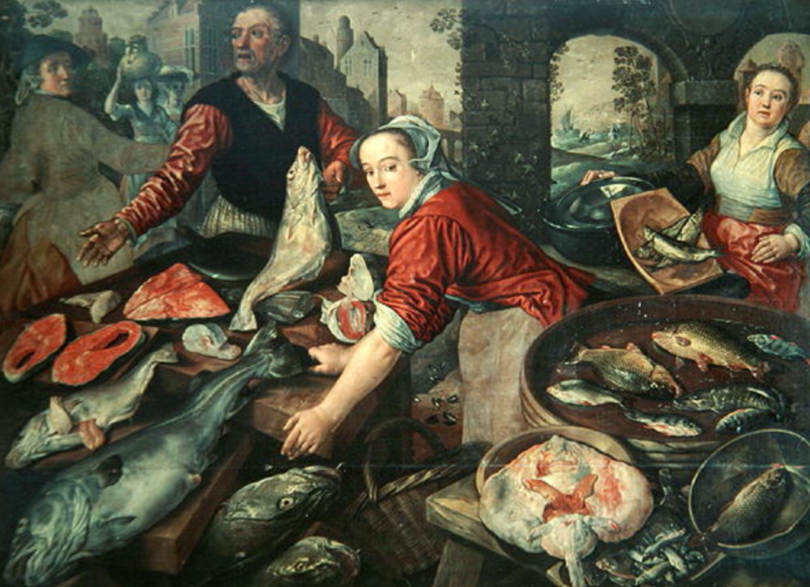
If you lived in medieval England, you’d probably have eaten an awful lot more fish than you do today, and not necessarily because you liked it, or even because you lived near the sea, but because the Church often told you what you were supposed to eat.
And no one ate more fish than churchmen, which is probably why the fish market at Lincoln was close to both the castle and cathedral (and features quite a lot in my Nicola de la Haye novels).
So, with Advent beginning soon, I've been looking into the medieval custom of abstaining from meat, and often dairy. I realised that fish played such an important part in the medieval diet that it deserved an article of its own, which is what this blog is about.

Medieval Advent
Everyone is talking about what they have in their advent calendars: chocolates, toys, even Star Wars characters! Advent also brings to mind glittering candles on wreaths, festive jumpers, Christmas markets, mulled wine, and the countdown to Christmas morning.
I haven’t met a single person (other than fellow medieval fiction authors) who have any idea that for medieval people, Advent was not a season of indulgence or celebration. It was a period of fasting, penance, self-examination, and preparation for the Second Coming rather than Santa’s sleigh.
The earliest evidence for Advent appears in the 4th century, particularly in Gaul and Spain, where Christians observed a multi-week fast before Epiphany rather than Christmas. This early “Nativity Fast” resembled Lent: No meat, no dairy, no rich foods, no marital relations (yes, this was explicitly addressed!). By the 6th century, Rome formalised a four-week liturgical season leading up to Christmas. But unlike today’s “anticipatory joy,” medieval Advent preached repentance, vigilance, and apocalyptic expectation.
The focus wasn’t solely on celebrating Christ’s birth. Advent was designed to prepare the soul for Christ’s return in judgement. Medieval sermons emphasised humility, fear of sin, confession, charitable giving, and moral renewal. The message was clear: Christmas might be coming, but so was Judgement Day!
If modern Advent is “countdown to the festivities,” medieval Advent was “brace yourself and prepare your soul.”
-
Biographies
- 31 Aug 2026 She Didn't Wait for Permission 31 Aug 2026
- 26 Aug 2026 Eleanor of Vermandois 26 Aug 2026
- 26 Aug 2026 Richard the Lionheart at Sixteen: the Making of a Warrior Duke 26 Aug 2026
- 25 Aug 2026 Hugh de Morville: The Knight Who Would Not Repent 25 Aug 2026
- 12 Aug 2026 Reginald FitzUrse: The Bear Knight Who Slayed a Saint 12 Aug 2026
- 12 Aug 2026 Eleanor of Aquitaine: Queen, Duchess, and Mother of Rebels 12 Aug 2026
- 12 Aug 2026 Henry II of England – The Jailer of Queens 12 Aug 2026
- 11 Aug 2026 Geoffrey of Anjou: The Handsome Count Who Founded the Plantagenet Dynasty (Died 7th September 1151) 11 Aug 2026
- 3 Jul 2026 Lucy of Bolingbroke: The Woman Behind Lincoln Castle's Lucy Tower 3 Jul 2026
- 3 Jul 2026 Muriel of Lincoln 3 Jul 2026
-
CrimeAndJustice
- 31 Aug 2026 The York Massacre, 16 March 1190: On this Day in History 31 Aug 2026
- 26 Aug 2026 A Rat, a Skull, and a Murder That History Never Solved 26 Aug 2026
- 25 Aug 2026 Richard de Brito: The Forgotten Killer; and a very Dangerous Friend 25 Aug 2026
- 25 Aug 2026 William de Tracy: The Penitent Knight of Canterbury 25 Aug 2026
- 12 Aug 2026 Henry II of England – The Jailer of Queens 12 Aug 2026
- 11 Aug 2026 Geoffrey de Mandeville – The Terror of Widows and Nuns 11 Aug 2026
- 11 Aug 2026 Philippe II (Augustus) of France Humiliated Queen Ingeborg 11 Aug 2026
- 11 Aug 2026 Fulk V of Anjou: the King Who Beat His Queen 11 Aug 2026
- 11 Aug 2026 Matthew of Boulogne: The Count Who Kidnapped a Nun 11 Aug 2026
-
EnglandAndAngevinEmpire
- 23 Nov 2026 Fish on Fridays and many more days beside 23 Nov 2026
- 13 Nov 2026 Friday the 13th? Try These 12th- and 13th-Century Superstitions Instead 13 Nov 2026
- 11 Nov 2026 Martinmas: Geese, Blood Puddings and a Medieval Feast Gone Wrong 11 Nov 2026
- 12 Oct 2026 Barlings Abbey: The White Canons and the Medieval World Behind Lady of the Castle 12 Oct 2026
- 1 Oct 2026 Black Shuck: The Devil’s Dog That Haunted Medieval England 1 Oct 2026
- 7 Sept 2026 The Treaty of Lambeth, 1217 7 Sept 2026
- 24 Aug 2026 How Nicola de la Haye and Gerard de Camville Conquered the Sea, and Made a Deadly Enemy 24 Aug 2026
- 10 Aug 2026 Willikin of the Weald: Was He the Real Inspiration for Robin Hood? 10 Aug 2026
- 3 Aug 2026 The Real Sheriff of Nottingham? 3 Aug 2026
- 6 Jul 2026 Lincoln's Lost Castle: The Rise and Fall of Thorngate 6 Jul 2026
- 23 Jun 2026 Why the Plantenet Angevins Ruled Half of Europe 23 Jun 2026
-
EverydayLife
- 2 Nov 2026 All Souls’ Day: Soul Cakes, Prayer and Memory 2 Nov 2026
- 1 Nov 2026 What Is Allhallowtide? The Three Days of the Dead… 1 Nov 2026
- 31 Oct 2026 All Hallows’ Eve: The Vigil of the Departed 31 Oct 2026
- 30 Oct 2026 Lanterns and Mischief: From Samhain Fires to Punkie Night 30 Oct 2026
- 12 Oct 2026 Barlings Abbey: The White Canons and the Medieval World Behind Lady of the Castle 12 Oct 2026
- 26 Aug 2026 Medieval New Year's Eve: When Chaos Was the Point 26 Aug 2026
- 26 Aug 2026 Feasts, Folklore & Boar: A Medieval Christmas with a Dash of Wild Hunt Magic 26 Aug 2026
- 26 Aug 2026 A’Wassailing We Come! 26 Aug 2026
- 26 Aug 2026 Medieval Advent 26 Aug 2026
- 17 Aug 2026 Capons, Cocks and Hens: Keeping Chickens in Medieval England 17 Aug 2026
- 12 Aug 2026 All Souls’ Day: Soul Cakes, Prayer and Memory 12 Aug 2026
- 12 Aug 2026 All Hallows’ Day: The Feast of All Saints 12 Aug 2026
- 12 Aug 2026 All Hallows’ Eve: The Vigil of the Departed 12 Aug 2026
- 12 Aug 2026 Lanterns and Mischief: From Samhain Fires to Punkie Night 12 Aug 2026
- 12 Aug 2026 What Is Allhallowtide? The Three Days of the Dead… 12 Aug 2026
- 22 Jun 2026 What Languages Did Jews Speak in Medieval England? 22 Jun 2026
-
HistoricalEvents
- 17 Oct 2026 The Battle of Fornham 17 October 1217 17 Oct 2026
- 16 Sept 2026 The Prayer That Outlived Him: Rabbi Yom Tov of Joigny (and York) 16 Sept 2026
- 7 Sept 2026 The Treaty of Lambeth, 1217 7 Sept 2026
- 31 Aug 2026 Magna Carta Day: The Meadow Where a King Was Made to Yield, and the Woman Who Saved It from Ruin 31 Aug 2026
- 31 Aug 2026 Battle of Lincoln 1217: The Woman Who Held the Castle That Saved England 31 Aug 2026
- 31 Aug 2026 The Sky is Falling! Halley's Comet, the Bayeux Tapestry, and the Four Portents in ‘Lady of the Castle’ 31 Aug 2026
- 31 Aug 2026 How a Birthday Party at Chinon Kickstarted a Civil War (5 March 1173) 31 Aug 2026
- 26 Aug 2026 A Rat, a Skull, and a Murder That History Never Solved 26 Aug 2026
- 26 Aug 2026 ‘King and Conqueror’: How much truth-stretching is acceptable? 26 Aug 2026
- 25 Aug 2026 Medieval Succession: When Henry II’s Empire Imploded 25 Aug 2026
- 25 Aug 2026 Richard de Brito: The Forgotten Killer; and a very Dangerous Friend 25 Aug 2026
- 25 Aug 2026 William de Tracy: The Penitent Knight of Canterbury 25 Aug 2026
- 12 Aug 2026 Reginald FitzUrse: The Bear Knight Who Slayed a Saint 12 Aug 2026
- 12 Aug 2026 The Shadow of Becket: How a Murder Shook the Kingdom 12 Aug 2026
- 11 Aug 2026 Princes Without Power: Why Henry the Young King Rebelled 11 Aug 2026
- 27 Jul 2026 What really burned at York Castle in 1190? 27 Jul 2026
- 22 Jun 2026 The Battle of Fornham: When a Countess Rode to War and Changed Medieval England Forever 22 Jun 2026
-
HistoricalFiction
- 26 Oct 2026 The Revenant of Hereford: Walter Map’s Medieval Walking Dead 26 Oct 2026
- 26 Aug 2026 Warrior Monks on the Lincolnshire Heath 26 Aug 2026
- 26 Aug 2026 Nicola de la Haye 26 Aug 2026
- 26 Aug 2026 Fastrada: Charlemagne’s Queen History Tried to Forget 26 Aug 2026
- 26 Aug 2026 Wu Zetian: The Woman Who Ruled an Empire 26 Aug 2026
- 26 Aug 2026 ‘King and Conqueror’: How much truth-stretching is acceptable? 26 Aug 2026
- 26 Aug 2026 Empress Theodora of Byzantium: She Saved an Empire 26 Aug 2026
- 26 Aug 2026 Hypatia of Alexandria 26 Aug 2026
- 25 Aug 2026 Zenobia of Palmyra: the Queen Who Defied Rome 25 Aug 2026
- 25 Aug 2026 Vibia Sabina: Empress, Wife of Hadrian 25 Aug 2026
- 25 Aug 2026 Claudia Procula, Pontius Pilate’s wife 25 Aug 2026
- 12 Aug 2026 Zipporah, the Wife of Moses 12 Aug 2026
- 12 Aug 2026 The Revenant of Hereford: Walter Map’s Medieval Walking Dead 12 Aug 2026
-
MedievalLincoln
- 11 Nov 2026 Martinmas: Geese, Blood Puddings and a Medieval Feast Gone Wrong 11 Nov 2026
- 19 Oct 2026 The Holy Innocents Leper Hospital, Lincoln: The Malandry's Forgotten History 19 Oct 2026
-
People
- 26 Aug 2026 The Saxon Secret to Avoiding a Bad Ruler 26 Aug 2026
- 25 Aug 2026 Medieval Succession: When Henry II’s Empire Imploded 25 Aug 2026
- 24 Aug 2026 How Nicola de la Haye and Gerard de Camville Conquered the Sea, and Made a Deadly Enemy 24 Aug 2026
- 12 Aug 2026 The Shadow of Becket: How a Murder Shook the Kingdom 12 Aug 2026
- 11 Aug 2026 Princes Without Power: Why Henry the Young King Rebelled 11 Aug 2026
- 10 Aug 2026 Willikin of the Weald: Was He the Real Inspiration for Robin Hood? 10 Aug 2026
- 3 Aug 2026 The Real Sheriff of Nottingham? 3 Aug 2026
-
ReligionMagicandBelief
- 23 Nov 2026 Fish on Fridays and many more days beside 23 Nov 2026
- 13 Nov 2026 Friday the 13th? Try These 12th- and 13th-Century Superstitions Instead 13 Nov 2026
- 11 Nov 2026 Martinmas: Geese, Blood Puddings and a Medieval Feast Gone Wrong 11 Nov 2026
- 2 Nov 2026 All Souls’ Day: Soul Cakes, Prayer and Memory 2 Nov 2026
- 1 Nov 2026 What Is Allhallowtide? The Three Days of the Dead… 1 Nov 2026
- 31 Oct 2026 All Hallows’ Eve: The Vigil of the Departed 31 Oct 2026
- 30 Oct 2026 Lanterns and Mischief: From Samhain Fires to Punkie Night 30 Oct 2026
- 26 Oct 2026 The Revenant of Hereford: Walter Map’s Medieval Walking Dead 26 Oct 2026
- 19 Oct 2026 The Holy Innocents Leper Hospital, Lincoln: The Malandry's Forgotten History 19 Oct 2026
- 12 Oct 2026 Barlings Abbey: The White Canons and the Medieval World Behind Lady of the Castle 12 Oct 2026
- 1 Oct 2026 Black Shuck: The Devil’s Dog That Haunted Medieval England 1 Oct 2026
- 16 Sept 2026 The Prayer That Outlived Him: Rabbi Yom Tov of Joigny (and York) 16 Sept 2026
- 3 Sept 2026 Bloodbath at the Lionheart’s Coronation 3 Sept 2026
- 31 Aug 2026 The Sky is Falling! Halley's Comet, the Bayeux Tapestry, and the Four Portents in ‘Lady of the Castle’ 31 Aug 2026
- 31 Aug 2026 The York Massacre, 16 March 1190: On this Day in History 31 Aug 2026
- 26 Aug 2026 Warrior Monks on the Lincolnshire Heath 26 Aug 2026
- 26 Aug 2026 Friday the 13th Superstitions? 26 Aug 2026
- 26 Aug 2026 Feasts, Folklore & Boar: A Medieval Christmas with a Dash of Wild Hunt Magic 26 Aug 2026
- 26 Aug 2026 Medieval Advent 26 Aug 2026
- 25 Aug 2026 Hugh de Morville: The Knight Who Would Not Repent 25 Aug 2026
- 12 Aug 2026 All Souls’ Day: Soul Cakes, Prayer and Memory 12 Aug 2026
- 12 Aug 2026 All Hallows’ Day: The Feast of All Saints 12 Aug 2026
- 12 Aug 2026 All Hallows’ Eve: The Vigil of the Departed 12 Aug 2026
- 12 Aug 2026 The Revenant of Hereford: Walter Map’s Medieval Walking Dead 12 Aug 2026
- 12 Aug 2026 Lanterns and Mischief: From Samhain Fires to Punkie Night 12 Aug 2026
- 12 Aug 2026 What Is Allhallowtide? The Three Days of the Dead… 12 Aug 2026
- 27 Jul 2026 What really burned at York Castle in 1190? 27 Jul 2026
- 22 Jun 2026 What Languages Did Jews Speak in Medieval England? 22 Jun 2026
-
TimePeriods
- 23 Nov 2026 Fish on Fridays and many more days beside 23 Nov 2026
- 13 Nov 2026 Friday the 13th? Try These 12th- and 13th-Century Superstitions Instead 13 Nov 2026
- 31 Aug 2026 How a Birthday Party at Chinon Kickstarted a Civil War (5 March 1173) 31 Aug 2026
- 26 Aug 2026 Friday the 13th Superstitions? 26 Aug 2026
- 26 Aug 2026 Richard the Lionheart at Sixteen: the Making of a Warrior Duke 26 Aug 2026
- 11 Aug 2026 Geoffrey of Anjou: The Handsome Count Who Founded the Plantagenet Dynasty (Died 7th September 1151) 11 Aug 2026
- 23 Jun 2026 Why the Plantenet Angevins Ruled Half of Europe 23 Jun 2026
-
WomeninHistory
- 17 Oct 2026 The Battle of Fornham 17 October 1217 17 Oct 2026
- 31 Aug 2026 Magna Carta Day: The Meadow Where a King Was Made to Yield, and the Woman Who Saved It from Ruin 31 Aug 2026
- 31 Aug 2026 Battle of Lincoln 1217: The Woman Who Held the Castle That Saved England 31 Aug 2026
- 31 Aug 2026 She Didn't Wait for Permission 31 Aug 2026
- 26 Aug 2026 The Saxon Secret to Avoiding a Bad Ruler 26 Aug 2026
- 26 Aug 2026 Nicola de la Haye 26 Aug 2026
- 26 Aug 2026 Eleanor of Vermandois 26 Aug 2026
- 26 Aug 2026 Fastrada: Charlemagne’s Queen History Tried to Forget 26 Aug 2026
- 26 Aug 2026 Wu Zetian: The Woman Who Ruled an Empire 26 Aug 2026
- 26 Aug 2026 Empress Theodora of Byzantium: She Saved an Empire 26 Aug 2026
- 26 Aug 2026 Hypatia of Alexandria 26 Aug 2026
- 25 Aug 2026 Zenobia of Palmyra: the Queen Who Defied Rome 25 Aug 2026
- 25 Aug 2026 Vibia Sabina: Empress, Wife of Hadrian 25 Aug 2026
- 25 Aug 2026 Claudia Procula, Pontius Pilate’s wife 25 Aug 2026
- 12 Aug 2026 Zipporah, the Wife of Moses 12 Aug 2026
- 12 Aug 2026 Eleanor of Aquitaine: Queen, Duchess, and Mother of Rebels 12 Aug 2026
- 11 Aug 2026 Geoffrey de Mandeville – The Terror of Widows and Nuns 11 Aug 2026
- 11 Aug 2026 Philippe II (Augustus) of France Humiliated Queen Ingeborg 11 Aug 2026
- 11 Aug 2026 Fulk V of Anjou: the King Who Beat His Queen 11 Aug 2026
- 11 Aug 2026 Matthew of Boulogne: The Count Who Kidnapped a Nun 11 Aug 2026
- 3 Jul 2026 Lucy of Bolingbroke: The Woman Behind Lincoln Castle's Lucy Tower 3 Jul 2026
- 3 Jul 2026 Muriel of Lincoln 3 Jul 2026
- 22 Jun 2026 The Battle of Fornham: When a Countess Rode to War and Changed Medieval England Forever 22 Jun 2026
- 1173-4 Great Rebellion
- 12th Century
- 12th Century England
- 12th Century History
- 13th Century
- All Hallow Tide
- All Hallow's Eve
- Angevin Empire
- Barlings Abbey
- Battle of Fornham
- Battle of Lincoln
- Battle of Lincoln 1217
- Becket Martyrdom 1170
- Becket's Assassins
- Becket's murder 1170
- Canterbury Cathedral
- Celtic Traditions
- Christianity
- Clifford's Tower
- Clifford's Tower massacre
- Dark Ages
- Death
- Earl of Leicester
- Eleanor of Aquitaine
- Eleanor of Aquitane Imprisonment
- England
- Faith and Folklore
- female warriors
- Folklore
- Forgotten Women
- Forgotten Women of History
- Friday the 13th
- Geoffrey of Anjou
- Ghosts
- Halloween
- Halloween History
- Henry II
- Henry II and Becket conflict
- Henry the Young King
- Historical Fiction
- Household Knights
- Jack O' Lanterns
- King John
- Knights Templar
- Knights Who Killed Thomas Becket
- Lady of England
- Lady of Lincoln
- Lady of Lincoln Novel
- Lady of the Castle
- Lincoln Castle
- Lincoln Castle history
- Magna Carta
- Medieval
- Medieval Antisemitism
- Medieval battles
- Medieval Customs
- Medieval England
- Medieval England and France
- Medieval Feasts
- Medieval Folklore
- Medieval Food
- Medieval France
- Medieval historical fiction
- Medieval Historical Fiction
- Medieval History
- Medieval Jews
- Medieval Lincolnshire
- Medieval Misogyny
- Medieval Superstitions
- medieval women
- Muriel of Lincoln
- Myths and Legend
- Nicholaa de la Haye
- Nicholaa de la Haye novel
- Nicola de la Haye
- Nicola de la Haye historical fiction
- Nicola de la Haye novel
- Norman Conquest
- Norman Invasion
- Pagan Traditions
- Paganism
- Plantagenet dynasty
- Punkie Night
- Purgatory
- Revenants
- Revolt of the Eaglets
- Richard the Lionheart
- Robert de Beaumont
- Romans
- Samhain
- Saxons
- Soul Cakes
- Spirit World
- The Three Days of the Dead
- Thomas Becket
- Thomas Becket Murder
- William FitzErneis
- Women in History
- York Jewish massacre 1190
- York massacre 1190